8-Week-Old Puppy Care: Feeding, Baths, and Potty Training
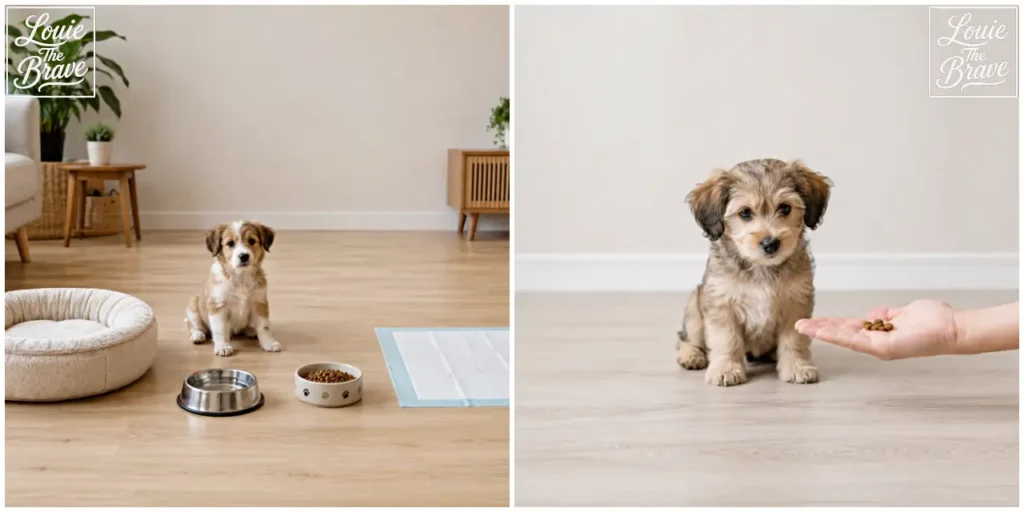
Bringing home an 8-week-old puppy does not mean you need to change the food, start treats, give a full bath, and teach several commands on the same day. The better first-week goal is simple: keep meals, sleep, potty breaks, and handling predictable while you watch how your puppy is eating, drinking, eliminating, and settling in.
Keep the First Few Days Simple
Give your puppy a clear sleeping area, fresh water, food bowls, and one consistent potty location. Keep visitors and excitement limited at first, and let your puppy explore the home at their own pace.
The American Animal Hospital Association recommends keeping the first week calm, maintaining consistent feeding and bathroom schedules, and monitoring eating and elimination. Early training can focus on house training and comfortable crate use instead of trying to teach several obedience skills immediately.
How Much Should an 8-Week-Old Puppy Eat?
Start with the feeding guide on a complete and balanced puppy food, but treat the listed amount as a starting point rather than an exact prescription. Your puppy’s expected adult size, growth rate, body condition, activity, and the calories in the food all affect how much they need. As your puppy grows, feeding amounts should also be checked against actual body condition; feeling the ribs, looking for a waist, and using a body condition score can tell you more than body weight alone.
At this age, measured small meals are usually easier than one or two large meals. Many young puppies do well with three or four meals per day, while toy and small-breed puppies may need at least three small meals daily until about 4 months old. A digital kitchen scale makes portions easier to track accurately.
When Louie came home on October 3, 2023, at about 2 months old, I switched him right away to Royal Canin X-Small Puppy because I wanted to choose his food myself. That was my personal choice, not a rule I would use for every puppy. When changing foods, a gradual transition is generally easier on digestion than an abrupt switch.
Stool can help you notice changes, but it should not be the only way you decide whether to increase or decrease food.
| What you notice | What to check first | What to do |
|---|---|---|
| Loose stool after adding food or treats | Portion size, new food, new treats | Remove the newest extra and measure meals carefully |
| Less stool plus lower food intake | Actual daily intake and weight | Weigh the food and track appetite and body weight |
| Small, hard stool or repeated straining | Hydration and possible constipation | Do not assume the puppy simply needs more food |
Repeated diarrhea, blood in the stool, vomiting, marked lethargy, or repeated straining should be discussed with a veterinarian.
Use Puppy Food as the First Training Reward
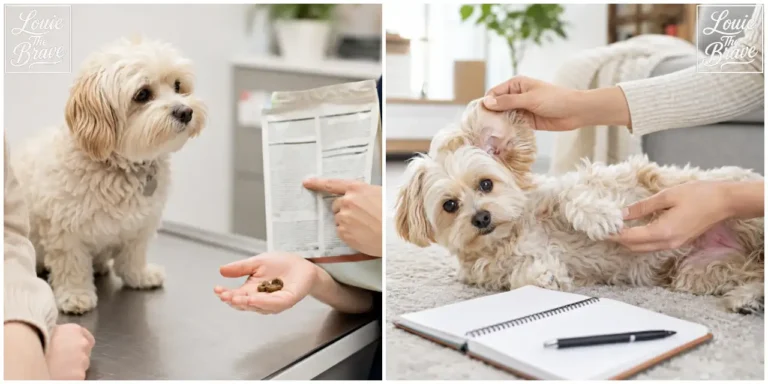
You do not need several bags of treats during the first week. Set aside part of your puppy’s regular kibble and use it for name recognition, gentle handling, crate practice, and successful potty trips.
For dogs in general, treats should stay under 10% of daily calories so they do not replace too much of a complete and balanced diet. For a very small puppy, even tiny treats can add up quickly, so using part of the normal meal as training rewards is an easy way to control extra calories.
Choose chew items carefully, too. Avoid extremely hard options such as bones, antlers, and rigid nylon chews because they can fracture teeth. Any chew or toy can also become dangerous if a puppy tears off and swallows pieces, so chewing should be supervised and damaged items should be removed.
The First Bath Does Not Have to Happen on Arrival Day
A puppy who is not very dirty does not need a full bath simply because they came home. You can wipe the paws, belly, or rear area and introduce a full bath once the puppy is comfortable and feeling well.
For the first bath, use comfortably warm water, provide a nonslip surface, and keep the experience calm. You can even practice standing in a dry tub and being handled with a towel before adding water.
Later bath frequency depends on coat, lifestyle, and health. More frequent bathing is not automatically better, and VCA advises that healthy dogs generally should not be bathed more than about once a month unless their individual needs call for something different.
Start Potty Training on the First Day
Potty training can begin as soon as your puppy comes home. Take them to the same potty area after waking, after meals, after active play, and before bed.
At 6 to 8 weeks old, some puppies may need potty opportunities about every two hours while awake and may still need overnight breaks. Reward your puppy immediately after they eliminate in the correct place.
If you catch an accident happening, calmly redirect your puppy to the correct location. Do not punish them afterward. A young puppy is more likely to learn from an immediate reward for the behavior you want than from punishment for an accident they may no longer connect with the correction.
What Should You Teach Before Tricks?
Before focusing on “shake” or “play dead,” teach skills that make everyday life easier: responding to their name, accepting gentle handling, relaxing in a crate or safe area, beginning short periods of independence, and redirecting puppy biting toward appropriate toys.
Keep practice short and positive. An 8-week-old puppy is learning throughout the day, even when you are not holding a formal training session.
The first month is less about creating a perfectly trained puppy and more about making home life predictable. Keep meals measured, introduce treats gradually, make grooming a calm experience, and reward the potty behavior you want. Once eating, stool, sleep, and everyday routines are steady, adding new foods, training skills, and experiences becomes much easier.
Source:
American Animal Hospital Association — New Dog Checklist: Your Step-by-Step Guide to a Successful Start
VCA Animal Hospitals — How Much Food Should I Feed My Puppy
VCA Animal Hospitals — Nutritional Considerations for Toy and Small Dogs
VCA Animal Hospitals — Using Food and Treats for Training Dogs
VCA Animal Hospitals — How to Potty Train Your Puppy
VCA Animal Hospitals — Puppy Bath & Nail Trim Tips
VCA Animal Hospitals — Dos and Don’ts of Puppy Teething Toys