Cat Litter Box Size: Choose the Right Box and Litter
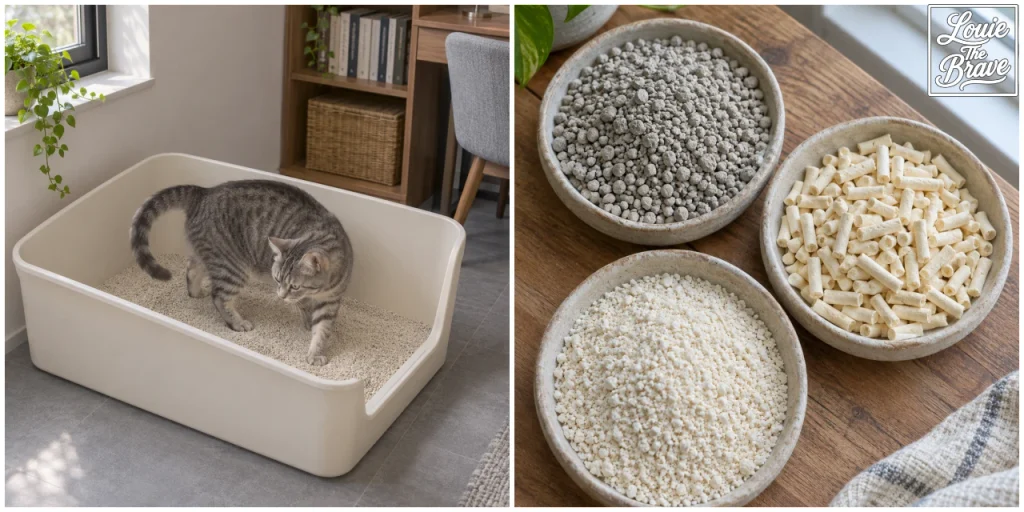
The right cat litter box size gives your cat enough room to turn around, dig, and cover waste without bumping into the sides. A useful starting point is a box with an interior length at least 1.5 times your cat’s body length, measured from the nose to the base of the tail. For a cat measuring 16 inches, that means about 24 inches of usable interior length.
A large, uncovered litter box with an easy entrance and unscented, fine-textured litter is a sensible first choice. However, a good setup also depends on where the box sits, how many cats share the home, and whether your cat accepts the litter under its paws.
What cat litter box size fits your cat?
The American Association of Feline Practitioners and International Society of Feline Medicine recommend a rectangular litter box measuring about 1.5 times the cat’s length from nose to tail base. This gives the cat room to move naturally while urinating or defecating.
To estimate the appropriate cat litter box size, measure your cat while standing comfortably, without including the tail itself. Multiply that measurement by 1.5 to estimate the minimum interior length to look for.
| Cat body length | Suggested interior box length |
|---|---|
| 14 inches | At least 21 inches |
| 16 inches | At least 24 inches |
| 18 inches | At least 27 inches |
| 20 inches | At least 30 inches |
These are calculation examples, not fixed sizes for particular breeds. The box should also be wide enough for your cat to turn around, squat, and dig without needing to stand on the rim.
Check the inside floor dimensions before buying. A box advertised as 24 inches long may have a smaller usable floor because of sloped walls, rounded corners, or a wide rim. The outer measurements alone cannot tell you how much room your cat actually has.
Large cats may need an extra-large plastic litter pan or a suitable storage container with an accessible entrance. A 2025 study published in the Journal of Veterinary Medical Science also found that cats in its experiments preferred larger boxes, although the results do not establish one ideal measurement for every cat.
Does body shape affect litter box access?
Body shape, age, and mobility can affect how comfortably a cat enters the box. A kitten may struggle with tall sides, while a senior cat with arthritis may have difficulty stepping over a high entrance.
For an adult cat that digs vigorously or urinates toward the sides, a box with high back and side walls but a lower front entrance can contain scattered litter without making entry difficult.
A hanging flap of belly skin is not automatically evidence that a cat is overweight. If you are assessing your cat’s overall body shape, this guide to distinguishing a primordial pouch from excess body fat can help you understand the difference.
Open, covered, and automatic litter boxes: Which is better?
An uncovered litter box is a practical starting point because it allows cats to enter freely, see their surroundings, and turn around without a roof restricting their movement. It also provides better air circulation and makes waste easier to spot.
Covered boxes can reduce litter scatter and provide a more enclosed space, which some cats accept. However, a hood reduces usable headroom and may trap odors inside. Some cats dislike enclosed spaces, especially if they cannot easily see another pet approaching.
I experienced this while temporarily fostering British Shorthair cats. The litter box that came with them had an optional hood, which I initially installed. The odor became unpleasant, so I eventually removed the cover and used the box as an open tray.
Here is how the main litter box designs compare:
| Litter box type | Potential advantage | What to check |
|---|---|---|
| Open litter pan | Easy access, ventilation, and cleaning | Interior dimensions and litter scatter |
| High-sided open box | Helps contain kicked litter | Low enough entrance for easy access |
| Covered or hooded box | Contains some litter scatter | Headroom, ventilation, and cat acceptance |
| Top-entry box | Can reduce litter tracked directly out of the entrance | Whether the cat can comfortably climb and jump |
| Automatic self-cleaning box | Removes waste through a mechanical cleaning cycle | Safety sensors, internal space, weight limits, and litter compatibility |
| Sifting or pad-based system | Separates waste using a specific tray and litter arrangement | Required pellets, pads, and replacement routine |
A covered or top-entry model should not be selected solely because it looks neater in the home. If a cat hesitates at the entrance, rushes out, or starts eliminating elsewhere, offer an easily accessible open box and observe which one it uses.
Are automatic litter boxes worth buying?
Automatic litter boxes can reduce manual scooping, but they require careful model selection. Check whether the machine stops when a cat enters during cleaning, whether it has anti-pinch protection, and whether the entrance remains safely accessible while moving parts operate.
Each manufacturer specifies compatible litter types and may set minimum cat weights or age restrictions. Those limits matter particularly for kittens and smaller cats, because some detection systems depend on weight sensors.
An automatic box also needs regular waste-bin emptying, cleaning, and inspection. It should not prevent you from noticing changes in your cat’s urine or stool. When introducing one, keep the familiar manual box available until the cat reliably accepts the new setup.
Which cat litter is best: Clay, tofu, or cassava?
Once you have selected the cat litter box size, the next decision is what goes inside it. Litter texture can strongly affect whether a cat feels comfortable digging and burying waste.
Many cats prefer unscented, fine-grained, clumping litter. A 2025 study examining litter preferences found that the cats tested favored clumping clay litter. However, individual cats may accept different materials, and the study does not establish that clay is always better than every plant-based alternative.
Comparing common litter materials
| Litter type | Main characteristics | What to check |
|---|---|---|
| Bentonite clay | Mineral-based, usually clumping; many products have fine, sand-like particles | Dust, weight, clump strength, and tracking |
| Tofu litter | Soy-based plant litter, often sold as cylindrical pellets or smaller particles | Pellet size, added fragrance, scooping compatibility |
| Cassava litter | Plant-based litter that may form clumps; also sold in blends | Actual ingredients, dust, tracking, and clump stability |
| Silica crystal litter | Absorbs moisture; some formulas are nonclumping | Crystal texture, dust, and replacement instructions |
| Paper or wood pellets | Often larger particles, with different absorption and waste-removal systems | Paw comfort, odor, and whether the system requires separate pads |
Bentonite clay litter is a reasonable first option for a cat already accustomed to fine, clumping material. It makes urine clumps easier to locate and remove, although dust levels and tracking vary by product.
Tofu litter appeals to owners seeking plant-based alternatives, but its larger pellet shapes can feel different under a cat’s paws. Some products are smaller-grained, so comparing particle size and fragrance matters more than choosing a product simply because it says “tofu.”
Cassava litter is another plant-derived option. Some formulas contain cassava alongside other materials, so check the ingredient list rather than assuming every cassava product behaves the same way.
A litter advertised as natural, biodegradable, or eco-friendly is not necessarily the most comfortable option for your cat. Those labels also do not establish that the used litter is suitable for flushing or local composting.
When comparing products, prioritize your cat’s willingness to use them, followed by dust, tracking, odor control, and ease of waste removal.
How should you switch to a different cat litter?
Changing litter can be more disruptive than owners expect. Cats recognize the texture and smell of their usual toilet area, so an abrupt change may cause them to avoid the box.
When I fostered cats, I initially replaced their familiar litter completely with a product I had heard was better. The cats stopped using the litter box, and I had to remove the new litter. That experience showed me why maintaining a familiar option matters during a change.
If you know which litter your cat previously used, keep it available when the cat first arrives. This is especially helpful for adopted or foster cats adapting to a new home.
A controlled comparison is one way to test alternatives:
- Keep one familiar litter box with the original litter.
- Put the new litter in a similar box nearby, with the same general accessibility.
- Watch which box your cat chooses over repeated bathroom visits.
- If the cat consistently accepts the new litter, transition gradually while keeping a reliable option available.
- If the cat avoids the new material, return to the familiar litter rather than forcing the change.
You can also introduce a small amount of new litter into the original material if your cat tolerates mixing. There is no universal transition schedule; the cat’s behavior should determine how quickly you proceed.
If your cat already has a comfortable cat litter box size and uses the current litter consistently, there may be little reason to replace everything at once. Change one part of the setup at a time so you can identify what the cat accepts.
How many litter boxes do cats need, and where should they go?
A widely used veterinary recommendation is one litter box per cat, plus one extra.
That means two boxes for one cat, three for two cats, and four for three cats. This is a starting guideline rather than a guarantee that every cat will accept every arrangement.
I learned this during my own fostering experience. Three cats initially arrived with only one litter box. One soon found a family, and I bought another box for the remaining two, but later realized I should have provided a third.
The boxes should not all be grouped in one corner. Cats may treat several adjacent trays as one shared toilet area, and a cat that dislikes or fears that location may have no comfortable alternative.
Good litter box locations usually have the following features:
- A quiet, low-traffic area that the cat can reach at any time.
- Separation from food and water bowls.
- No nearby washing machine or other appliance that may suddenly make loud noises.
- An accessible route that another pet cannot easily block.
- A location that remains available overnight, even when interior doors are closed.
For multistory homes, consider a box on each level the cat regularly uses. This is particularly useful for senior cats that may find stairs uncomfortable.
Even a generous cat litter box size cannot compensate for a location where a cat feels trapped or disturbed. Observe how the cat approaches and leaves the area, especially when several pets share the home.
How often should you scoop and clean a cat litter box?
Remove feces and urine clumps at least once every day. In a home with multiple cats or a heavily used box, scooping more often helps prevent waste buildup and makes it easier to notice changes in bathroom habits.
The Merck Veterinary Manual recommends daily scooping and a complete box cleaning at least once a week. Cleaning needs may vary with the litter system, the number of cats, and how quickly the box becomes soiled.
For ordinary clumping litter, approximately 1.5–2 inches of litter can be a useful starting depth. Keep enough material for digging and covering waste, and adjust if your cat repeatedly digs to the bare bottom or avoids a particularly deep layer.
A simple cleaning routine involves removing waste, topping up the litter, and regularly replacing soiled material. During full cleaning, empty the tray, wash it with warm water and a mild detergent, rinse thoroughly, and allow it to dry before refilling. Avoid strong fragrances and ammonia-based cleaners.
What actually helps control litter box odor?
I tried regular deodorizing products and an electronic deodorizer while fostering cats. Even though I washed the boxes weekly, odor was still a concern. Removing waste as soon as I could after the cats used the boxes made the biggest practical difference in my experience.
Fragranced litter and deodorizing powders may mask smells for people while making the area less appealing to cats. Maintaining clean litter, adequate ventilation, and enough accessible boxes is a better starting approach.
Use a scoop with openings that match the litter particles so clean material can fall back into the tray. A litter mat placed where the cat actually walks after exiting may also reduce tracked particles.
Bag used litter and waste, seal the bag, and follow local trash disposal rules. Do not flush litter down the toilet, including products marketed as flushable. The U.S. Environmental Protection Agency specifically warns against flushing cat litter into septic systems.
Daily waste removal also matters for household hygiene. The Centers for Disease Control and Prevention notes that Toxoplasma shed in cat feces generally takes 1–5 days to become infectious. Anyone cleaning the box should wash their hands afterward, and someone else should handle litter duties when possible if a household member is pregnant or immunocompromised.
Why is your cat suddenly avoiding the litter box?
If a cat starts urinating or defecating outside its litter box, first consider whether anything changed recently. A new litter texture, a different location, a dirty tray, or an entrance that has become difficult to navigate may contribute to the problem.
Watch for observable behaviors such as balancing on the rim, entering and immediately leaving, avoiding digging, or eliminating near the box. These observations may help identify discomfort with the setup, but they cannot rule out illness.
The cat’s litter box size, location, and material should all be reviewed, particularly if avoidance began after a recent change. Never punish a cat for eliminating outside the box; punishment does not address the underlying problem and may increase stress.
Medical causes must also be considered. Urinary tract inflammation, digestive problems, arthritis, and other conditions can interfere with normal litter box use, even when a cat otherwise seems well.
Contact your veterinarian promptly if your cat develops new litter box avoidance, changes in urination frequency, blood in the urine, or signs of pain.
Emergency warning: If your cat repeatedly enters the litter box, strains to urinate, and produces little or no urine, seek emergency veterinary care immediately. A urethral obstruction can be life-threatening and is especially concerning in male cats.
A comfortable litter box setup starts with the cat
For a new cat, begin with an accessible, spacious open tray and the litter the cat already recognizes whenever possible. Check the actual interior measurements before purchasing and provide enough boxes in separate, quiet locations.
As you learn your cat’s preferences, you can adjust the litter texture, entrance height, and cleaning routine without replacing the entire setup at once. A higher-priced automatic model or a more decorative covered box is not automatically an improvement.
The best cat litter box size is one that allows your cat to move naturally, while the best litter is one your cat willingly uses. Start with comfort and accessibility, then make changes based on the cat’s behavior rather than appearance or convenience alone.
Source
- American Association of Feline Practitioners (AAFP) and International Society of Feline Medicine (ISFM) — Guidelines for Diagnosing and Solving House-Soiling Behavior in Cats.
- American Animal Hospital Association (AAHA) — 2021 AAHA/AAFP Feline Life Stage Guidelines: General Litter Box Considerations.
- Merck Veterinary Manual — Providing a Litter Box for a Cat.
- Iwabuchi-Inoue et al., Journal of Veterinary Medical Science (2025) — Litter Box Size and Litter Type Preference and Their Associated Behavioral Changes in Cats.
- The Ohio State University College of Veterinary Medicine — Indoor Pet Initiative: Litter Boxes.
- Cornell University College of Veterinary Medicine — Feline Behavior Problems: House Soiling.
- Cornell University College of Veterinary Medicine — Feline Lower Urinary Tract Disease.
- Centers for Disease Control and Prevention — About Cleaning and Disinfecting Pet Supplies.
- U.S. Environmental Protection Agency — How to Care for Your Septic System.