Tracheal Collapse in Dogs: Tests, Grades and Treatment
Tracheal collapse in dogs occurs when the cartilage supporting the windpipe weakens, allowing the airway to flatten and restrict airflow. A persistent, dry, honking cough is a characteristic symptom, particularly in small breeds such as Yorkshire Terriers, Pomeranians, and Toy Poodles. The condition is progressive, but many affected dogs maintain a good quality of life with ongoing treatment.
When my Yorkshire Terrier, Louie, started reverse sneezing as a puppy, I immediately worried about a collapsing trachea. Before his first birthday, he had undergone X-rays and even an echocardiogram because I was concerned about possible heart disease. That experience taught me how useful it is to understand what each diagnostic test can actually reveal.
What Causes Tracheal Collapse in Dogs?
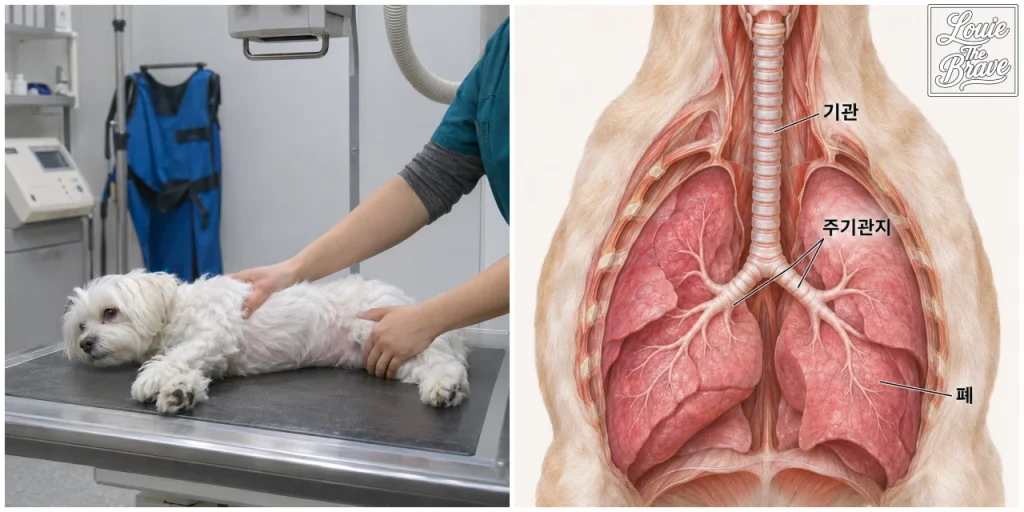
The trachea is a flexible tube that carries air from the throat toward the lungs. C-shaped cartilage rings support the tube, while a flexible membrane spans the open part of each ring. Together, these structures allow the airway to remain open during breathing.
When the cartilage loses its strength or the supporting membrane becomes loose, the airway can flatten. Changes in pressure during breathing can make the narrowing more pronounced. Collapse may occur in the neck, inside the chest, or across several sections of the trachea.
Tracheal collapse in dogs is frequently diagnosed during middle age or later, although younger dogs can also develop the condition. Genetics are suspected to contribute to the increased risk in certain small breeds. Excess body weight, airway inflammation, and exposure to respiratory irritants can worsen existing symptoms.
Tracheal Collapse vs. Bronchial Collapse and Airway Stenosis
The trachea and bronchi are connected, but they are different anatomical structures. The trachea carries air toward the chest, where it divides into two main bronchi that lead into the lungs.
Collapse describes a loss of structural support that allows an airway to flatten. Stenosis describes an abnormal narrowing of the airway, which can have several causes, including scar tissue or structural abnormalities.
| Condition | Location | What happens |
|---|---|---|
| Tracheal collapse | Trachea | Supporting structures weaken, allowing the windpipe to flatten. |
| Tracheal stenosis | Trachea | The internal opening of the windpipe becomes abnormally narrow. |
| Bronchial collapse | Bronchi | The airways leading into or branching within the lungs lose structural support. |
| Bronchial stenosis | Bronchi | The internal opening of a bronchus becomes abnormally narrow. |
A dog can have both tracheal and bronchial collapse. This distinction becomes particularly relevant when considering surgery because a stent placed inside the trachea cannot correct collapse in the smaller airways farther inside the lungs.
What Does a Collapsing Trachea Sound Like?
Dogs with a collapsing trachea may produce a harsh, dry cough that resembles a goose honk. Some cough repeatedly and finish with a gagging or retching sound. Symptoms can become more noticeable when a dog is excited, physically active, exposed to heat, or pulling against a neck collar.
Reverse sneezing can sound equally alarming, especially if you have never heard it before. During a reverse sneeze, a dog takes a series of rapid, forceful breaths inward through the nose.
| Feature | Tracheal collapse-related cough | Reverse sneezing |
|---|---|---|
| Typical sound | Dry honking or hacking | Repeated inward snorting |
| Air movement | Forceful outward airflow during coughing | Rapid inward nasal airflow |
| Main area involved | Trachea | Back of the nasal passages and upper throat |
| Associated signs | Gagging, exercise intolerance, or breathing difficulty | Extended neck and repeated inhalations |
A honking cough can raise suspicion of tracheal collapse in dogs, but respiratory infections, chronic bronchitis, and other airway disorders may produce similar sounds. Heart disease can also contribute to coughing or breathing difficulties.
For more examples of respiratory sounds and their possible causes, see my guide to distinguishing a dog’s honking cough from reverse sneezing and other coughing sounds.
Can a Normal X-Ray Rule Out Tracheal Collapse?
A normal X-ray does not completely rule out tracheal collapse in dogs. Standard radiographs capture the airway at a particular moment, while the degree of collapse can change throughout the breathing cycle.
The section of the trachea in the neck tends to collapse during inhalation. Collapse within the chest tends to become more pronounced during exhalation. If the affected section is open when the image is taken, the narrowing may be missed.
Chest X-rays remain useful because they provide information about the lungs, heart size, and other possible causes of coughing. A veterinarian may recommend additional airway imaging when a dog’s symptoms persist despite inconclusive radiographs.
Fluoroscopy, Bronchoscopy, and Echocardiography
Each diagnostic test answers a different clinical question. The appropriate choice depends on whether the veterinarian suspects a moving airway abnormality, disease inside the airways, or an underlying heart condition.
| Diagnostic test | What it evaluates | Main limitation |
|---|---|---|
| X-rays | Airway shape, heart size, and lung abnormalities | May miss intermittent airway collapse |
| Fluoroscopy | Changes in airway diameter during breathing and coughing | Requires specialized imaging equipment |
| Bronchoscopy | Internal airway structures, bronchial involvement, and inflammation | Requires general anesthesia |
| Echocardiogram | Heart valves, chambers, and cardiac function | Does not directly assess dynamic airway collapse |
Fluoroscopy uses continuous X-ray imaging to show airway movement. It allows the veterinarian to identify where the trachea narrows and how its diameter changes as the dog breathes or coughs.
Bronchoscopy involves passing a small camera into the airways while the dog is under general anesthesia. The veterinarian can examine the trachea and bronchi directly and collect samples when infection or inflammatory airway disease is suspected.
An echocardiogram is useful when examination findings suggest concurrent heart disease. Reverse sneezing alone does not automatically justify a cardiac ultrasound. The choice of test should follow the dog’s symptoms and physical examination findings.
What Do the Four Grades of Tracheal Collapse Mean?
Veterinarians use grading systems to describe the extent of airway narrowing. A traditional four-grade system classifies tracheal collapse in dogs according to the approximate reduction in the airway opening.
| Grade | Approximate airway narrowing | Classification |
|---|---|---|
| Grade 1 | 25% | Mild |
| Grade 2 | 50% | Moderate |
| Grade 3 | 75% | Advanced |
| Grade 4 | Nearly 100% | Severe |
These percentages describe the degree of narrowing in the affected section. They do not represent the percentage of lung function lost or the amount of oxygen a dog receives.
Different sections of the same dog’s trachea can have different grades of collapse. The imaging method and phase of breathing also matter when interpreting the findings.
Does a More Severe Cough Mean a Higher Collapse Grade?
A dog’s cough severity does not reliably indicate the anatomical grade of collapse.
A 2024 retrospective study published in Frontiers in Veterinary Science examined 110 small-breed dogs with tracheal collapse. Researchers found no statistically significant association between cough severity and either the location or grade of collapse identified through fluoroscopy.
A dog with frequent coughing may have substantial airway irritation even when imaging shows a lower collapse grade. Veterinarians therefore assess breathing comfort, daily activity, associated diseases, imaging findings, and response to medication when planning treatment.
How Is Tracheal Collapse in Dogs Treated?
Treatment aims to reduce coughing, improve airflow, and maintain a comfortable daily life. Medical management and environmental adjustments are generally the initial approach for dogs whose breathing remains stable.
According to the American College of Veterinary Surgeons, medical management can be effective in up to 70% of affected dogs, particularly those with mild collapse. Individual outcomes depend on disease progression and other health conditions.
Medications for a Collapsing Trachea
Medication cannot rebuild weakened tracheal cartilage. It can address several problems that develop when an unstable airway becomes irritated.
Repeated coughing can damage and inflame the airway lining. The resulting irritation encourages further coughing, while swelling can reduce the available space for airflow. Interrupting this cycle is one of the goals of medical treatment.
Depending on the dog’s condition, a veterinarian may prescribe:
- Cough suppressants to control persistent, nonproductive coughing.
- Anti-inflammatory medications to reduce airway inflammation.
- Bronchodilators when accompanying lower airway disease warrants their use.
- Anti-anxiety medications or sedatives for dogs whose respiratory symptoms worsen with stress or excitement.
- Antibiotics when a bacterial infection is identified or clinically suspected.
Medication choices depend on the type of cough, other diseases, and the dog’s overall health. Human cough medicines should not be given without veterinary approval.
When Are Tracheal Stents or External Rings Used?
Dogs with severe airway obstruction, repeated respiratory emergencies, or inadequate improvement with medication may be evaluated for an interventional or surgical procedure.
| Procedure | How it works | Typical application |
|---|---|---|
| External tracheal rings | Supports the windpipe from outside | Selected cases of collapse in the neck |
| Internal tracheal stent | An expandable device supports the airway from within | Selected cases involving the neck, chest, or both |
External rings require surgery to access the trachea. Internal stents can support sections of the airway inside the chest that are difficult to reach through traditional surgery.
Both procedures carry risks. External rings can cause damage to surrounding structures, while internal stents can develop complications such as fractures, displacement, or excessive tissue growth. Some dogs continue coughing because of inflammation or concurrent bronchial disease.
A successful procedure can improve airflow, but it does not eliminate the underlying disease. Continued medication and follow-up care may still be necessary.
How to Manage Tracheal Collapse in Dogs at Home
Daily management focuses on reducing the physical and environmental triggers that aggravate coughing.
- Use a properly fitted body harness that does not press against the throat.
- Maintain a healthy body weight to reduce unnecessary respiratory strain.
- Avoid cigarette smoke, aerosol sprays, strong fragrances, and other airborne irritants.
- Schedule walks during cooler parts of the day.
- Choose calm, manageable activities and allow breaks when coughing develops.
- Keep indoor temperatures comfortable during hot and humid weather.
A harness is particularly useful for dogs that cough when pressure is applied to the neck. Check where the harness sits when the leash becomes tight, since some designs can shift upward toward the throat. You can see the style I use with Louie in my Curli harness review for small dogs.
Can Supplements Help a Collapsing Trachea?
Respiratory supplements are sometimes marketed for dogs with coughing or sensitive airways. There is no established evidence that these supplements restore weakened tracheal cartilage or reverse the structural changes responsible for collapse.
I have tried respiratory supplements with Louie in the past, but I would not rely on them to treat a diagnosed airway disorder. Any supplement should be evaluated for its ingredients, evidence of benefit, and possible interactions with prescribed medication.
When Is a Collapsing Trachea an Emergency?
A severe episode of tracheal collapse in dogs can restrict airflow enough to become life-threatening. The following symptoms require immediate emergency veterinary care:
- Blue, gray, or purple gums or tongue.
- Obvious difficulty drawing air into the lungs.
- Strenuous abdominal movements during breathing.
- Open-mouth breathing at rest accompanied by respiratory effort.
- Severe weakness, fainting, or loss of consciousness.
Keep your dog as calm as possible and travel to the nearest emergency veterinary hospital. Use air conditioning during transportation and avoid pressure around the neck. Call the hospital ahead of your arrival if possible.
A dog that breathes comfortably between coughing episodes but develops persistent, recurring, or worsening symptoms should also receive a veterinary examination. Recording a short video of a typical episode can provide useful information, provided your dog is stable and filming does not delay care.
How Long Can a Dog Live With Tracheal Collapse?
There is no single life expectancy for dogs diagnosed with a collapsing trachea. Some dogs with mild disease respond well to long-term medical management, while others develop progressive airway obstruction that requires additional treatment.
Prognosis also depends on whether the dog has bronchial collapse, heart disease, obesity, or other respiratory conditions. A collapse grade alone cannot predict how long an individual dog will live.
If your dog has been diagnosed with tracheal collapse, ask your veterinarian which section of the airway is affected, whether the bronchi are involved, and how the imaging findings relate to your dog’s symptoms. Understanding those details helps you make informed decisions about medication, additional testing, exercise, and potential surgical treatment.
Source:
- Cornell University College of Veterinary Medicine: Tracheal Collapse
- American College of Veterinary Surgeons: Tracheal Collapse
- University of Missouri Veterinary Health Center: Tracheal Collapse: Medical Management Versus Implantable Stents
- Schwarzman Animal Medical Center: Tracheal Collapse in Dogs
- Cornell University College of Veterinary Medicine: Reverse Sneezing
- Cornell University College of Veterinary Medicine: Recognizing and Responding to Canine Respiratory Distress
- VCA Animal Hospitals: Tracheal Collapse in Dogs
- Tufts University Cummings School of Veterinary Medicine: Heart Disease Diagnosis
- Kim et al. (2024), Frontiers in Veterinary Science: A Retrospective Study of Tracheal Collapse in Small-Breed Dogs: 110 Cases (2022–2024)