Dog Ate a Peach Pit? Whole vs. Chewed and What to Do
A peach pit is not a safe chew or treat for a dog. If your dog swallowed one, the main concern depends on whether the pit went down whole or was cracked open first. A whole pit can choke a dog or lodge in the gastrointestinal tract. A chewed or broken pit adds another concern because the seed inside contains cyanogenic compounds that can release cyanide when damaged.
Call your veterinarian promptly after a peach pit ingestion, even if your dog looks normal. Have your dog’s weight, the approximate time of ingestion, the number of pits involved, and whether the pit was whole or broken ready when you call. Small dogs can be at greater risk of obstruction because the pit is large relative to their digestive tract.
Whole Peach Pit vs. Chewed Peach Pit
The first question is which part of the peach your dog actually ate.
| What your dog ate | Main concern | What to do |
|---|---|---|
| Small amount of peach flesh only | Possible stomach upset | Monitor for vomiting or diarrhea |
| Whole peach pit | Choking or gastrointestinal obstruction | Contact a veterinarian promptly |
| Cracked or chewed peach pit | Obstruction plus possible cyanide exposure | Contact a veterinarian or pet poison service right away |
| Peach leaves or stems | Cyanogenic glycoside exposure | Contact a veterinarian or pet poison service |
Fresh peach flesh can be offered to many dogs in small pieces once the pit, stem, and leaves are removed. The pit itself should be treated as an unsafe foreign object.
Why a Whole Pit Can Still Be Dangerous
A hard peach pit may become stuck in the throat, injure the esophagus, or move into the stomach and intestines where it can cause a blockage. Possible signs include gagging, drooling, vomiting, loss of appetite, straining to pass stool, and abdominal pain.
Do not wait for the pit to appear in the stool before asking for veterinary advice. Whether an object can pass depends on its size and shape and on the dog’s size and condition. Your veterinarian can decide whether monitoring, imaging, removal, or another approach is appropriate for your dog.
Why a Chewed Peach Pit Adds a Toxicity Concern
The hard outer pit surrounds a seed that contains cyanogenic glycosides. When the pit and seed stay intact, cyanide exposure is less likely. When the seed is crushed or thoroughly chewed, cyanide can be released.
Serious cyanide poisoning from ordinary peach pits is uncommon, but a broken pit should still be taken seriously. Possible signs include heavy drooling, rapid or difficult breathing, dilated pupils, unusually bright red mucous membranes, weakness, collapse, or seizures.
If your dog chewed open a peach pit, do not wait for symptoms before calling for help.
What to Do Right After Your Dog Eats a Peach Pit
Remove the remaining fruit and pits so your dog cannot eat more. Then gather the information a veterinarian will need:
- your dog’s weight
- when the ingestion happened
- how many pits may be missing
- whether the pit was whole or chewed
- any vomiting, gagging, breathing changes, weakness, or unusual behavior
Do not give salt, oil, milk, or other home remedies to make your dog vomit. Hydrogen peroxide should only be used if a veterinarian or animal poison professional specifically instructs you to use it for your dog. Inducing vomiting is not appropriate in every situation and can cause complications such as aspiration or additional injury.
When Is It an Emergency?
Go to an emergency veterinarian immediately if your dog is struggling to breathe, repeatedly gagging, collapsing, having seizures, or showing severe weakness.
Repeated vomiting, marked drooling, abdominal pain, refusal to eat, or trouble passing stool also needs prompt veterinary attention because these signs can occur with gastrointestinal obstruction.
Even without symptoms, a swallowed peach pit deserves a call to your veterinarian.
How I Prevent Peach Pit Accidents With Louie
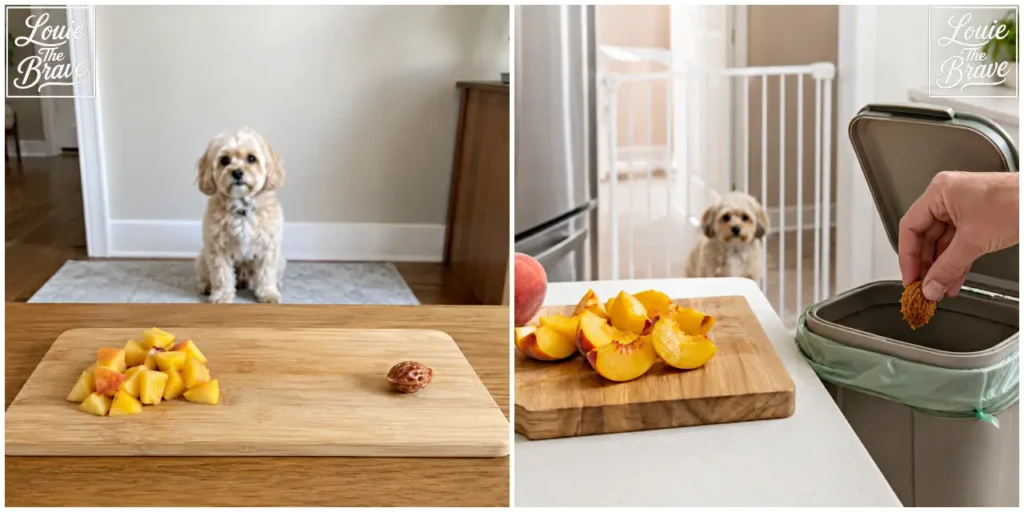
Louie is a small dog at about 7 pounds, so I keep large, hard fruit pits out of reach. He has never swallowed a peach pit. When I give him peach, I separate the flesh first, discard the pit immediately in a dog-proof trash can, and offer only a very small piece of flesh. I use the same part-by-part check with other fruit; for example, watermelon is safest when only the flesh is served and the rind and hard seeds are removed.
For any dog, the simplest prevention is to remove the pit, stem, and leaves before serving peach and put the pit where the dog cannot retrieve it.
If your dog already ate the pit, identify whether it was whole or chewed, note your dog’s size and symptoms, and contact a veterinarian for case-specific advice.
Source:
Pet Poison Helpline — Peach Pits
VCA Animal Hospitals — Summer Fun and Follies
ASPCA — Toxic and Non-Toxic Plants: Peach
ASPCA — Is It Ever Safe to Induce Vomiting?
Merck Veterinary Manual — Cyanide Poisoning in Animals
Merck Veterinary Manual — Houseplants and Ornamentals Toxic to Animals
American Kennel Club — Can Dogs Eat Peaches? Fruits Dogs Can Safely Eat