Cataracts in Dogs: Causes, Prevention, and Treatment
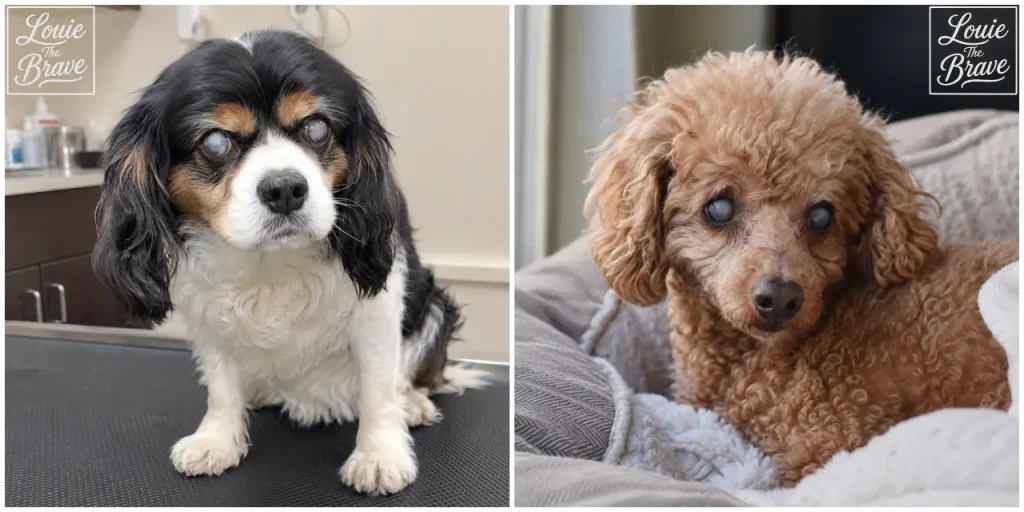
Cataracts in dogs cannot always be prevented. In fact, many canine cataracts are inherited, and diabetes is another major cause. Once a true cataract has formed, there is no proven diet, supplement, eye drop, or pair of goggles that can reliably make it disappear. Surgery remains the established treatment for restoring vision when a dog is a suitable candidate.
That does not mean owners are powerless. Protecting the eyes from injury, recognizing inflammation early, managing underlying disease, and having a cloudy eye examined promptly can reduce avoidable problems and help a veterinarian act before complications develop.
What Is a Cataract in a Dog’s Eye?
A cataract is an opacity inside the normally transparent lens of the eye. The lens sits behind the iris and focuses incoming light onto the retina. As the lens becomes opaque, less light reaches the retina and vision can become impaired.
A cataract may begin as a small spot that has little effect on vision or eventually involve most or all of the lens. Progression varies considerably between dogs, and appearance alone cannot tell an owner how quickly a cataract will worsen.
One important point is that a cloudy-looking eye is not automatically a cataract.
Cataract vs. Nuclear Sclerosis
Older dogs commonly develop nuclear sclerosis, also called lenticular sclerosis. This is an age-related change in which the center of the lens becomes denser and often develops a blue-gray haze.
| What you notice | Cataract | Nuclear sclerosis |
|---|---|---|
| Typical appearance | White, milky, or opaque area in the lens | More transparent blue-gray haze |
| Effect on vision | May range from minimal to severe vision loss | Usually does not cause blindness |
| Cause | Genetics, diabetes, inflammation, trauma, aging, or other conditions | Normal age-related lens change |
| What to do | Veterinary eye examination | Veterinary examination can confirm the difference |
A veterinarian can usually distinguish these conditions during an eye examination. Trying to diagnose them from a photograph is unreliable, especially because reflections and lighting can make a normal lens look cloudy.
What Causes Cataracts in Dogs?
There is no single cause. The dog’s age, breed, medical history, eye health, and the speed at which the lens changes all matter.
Inherited cataracts
Inherited disease is one of the most important causes of canine cataracts. These cataracts are not limited to senior dogs. Depending on the inherited form, they may appear in young or middle-aged dogs as well.
This is why assuming that cataracts are simply an “old dog problem” can delay diagnosis in a younger dog. Numerous breeds have documented hereditary forms of cataract, although any dog with a cloudy eye still needs an examination rather than a diagnosis based on breed alone.
For breeding dogs, ophthalmic screening and avoiding breeding affected dogs can help reduce inherited eye disease in future generations. It does not remove an inherited risk that is already present in an individual pet.
Diabetes mellitus
Diabetes is particularly important because diabetic cataracts may develop rapidly.
High glucose levels inside the lens lead to accumulation of sorbitol, which draws water into the lens and damages the orderly arrangement of lens fibers. Cornell University reports that roughly 75–80% of diabetic dogs develop cataracts within the first year after diabetes is diagnosed, even when the diabetes is being treated.
The newly published 2026 American Animal Hospital Association guidelines also identify diabetic cataracts as a clinical finding veterinarians may encounter in dogs with diabetes. Diabetes management still matters greatly for the dog’s overall health, but good glucose management should not be presented as a guarantee that cataracts will never form.
Diabetes is one of the reasons cataracts in dogs deserve prompt attention when cloudiness develops quickly, especially if the dog is also drinking and urinating more than usual, losing weight, or already has a diabetes diagnosis.
Eye inflammation and trauma
Chronic inflammation inside the eye, particularly uveitis, can lead to cataract formation. Trauma can also damage the lens and cause a cataract.
Preventing obvious eye injuries is therefore worthwhile. Dogs riding with their heads outside moving car windows, running through dense brush, or participating in activities where debris can strike the eye may need additional protection.
An eye that becomes red, painful, suddenly cloudy, or difficult to keep open should not simply be watched at home as a possible future cataract.
Age and other causes
Age-related cataracts do occur, but aging is not the only explanation for a cloudy lens. Cataracts can also be associated with nutritional problems in specific circumstances, radiation, retinal disease, inflammation, and other abnormalities.
That is why the useful question is not only “How old is my dog?” but also “Where is the cloudiness, is vision changing, and is there another eye or systemic disease?”
Can Cataracts in Dogs Be Prevented?
For many dogs, complete prevention is not possible.
There is currently no proven medication that reliably prevents inherited cataracts, reverses an established cataract, or guarantees that a cataract will stop progressing. The American College of Veterinary Ophthalmologists specifically cautions that products promoted as medical remedies for cataracts have not been proven to reverse, slow, or prevent cataract formation.
What owners can do is more specific.
Protect the eyes from preventable trauma. Avoid situations where sticks, debris, chemicals, windborne particles, or other objects can injure the eye.
Have new eye changes examined early. Detecting a cataract before it becomes advanced also allows the veterinarian or veterinary ophthalmologist to evaluate the retina and other eye structures while they can still be examined more easily.
Manage diagnosed medical disease. A diabetic dog needs consistent veterinary treatment and monitoring. However, insulin treatment should not be described as a guaranteed cataract-prevention method because diabetic cataracts remain common.
Feed a complete and balanced diet. Good nutrition supports general health, but adding vitamin A, vitamin C, vitamin E, or other antioxidants to a healthy dog’s diet has not been shown to guarantee cataract prevention.
What About Antioxidant Supplements?
There is some interesting research, but the evidence needs to be interpreted carefully.
A 2022 retrospective study examined dogs age 8 years and older with age-related incipient or immature cataracts. Two commercial antioxidant supplements did not significantly delay progression of incipient cataracts. In dogs that already had immature cataracts, progression to the mature stage was slower in the supplement groups than in the untreated group.
This study does not show that antioxidant supplements prevent cataracts in healthy dogs. It was retrospective rather than a randomized clinical trial, and it studied older dogs that already had cataracts.
For that reason, an eye supplement should not be treated as insurance against cataracts or as a substitute for an ophthalmic examination.
Do UV-Blocking Dog Goggles Prevent Cataracts?
Ultraviolet radiation has been discussed as one source of oxidative stress that may affect the lens. The same 2022 study cited UV exposure as one possible environmental contributor to oxidative damage but also noted that the dogs’ living environments and UV exposure could not be fully controlled.
That is not evidence that dog goggles prevent cataracts.
Protective goggles can have another practical purpose in certain dogs: reducing exposure to wind, dust, branches, and flying debris during specific outdoor activities. But saying that UV-blocking goggles are a proven method of preventing canine cataracts goes beyond the current clinical evidence.
When Does a Cloudy Eye Need Veterinary Care?
A gradual blue haze in both eyes of an older dog may turn out to be nuclear sclerosis. A white opacity may be a cataract. Cloudiness can also come from the cornea or from inflammation elsewhere in the eye.
Contact a veterinarian promptly if you notice:
- A new white, gray, or blue change in one or both eyes
- Sudden loss of vision or repeated bumping into objects
- Redness or obvious inflammation
- Squinting or keeping an eye closed
- Pawing or rubbing at the eye
- Excessive tearing or discharge
- A sudden change after trauma
- Rapid cloudiness in a dog with diabetes
Pain, redness, sudden vision loss, or rapidly changing eye appearance deserves faster assessment because glaucoma, uveitis, corneal injury, and other eye diseases can also threaten vision.
Vision problems do not always begin in the eye itself. If reduced vision occurs together with circling, head pressing, loss of balance, altered awareness, or seizures, neurologic disease also needs consideration. The related guide to dog hydrocephalus symptoms and neurologic warning signs explains what those additional changes can look like.
How Are Dog Cataracts Diagnosed?
Diagnosis starts with an ophthalmic examination. A veterinarian evaluates where the opacity is located and whether it truly involves the lens.
A veterinary ophthalmologist may use a slit lamp and a dilated eye examination for a more detailed assessment. Eye pressure may also be measured because cataracts and associated inflammation can be complicated by glaucoma.
If cataract surgery is being considered, additional testing may include an ocular ultrasound to examine structures that cannot be seen through an opaque lens and an electroretinogram to evaluate retinal function. These tests help determine whether restoring transparency to the lens is likely to restore useful vision.
How Are Cataracts in Dogs Treated?
There is currently no proven eye drop or oral medication that dissolves an established canine cataract.
Cataract surgery is the established treatment for restoring vision in an appropriate candidate. The most common procedure is phacoemulsification. The cloudy lens material is broken up and removed, and an artificial intraocular lens is commonly placed inside the eye.
When cataracts in dogs are small and vision remains useful, immediate surgery may not be necessary. The decision depends on cataract stage, progression, inflammation, retinal health, the dog’s general health, and whether the owner can manage postoperative medications and follow-up examinations.
Waiting until the dog is completely blind is not automatically the best strategy. Mature and hypermature cataracts are more likely to be accompanied by lens-induced inflammation, glaucoma, lens instability, and other complications that may make treatment more difficult.
Reported surgical success is high in appropriately selected dogs. Cornell cites success rates as high as 80–90%, while the MSD Veterinary Manual reports approximately 90–95% success during the first one to two years in published studies. Individual results still depend on the retina, inflammation, glaucoma risk, surgical complications, and long-term follow-up.
Prevention Means Knowing What You Can—and Cannot—Control
When I first wrote about this topic, Louie was only 16 months old and had no cataracts. I was thinking ahead because hearing about other dogs losing vision made the possibility feel much more real.
After looking more closely at the evidence, I would not rely on antioxidant foods, supplements, or UV goggles as a promise that his eyes will stay clear.
For cataracts in dogs, the more useful approach is to protect the eyes from injury, notice changes early, manage diseases such as diabetes appropriately, and have true lens opacity assessed before it becomes advanced. Genetics and some medical causes cannot be eliminated by home care, so prevention also means recognizing the limits of what owners can control.
Source:
American College of Veterinary Ophthalmologists — Cataracts
American College of Veterinary Ophthalmologists — Learn More About the Eye Lens & Cataracts
Cornell University College of Veterinary Medicine — Canine Cataracts
Merck Veterinary Manual — Disorders of the Lens in Dogs
American Animal Hospital Association — 2026 AAHA Diabetes Management Guidelines for Dogs
Journal of Veterinary Science — Effect of Oral Antioxidants on the Progression of Canine Senile Cataracts: A Retrospective Study