Grains of Paradise for Weight Loss: What Studies Show
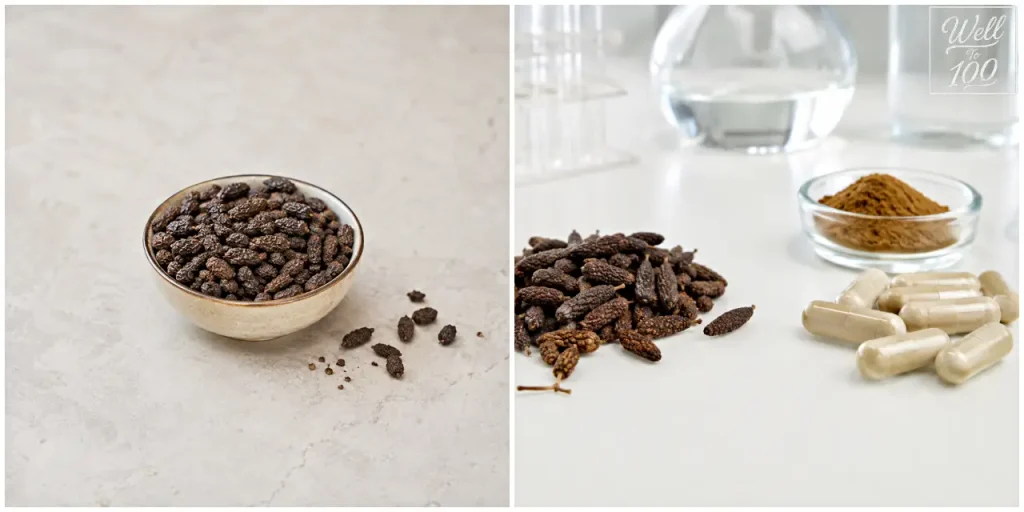
Grains of paradise for weight loss has a plausible mechanism and some positive human research, but it is not a proven fat-loss supplement. Specific extracts have increased energy expenditure and affected visceral fat or body weight in clinical trials. However, the studies used different extracts, doses, and populations, and newer research has not consistently reproduced the weight-loss effects.
The practical question is not simply whether grains of paradise “works.” It is whether the supplement you are considering is comparable to the exact extract tested in a study.
What Are Grains of Paradise and 6-Paradol?
Grains of paradise are the seeds of Aframomum melegueta, a plant in the ginger family. They contain pungent compounds including 6-paradol, 6-gingerol, and 6-shogaol.
The U.S. Food and Drug Administration lists grains of paradise as a flavoring agent or adjuvant. That food-use listing should not be confused with FDA approval of a dietary supplement for weight loss. FDA does not approve dietary supplements for safety and effectiveness before they are marketed.
6-Paradol has attracted particular attention because laboratory and human research suggests that compounds in grains of paradise may affect thermogenesis. However, whole seeds, generic seed extracts, and extracts standardized for 6-paradol are not equivalent.
Does Grains of Paradise Really Activate Brown Fat?
Brown adipose tissue, commonly called brown fat, produces heat and uses energy in the process.
A 2013 crossover study tested a single 40 mg dose of grains of paradise extract in 19 healthy young men. Twelve participants had detectable brown fat activity and seven did not. After taking the extract, energy expenditure increased within two hours in the brown-fat-positive group, while the same response was not seen in the group without detectable brown fat activity.
A 2021 crossover study then tested 40 mg daily for five weeks in nine young men with low brown fat activity. Cold-induced thermogenesis increased, but resting energy expenditure and body weight did not significantly change. Body-fat percentage decreased slightly.
These studies support an effect on thermogenesis, but both were very small. Activating brown fat also does not automatically mean that enough additional calories are burned to produce meaningful long-term weight loss.
What Have Human Weight-Loss Studies Found?
The human trials are easier to interpret when the extract, dose, and outcome are compared directly.
| Study | Participants | Intervention | Main result |
|---|---|---|---|
| 2013 | 19 young men | 40 mg once | Energy expenditure increased in participants with detectable brown fat |
| 2014 | 19 non-obese young women | 30 mg/day for 4 weeks | Energy expenditure increased; visceral-fat change differed from placebo |
| 2021 | 9 young men with low brown fat activity | 40 mg/day for 5 weeks | Cold-induced thermogenesis increased; no significant weight change |
| 2022 | 70 adults with BMI 25–30 | AfperFit 500 mg/day for 12 weeks | Greater energy expenditure, visceral-fat reduction, and weight loss than placebo |
| 2026 | 37 overweight or obese adults | 40 mg GOP + 500 mg L-BAIBA for 56 days | No significant additional change in weight, fat mass, body-fat percentage, or resting metabolic rate |
The 2014 study found a difference in visceral-fat-area change between grains of paradise and placebo after four weeks, but subcutaneous fat and total fat did not significantly change.
The strongest positive weight-loss result came from the 2022 AfperFit trial. Seventy adults with a BMI of 25 to 30 were assigned to 250 mg twice daily or placebo for 12 weeks. Each 250 mg capsule contained 5 mg of 6-paradol.
Participants in the AfperFit group lost an average of about 9.0 lb (4.07 kg) compared with about 1.8 lb (0.81 kg) in the placebo group. Mean energy expenditure increased 18.55% from baseline in the AfperFit group, and visceral-fat measurements also favored the extract.
There are important limitations. Changes in overall body-fat percentage and fat mass were not significantly different between groups, and two authors were employees of Vidya Herbs, the company associated with AfperFit. Independent replication would strengthen confidence in the result.
New 2026 Research Makes the Picture Less Clear
A June 2026 randomized trial studied adults following a calorie-restricted diet and exercise program. One group received 500 mg of L-BAIBA plus 40 mg of grains of paradise daily.
After 56 days, the combination did not produce significantly different changes in body mass, resting metabolic rate, DXA fat mass, or body-fat percentage compared with placebo. A reduction in perceived hunger appeared at one assessment point, but it did not translate into greater measured fat or weight loss.
This trial does not directly contradict the 2022 AfperFit study because grains of paradise was combined with L-BAIBA rather than tested alone, and a different extract and dose were used. It does show why claims that all grains of paradise supplements “boost metabolism” or “burn belly fat” go beyond the current evidence.
How to Compare Grains of Paradise Supplements
For a U.S. supplement, start with the Supplement Facts panel rather than front-label weight-loss claims. FDA requires this panel to identify serving size, dietary ingredients, and ingredient amounts.
Look for:
- Whole grains of paradise seed versus a seed extract
- The specific standardized extract, if identified
- Whether 6-paradol content is disclosed
- The amount of extract per serving
- Other thermogenic or stimulant ingredients in the formula
- The manufacturer or distributor
Do not treat 30 mg, 40 mg, and 500 mg as interchangeable doses. They came from different preparations. A 500 mg standardized extract used in one clinical trial is not necessarily comparable to 500 mg of ordinary seed powder.
Side Effects and Who Should Be Careful
The 2022 AfperFit trial reported no adverse effects during 12 weeks, and laboratory safety measurements did not show clinically important problems. However, the study excluded people with several chronic conditions, including diabetes, hypertension, chronic kidney failure, heart disease, and liver disease.
That means this trial cannot establish safety for people with those conditions. It also should not be used as proof of safety during pregnancy or breastfeeding or alongside prescription medications.
If you take medications, have a chronic medical condition, are pregnant or breastfeeding, or are preparing for surgery, discuss a grains of paradise supplement with your physician or pharmacist before taking it. FDA also advises consumers to discuss dietary supplements with a healthcare professional because supplements can carry risks and are not reviewed for effectiveness before sale.
Is Grains of Paradise Worth Taking for Weight Loss?
Grains of paradise and 6-paradol have real human research behind them, especially for brown fat activity and energy expenditure. One 12-week trial of a specific standardized extract also reported meaningful differences in visceral fat and body weight.
The evidence is still limited, product-specific, and inconsistent enough that grains of paradise should not be described as a proven weight-loss supplement.
If you are comparing products, check whether the exact extract and 6-paradol standardization match the research rather than assuming every grains of paradise supplement will produce the same result. Diet, physical activity, sleep, and an overall sustainable calorie balance remain much better established for long-term weight management.
Source:
U.S. Food and Drug Administration — Substances Added to Food: Grains of Paradise
U.S. Food and Drug Administration — FDA 101: Dietary Supplements
British Journal of Nutrition — Grains of paradise extract, brown adipose tissue, and energy expenditure study
Journal of Nutritional Science and Vitaminology — Daily grains of paradise extract and visceral fat study
Journal of Nutritional Science and Vitaminology — Prolonged grains of paradise treatment and adaptive thermogenesis study
Drug Design, Development and Therapy — Standardized 6-paradol AfperFit clinical trial
Nutrition Journal — L-BAIBA with and without grains of paradise randomized trial, 2026