Inositol for PCOS: Benefits, Side Effects, and 40:1
If you are considering inositol for PCOS, irregular periods, insulin resistance, or fertility, you have probably seen supplements advertising a 40:1 ratio of myo-inositol to D-chiro-inositol. That ratio is often presented as if it were the ideal formula for everyone.
Current evidence does not support that claim. Inositol may improve some metabolic measures in people with PCOS, but its effects on ovulation, body weight, excess hair growth, pregnancy, and live birth remain limited or uncertain. International guidelines also do not recommend one specific form, dose, or inositol ratio.
One terminology update is also worth knowing. In May 2026, polycystic ovary syndrome, or PCOS, was officially renamed polyendocrine metabolic ovarian syndrome (PMOS) through an international consensus process. The new name reflects the condition’s broader hormonal and metabolic features. Because PCOS is still widely recognized and searched, both terms are used here.
What Can Do Inositol for PCOS or PMOS?
Inositol is involved in cellular signaling, including pathways related to insulin activity. This is one reason researchers have studied it in people with PCOS/PMOS, where insulin resistance can be part of the condition.
The major international PCOS guideline concluded that inositol in any form may be considered based on individual preferences. Research suggests possible improvement in some metabolic measures, while clinical benefits for outcomes such as ovulation, hirsutism, and weight are limited.
A systematic review conducted for the guideline included 30 trials with more than 2,200 participants. Some studies reported improvements in insulin, glucose, or other metabolic measurements, but the results were inconsistent and much of the evidence was rated low or very low certainty.
This means inositol should not be described as a supplement that “balances female hormones” or reliably restores normal ovulation. Irregular periods can also have causes other than PCOS/PMOS and deserve medical evaluation when they persist.
Is the 40:1 Myo-Inositol to D-Chiro-Inositol Ratio Better?
Two forms appear frequently on supplement labels:
- Myo-inositol (MI)
- D-chiro-inositol (DCI)
They are different forms of inositol and have been studied alone and in combination.
The 40:1 MI-to-DCI ratio appears in both clinical studies and commercial products, but that does not make it a medically established “optimal ratio.”
Studies have compared 40:1 with several other ratios. Some individual results favored 40:1 for certain measurements, but the trials were small and the overall certainty of evidence was very low. The international guideline therefore states that a specific type, dose, or combination of inositol cannot currently be recommended.
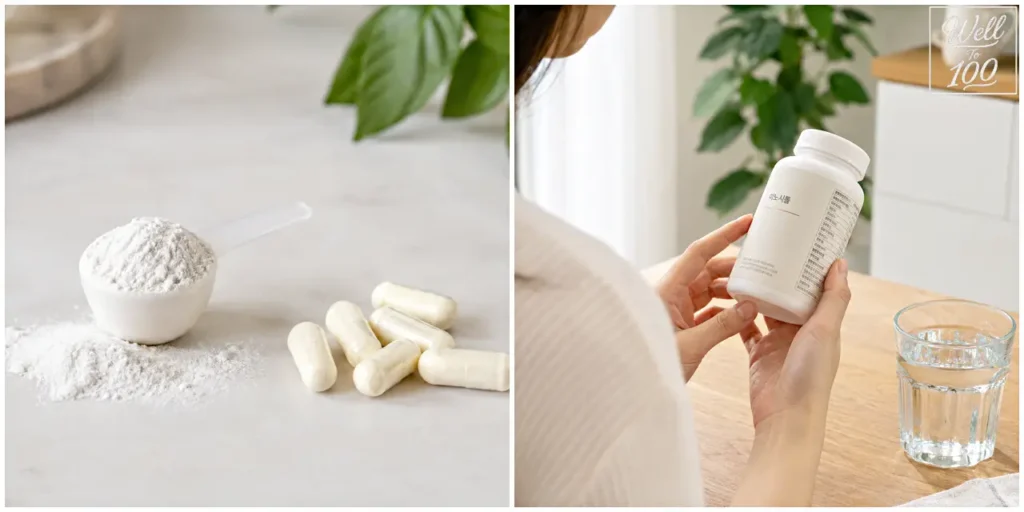
When comparing products, the actual amounts on the label are more useful than a large “40:1” claim on the front of the bottle.
| What to check | What it tells you |
|---|---|
| Myo-inositol amount | How much MI you receive per serving |
| D-chiro-inositol amount | Whether DCI is included and at what dose |
| Serving size | How many capsules, scoops, or packets provide the listed amount |
| 40:1 claim | A formulation used in research, not a proven universal best ratio |
| Other ingredients | Whether the product includes additional vitamins, herbs, or nutrients |
A 40:1 product can be one option, but there is not enough evidence to call it the best formula for everyone with PCOS/PMOS.
What About Blood Sugar, Ovulation, and Fertility?
Because insulin resistance is common in PCOS/PMOS, inositol is often marketed for blood sugar support. Some studies have reported changes in fasting insulin, glucose, or insulin-resistance measurements. Because insulin resistance and abnormal glucose results can overlap with PCOS/PMOS, this guide explains how diabetes can be present without weight loss and how A1C and fasting glucose are used to check blood sugar.
That is not the same as proving that inositol treats diabetes or can replace established treatment for high blood sugar. If you take medication for diabetes or another metabolic condition, discuss supplements with your healthcare professional rather than changing treatment on your own.
Fertility claims require even more caution.
The international guideline considers inositol experimental therapy for infertility associated with PCOS/PMOS. Evidence remains uncertain for ovulation, clinical pregnancy, and live birth.
So while someone preparing for pregnancy may decide to use inositol after discussing it with a clinician, it should not be presented as a proven fertility treatment.
Inositol for PCOS: Side Effects and Safety
Inositol supplements are generally associated with relatively mild side effects in available studies. Reported symptoms can include:
- Nausea
- Diarrhea or loose stools
- Abdominal discomfort
- Headache
- Dizziness
- Fatigue
However, the international PCOS/PMOS guideline emphasizes that evidence about supplement safety, especially when used as fertility therapy, remains incomplete.
Talk with your physician, pharmacist, or fertility specialist before using inositol if you are pregnant, breastfeeding, undergoing fertility treatment, taking prescription medication, or receiving treatment for diabetes or Inositol for PCOS/PMOS.
Do not use a research dose from a clinical trial as your personal dose without medical guidance.
How to Choose an Inositol Supplement in the U.S.
In the United States, dietary supplements are not approved by the FDA for safety and effectiveness before they reach the market. Manufacturers are responsible for their products, and the FDA generally oversees supplements after marketing.
Start with the Supplement Facts panel instead of front-label claims.
Check the serving size, the amount of myo-inositol per serving, the amount of D-chiro-inositol if included, and any additional ingredients. A product that advertises a ratio without clearly showing the actual amounts gives you less useful information for comparison.
Also remember that inositol does not have to be the same formulation from one brand to another. Powders, capsules, combination products, and serving sizes can vary substantially.
Should You Take Inositol for PCOS or PMOS?
Inositol for PCOS, can be considered as a complementary option for some people with PCOS/PMOS, particularly when potential metabolic benefits fit their goals. But it is not a proven treatment for every feature of the condition.
The strongest purchasing decision is not simply finding “40:1” on the label. Check how much myo-inositol and D-chiro-inositol the product actually provides, what else is included, and what you are hoping the supplement will accomplish.
If your main concerns are missing or irregular periods, infertility, abnormal glucose results, or ongoing PCOS/PMOS symptoms, bring the product name and Supplement Facts panel to your healthcare professional. That makes it easier to decide whether the supplement fits with your current evaluation and treatment.
Source:
- American Society for Reproductive Medicine — Recommendations from the 2023 International Evidence-based Guideline for the Assessment and Management of PMOS/PCOS
- Monash University — International Evidence-based Guideline for PMOS/PCOS and 2026 Terminology Update
- Fitz et al. — Inositol for Polycystic Ovary Syndrome: A Systematic Review and Meta-analysis
- U.S. Food and Drug Administration — FDA 101: Dietary Supplements
- Cleveland Clinic — Inositol: Benefits & Side Effects