7 Kidney-Friendly Foods to Add to Your Everyday Meals
What Does “Kidney-Friendly” Food Really Mean?
There is no single food that cleanses, repairs, or “detoxes” your kidneys. For most adults without kidney disease, the better approach is a varied diet built around minimally processed foods, vegetables, fruits, healthy fats, and appropriate portions of protein.
The term kidney-friendly food becomes more specific when you have chronic kidney disease (CKD). As kidney function changes, your health care team may ask you to adjust sodium, potassium, phosphorus, protein, or fluids based on your blood tests and treatment. A food that works well for one person with CKD may not fit another person’s meal plan.
Kidney stones are different. If you have had a kidney stone, diet recommendations depend partly on the type of stone. Water intake and the amounts of sodium, animal protein, calcium, and oxalate in your diet may all matter.
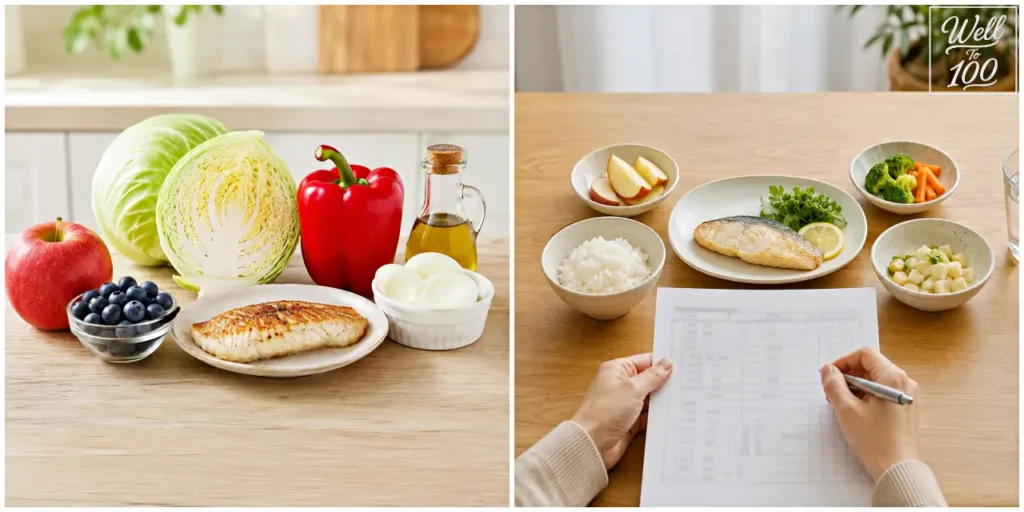
Here are seven foods that can be useful building blocks for everyday meals, along with the situations where you may need to adjust portions.
1. Apples
Apples are an easy fruit to keep on hand for snacks, salads, or breakfast. They are relatively low in sodium, phosphorus, and potassium, which can make them easier to fit into many kidney-friendly eating plans.
A whole apple also provides fiber without the added sugars that may come with some sweetened fruit products. Eat it fresh, slice it into oatmeal, or bake it with cinnamon instead of turning it into a heavily sweetened dessert.
If you have been told to restrict potassium, serving size still matters. A large amount of a lower-potassium food can add more potassium than expected. If you also need to watch potassium, fruit form and portion size matter; this fresh-versus-dried fig comparison shows how drying concentrates potassium, sugar, calories, and fiber.
2. Blueberries
Blueberries offer fiber and other plant nutrients while fitting into many lower-potassium fruit choices. The National Kidney Foundation includes blueberries among fruits that can be used in potassium-restricted eating plans.
Fresh or frozen unsweetened blueberries can be added to cereal, oatmeal, or a small fruit serving. Check packaged products carefully, because blueberry muffins, sweetened dried berries, and flavored desserts are very different nutritionally from plain berries.
3. Cabbage
Cabbage is useful because it can add volume and texture to meals without relying on salty sauces. Both green and red cabbage appear on the National Kidney Foundation’s list of lower-potassium vegetable choices.
Try it raw in a simple slaw, lightly sautéed, roasted, or added to soups. If sodium is a concern, season it with vinegar, lemon, garlic, pepper, or herbs rather than large amounts of soy sauce, bottled dressing, or salt.
4. Red Bell Peppers
Red bell peppers are another colorful vegetable that can work in a lower-potassium meal plan. Peppers are included among lower-potassium vegetables by the National Kidney Foundation.
They work well raw with a dip, chopped into salads, roasted, or cooked with eggs and other vegetables. As with cabbage, the preparation method matters. A fresh pepper and a pepper served in a salty bottled sauce are not nutritionally equivalent.
5. Fish
Fish provides high-quality protein, and fatty fish such as salmon also provide omega-3 fatty acids. Fish can be part of a heart-conscious eating pattern, which is especially relevant because cardiovascular health and kidney health are closely connected. NIDDK also includes fish among protein choices used in dialysis meal planning.
However, not every fish is automatically low in potassium or phosphorus, and portion size matters. Processed, smoked, cured, or heavily salted fish may also contain much more sodium than fresh fish.
For people with a history of certain kidney stones, animal protein may need to be limited rather than increased.
6. Egg Whites
Egg whites provide protein and are commonly used in kidney-friendly meal planning. The National Kidney Foundation specifically identifies egg whites as a lower-potassium protein option.
You can use cooked egg whites in an omelet with cabbage or peppers, add them to breakfast, or use them as one part of a balanced meal.
Protein needs are not the same for everyone with kidney disease. People who are not receiving dialysis may be advised to manage protein intake differently from people on hemodialysis, who generally need adequate high-quality protein because dialysis removes some protein from the body.
7. Olive Oil
Olive oil does not directly improve kidney function, but it can be a useful replacement for fats that are higher in saturated fat.
NIDDK recommends using a small amount of olive oil instead of butter when preparing heart-healthy meals for adults with CKD.
Use it lightly on roasted vegetables, in a homemade salad dressing, or when cooking fish. Because all oils are calorie-dense, adding more is not automatically better.
CKD and Kidney Stones Need Different Food Decisions
These two conditions are often discussed together, but their nutrition priorities are not identical.
| Situation | What may need attention |
|---|---|
| Chronic kidney disease | Sodium, potassium, phosphorus, protein, and sometimes fluid intake may need adjustment according to kidney function, blood tests, medications, and treatment. |
| Hemodialysis | Protein needs may be higher, while potassium, phosphorus, sodium, and fluids may still need careful management. |
| Kidney stone history | Water intake and sodium, animal protein, calcium, or oxalate may need adjustment depending on the type of stone. |
NIDDK emphasizes individualized nutrition planning for CKD because nutritional needs change as kidney disease progresses. For kidney stones, identifying the stone type can help determine which dietary changes are most relevant.
What to Check on Packaged Foods
Even a generally kidney-friendly ingredient can become less suitable when it is heavily processed.
If you are limiting sodium, check the Nutrition Facts label and compare similar products. Packaged foods, prepared meals, processed meats, sauces, and restaurant foods can contribute substantial sodium.
People who need to control phosphorus should also review ingredient lists for phosphorus additives. NIDDK recommends looking for ingredients containing “phos,” such as phosphoric acid or phosphate additives.
If your blood potassium is high, check for potassium chloride as well. It is sometimes used in salt substitutes and lower-sodium packaged foods, so a product marketed as having less sodium is not automatically a better choice for someone who must restrict potassium. Kidney function also matters when using mineral supplements because impaired kidneys may have more difficulty removing excess minerals; this magnesium guide explains supplement amounts, medication interactions, and why kidney function should be checked before adding magnesium.
Build a Kidney-Friendly Plate Around Your Own Needs
Apples, blueberries, cabbage, red bell peppers, fish, egg whites, and olive oil can all be practical foods to keep in rotation. They do not need to be eaten every day, and eating all seven together does not provide extra kidney protection.
If your kidneys are functioning normally, focus on variety, minimally processed foods, reasonable portions, and avoiding excessive sodium rather than searching for a special “kidney detox” food.
If you have CKD, kidney failure, abnormal potassium or phosphorus levels, or a history of kidney stones, your best choices may be more specific. Use your most recent lab results, stone type when known, medications, and treatment status to plan meals with your health care professional or a renal dietitian.
Source:
- National Institute of Diabetes and Digestive and Kidney Diseases — Healthy Eating for Adults with Chronic Kidney Disease
- National Institute of Diabetes and Digestive and Kidney Diseases — Eating, Diet, & Nutrition for Kidney Stones
- National Institute of Diabetes and Digestive and Kidney Diseases — Eating & Nutrition for Hemodialysis
- National Kidney Foundation — Apples
- National Kidney Foundation — 10 Superfoods for People with Kidney Disease