Chestnut Nutrition: Boiled vs. Roasted vs. Steamed
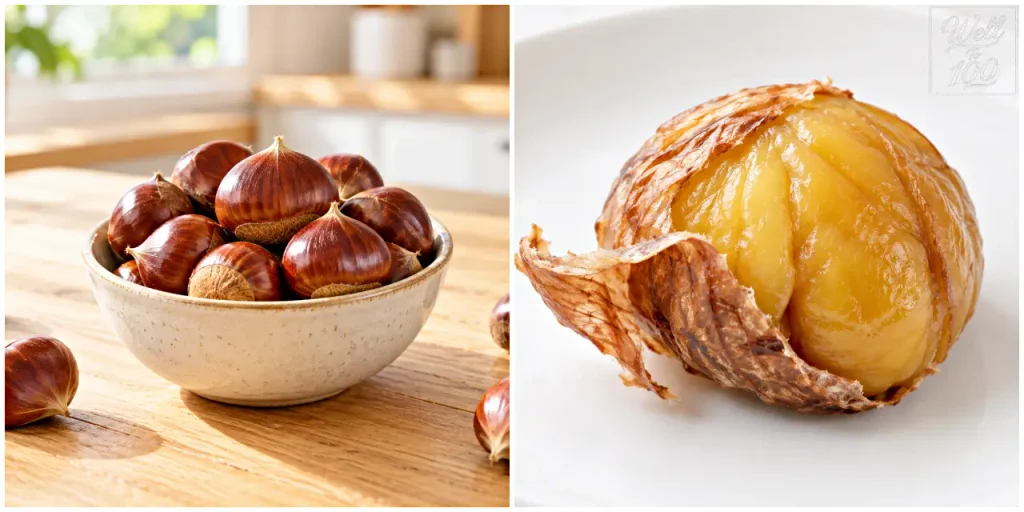
Chestnut nutrition changes depending on whether the nuts are boiled, steamed, or roasted. Cooking affects moisture content and the amount of certain nutrients retained, especially vitamin C. Roasted chestnuts can also contain more calories and carbohydrates per ounce because they generally have less water.
That doesn’t automatically make one cooking method healthier than another. Understanding how cooking affects nutrient measurements, along with the amount you actually eat, helps you choose the right preparation for your diet.
What Makes Chestnut Nutrition Different From Other Nuts?
Although chestnuts are classified as nuts, their nutritional profile is quite different from that of almonds, walnuts, or pecans. Most tree nuts are relatively high in fat, while chestnuts contain very little fat and get most of their calories from carbohydrates, particularly starch.
For example, University Hospitals’ nutrition data for European roasted chestnuts lists approximately 15 grams of carbohydrates and 0.6 grams of fat per 1-ounce serving. This makes chestnuts nutritionally different from many other nuts commonly eaten as snacks.
Chestnuts also provide several nutrients that contribute to a balanced diet.
- Dietary fiber: Supports normal bowel function and helps maintain digestive health.
- Vitamin C: Contributes to normal immune function, collagen production, and antioxidant activity.
- Potassium: Supports nerve signaling, muscle contraction, and normal cellular function.
- Other micronutrients: Chestnuts contain minerals such as magnesium and phosphorus, along with small amounts of several B vitamins.
According to University Hospitals’ food composition data, 1 ounce of roasted European chestnuts provides approximately 1.5 grams of fiber, 7.4 mg of vitamin C, and 168 mg of potassium. These nutrients make chestnuts a useful addition to a varied diet, although their starch content means carbohydrate intake still deserves attention.
For people managing blood glucose or following a carbohydrate-controlled eating plan, chestnuts should be counted as a source of carbohydrates. Their low fat content does not make them a low-carbohydrate food.
How Does Cooking Change Chestnut Nutrition?
Boiling, steaming, and roasting expose chestnuts to different combinations of water and heat. These differences affect texture, moisture content, and the retention of certain vitamins and plant compounds.
| Cooking method | Typical texture | Main nutritional consideration |
|---|---|---|
| Boiling | Soft, moist, and tender | Some water-soluble nutrients may move into the cooking water. |
| Steaming | Tender with a slightly firmer texture | Avoids direct immersion in water and preserved vitamin C relatively well in a 2026 study. |
| Roasting | Firm, aromatic, and slightly drier | Moisture loss can increase calorie and carbohydrate concentration per ounce. |
The table describes general cooking characteristics rather than a guaranteed nutritional ranking. The results can vary with chestnut variety, temperature, cooking time, and the amount of water retained or lost.
Boiled Chestnuts
Boiling involves cooking chestnuts in water until the flesh becomes tender. Because the nuts are immersed in water, some water-soluble nutrients can move into the cooking liquid. The process can therefore change the concentration of certain vitamins and plant compounds in the edible portion.
Boiled chestnuts also retain considerable moisture, which affects their weight and nutritional values per ounce. Their soft texture makes them suitable for eating on their own or incorporating into soups, purees, and other dishes.
Steamed Chestnuts
Steaming uses hot vapor to cook chestnuts without directly submerging them in water. This reduces contact with cooking water, although heat can still affect nutrients that are sensitive to high temperatures.
A 2026 study published in Discover Food found that steaming preserved vitamin C particularly well in European sweet chestnuts grown in Slovakia. However, the results apply to the specific varieties and cooking conditions tested, so they should not be interpreted as proof that every steaming method is nutritionally superior.
Roasted Chestnuts
Roasting exposes chestnuts to hot, relatively dry conditions, producing their characteristic aroma and firmer texture. The process also reduces moisture, which changes how many calories and carbohydrates are present in a measured weight of the finished food.
As water evaporates, the remaining nutrients become more concentrated by weight. Consequently, 1 ounce of roasted chestnuts can contain more carbohydrates and calories than 1 ounce of boiled chestnuts, even though roasting does not create additional carbohydrates.
Boiled vs. Roasted Chestnuts: Calories and Carbs Compared
One practical way to compare chestnut nutrition is to look at equal weights of the edible, cooked portion. University Hospitals provides USDA-derived food composition data for European chestnuts prepared using different methods.
| Nutrient per 1 oz (28 g) | Boiled or steamed | Roasted |
|---|---|---|
| Calories | 37 kcal | 69 kcal |
| Total carbohydrates | 7.9 g | 15.0 g |
| Total fat | 0.4 g | 0.6 g |
| Potassium | 203 mg | 168 mg |
| Vitamin C | 7.6 mg | 7.4 mg |
Values are rounded from published food composition records for European chestnuts. They are reference values for different cooked foods, not measurements from a controlled experiment using the same batch of nuts.
The largest difference is the amount of energy and carbohydrate per ounce. In these records, roasted chestnuts contain approximately 69 calories per ounce, compared with 37 calories for boiled or steamed chestnuts.
However, this does not mean roasting nearly doubles the calories in an individual chestnut. The cooking methods produce foods with different moisture levels, so equal finished weights do not necessarily contain equal amounts of the original chestnut material.
There is also an important limitation when comparing boiled and steamed chestnuts. The USDA-derived reference groups these preparations into one nutritional category, meaning the table cannot identify specific differences between them.
For a controlled comparison of cooking methods, researchers need to examine comparable chestnut samples while accounting for changes in moisture content. This distinction is essential when interpreting published nutrition data.
Does Steaming Preserve More Vitamin C Than Roasting?
Vitamin C is one of the most interesting nutrients to examine when comparing cooked chestnuts. It is water-soluble and sensitive to processing conditions, making cooking methods relevant to how much remains in the food.
A study published in Discover Food on May 5, 2026, investigated how different heating methods affected European sweet chestnuts harvested in Slovakia. Researchers examined boiling, steaming, roasting, and microwave cooking, measuring vitamin C along with minerals, polyphenols, and laboratory antioxidant activity.
The cooking conditions included boiling and steaming for 30 minutes at approximately 212°F (100°C), and roasting for 20 minutes at approximately 356°F (180°C).
The results showed the following vitamin C concentrations:
| Preparation | Vitamin C (g/kg dry weight) |
|---|---|
| Raw | 1.341 |
| Steamed | 1.199 |
| Boiled | 0.979 |
| Roasted | 0.779 |
Steamed chestnuts retained vitamin C particularly well, with no statistically significant difference from the raw samples. Roasting produced the lowest measured concentration, although the difference between roasted and boiled samples was not statistically significant.
The researchers expressed vitamin C values on a dry-weight basis, meaning the measurements accounted for the water content of the chestnuts. This matters because a nutrient can appear more concentrated in a drier food even when its actual amount has decreased during cooking.
The study also found no statistically significant differences in measured mineral concentrations among the cooking treatments. Although steaming performed well for vitamin C retention, the results do not establish that steamed chestnuts produce better health outcomes in people.
For everyday food preparation, steaming is a reasonable choice when vitamin C preservation is a priority. Still, chestnut variety, storage conditions, cooking temperature, and cooking duration can influence the final result.
How Many Chestnuts Should You Eat in One Serving?
There is no single scientifically established number of chestnuts that everyone should eat each day. Chestnuts vary in size, and the carbohydrate content of a serving depends on both the weight and cooking method.
Counting individual chestnuts can therefore be misleading. Measuring the edible portion after removing the hard outer shell and papery inner skin provides a more consistent way to estimate intake.
How to Calculate the Carbohydrates in Your Portion
Suppose you eat 2 ounces of plain roasted European chestnuts. Using the reference value of approximately 15 grams of total carbohydrate per ounce, that portion would contain about 30 grams of total carbohydrate.
2 oz × 15 g of carbohydrate per oz = approximately 30 g of total carbohydrate.
This is a calculation example, not a recommendation that everyone should eat 2 ounces. A smaller portion would provide fewer carbohydrates, while a larger portion would provide more.
If you buy packaged chestnuts, the Nutrition Facts label is usually the most useful starting point. Check the serving size and total carbohydrate content, then adjust the numbers according to how much you actually eat.
The U.S. Food and Drug Administration (FDA) explains that serving sizes on food labels reflect amounts people typically consume rather than recommended daily portions. If a package contains multiple servings and you eat the entire package, the total nutrients must be calculated for all servings consumed.
This approach also helps when comparing different chestnut products. Plain roasted chestnuts, boiled chestnuts, and sweetened chestnut preparations may have noticeably different carbohydrate values.
Are Chestnuts Good for People Managing Blood Sugar?
Chestnuts can fit into a carbohydrate-controlled eating plan, but their starch content needs to be included in the daily carbohydrate total. Their low fat content does not mean they have little effect on blood glucose.
The American Diabetes Association recommends using total carbohydrate information and serving sizes when planning meals for diabetes management. These details are especially relevant to chestnuts because the amount eaten can substantially change the carbohydrate contribution of a snack.
The nutritional comparison also shows why cooking method matters when measuring portions. A given weight of roasted chestnuts may contain more carbohydrate than the same weight of boiled chestnuts because of moisture differences.
However, this does not prove that roasted chestnuts necessarily produce a greater blood glucose response when equivalent amounts of available carbohydrate are consumed. Blood glucose responses depend on several factors, including the amount eaten, preparation method, other foods in the meal, and individual metabolic differences.
For practical meal planning, count the carbohydrates in your chestnut portion using a suitable nutrition reference or product label. People taking insulin or other glucose-lowering medications should follow the carbohydrate plan recommended by their diabetes care team.
Similar questions arise with other starchy foods. For another example, read about why corn’s sweetness does not tell you everything about its effect on blood sugar.
Who Should Pay Attention to Potassium or Digestive Symptoms?
Chestnuts contain potassium and dietary fiber, both of which contribute to normal body functions. However, people with certain medical conditions may need to adjust the amount they consume.
People With Chronic Kidney Disease
Potassium supports normal nerve signaling, muscle contraction, and cellular function. However, some people with chronic kidney disease have difficulty removing excess potassium, and certain medications can also affect potassium regulation.
The National Institute of Diabetes and Digestive and Kidney Diseases (NIDDK) recommends adjusting potassium intake according to individual kidney function, blood test results, and medical guidance. Not everyone with kidney disease needs the same dietary restrictions.
Chestnuts should therefore be considered within the person’s overall potassium allowance. The nutrition comparison also demonstrates why it is inappropriate to assume that one preparation always produces a low-potassium food.
People who have been instructed to limit potassium should discuss suitable portions with their healthcare professional or renal dietitian. For a broader discussion of food selection, see how to choose kidney-friendly foods based on their nutritional composition.
People With Irritable Bowel Syndrome
Chestnuts provide dietary fiber, but digestive tolerance varies from person to person. Some people with irritable bowel syndrome (IBS) experience gas, bloating, or abdominal discomfort when they increase fiber intake too quickly.
NIDDK recommends increasing dietary fiber gradually to help reduce these symptoms. People who are not accustomed to eating chestnuts may find it useful to begin with a small portion and observe their digestive response.
Those following a medically recommended low-FODMAP diet or another specialized eating plan should also consider their individual dietary instructions. The presence of fiber alone does not establish that chestnuts will improve IBS symptoms.
What About Packaged and Ready-to-Eat Chestnuts?
In the United States, chestnuts are available in several forms, including fresh chestnuts, roasted chestnuts, vacuum-packed cooked chestnuts, and sweetened chestnut products. These foods should not automatically be treated as nutritionally identical.
Plain cooked chestnuts and sweetened chestnut preparations may contain different amounts of total carbohydrate and added sugar. When comparing products, check both the ingredient list and Nutrition Facts label.
Pay particular attention to serving size, total carbohydrates, and added sugars. A package described as roasted or ready to eat tells you how the chestnuts were prepared, but it does not establish their exact nutritional composition.
For accurate chestnut nutrition estimates, use the label for the product you consume whenever one is available. Generic food composition values remain useful when preparing plain chestnuts at home, provided you select the closest available food description.
Does Chestnut Inner Skin Have Health Benefits?
The thin brown skin beneath the hard outer shell contains several plant compounds, including polyphenols. These substances have attracted research interest because some demonstrate antioxidant activity in laboratory tests.
A 2021 study published in Molecules investigated the polyphenolic composition of chestnut seeds and shells after different cooking treatments. The researchers found that the inner and outer shells generally contained higher levels of certain phenolic compounds than the edible seeds.
The study also measured antioxidant activity using laboratory methods. The inner shells showed particularly high polyphenol concentrations and antioxidant activity compared with the edible kernels.
However, these results do not prove that drinking chestnut-skin tea or consuming chestnut-skin powder prevents aging, treats diarrhea, or provides specific health benefits in humans. Laboratory antioxidant activity cannot automatically be translated into clinical effectiveness.
The study did not establish effective human consumption amounts or long-term safety for concentrated chestnut-skin preparations. For everyday eating, the nutritional composition of the edible chestnut kernel is better characterized than the health effects of consuming the inner skin as a separate product.
Which Chestnut Cooking Method Is the Best Choice?
The most suitable method depends on your nutritional priorities and personal preferences. Boiled chestnuts offer a soft texture and retain more moisture, making them appealing when you want a tender snack.
Steaming is a reasonable option when vitamin C retention is a priority, based on the findings of the 2026 European chestnut study. However, those findings should not be applied indiscriminately to every chestnut variety or cooking condition.
Roasted chestnuts remain an enjoyable option for people who prefer a toasted aroma and firmer texture. Because they generally contain less moisture, a measured serving may provide more carbohydrates and calories than the same weight of boiled chestnuts.
No single cooking method makes chestnuts the healthiest choice for every person. When evaluating chestnut nutrition, consider the cooking method, edible portion weight, and any dietary restrictions that apply to you.
For everyday eating, choose a preparation you enjoy and account for its carbohydrate content when planning meals or snacks. People managing blood glucose or restricting potassium should select portions that fit their individual dietary plans.
Source
- University Hospitals — Nutrition Facts: European Chestnuts, Boiled and Steamed, 1 oz
- University Hospitals — Nutrition Facts: European Chestnuts, Roasted, 1 oz
- Fedorková et al., Discover Food (2026) — Effect of Thermal Processing on the Nutritional Quality and Bioactive Potential of Sweet Chestnuts
- National Institutes of Health, Office of Dietary Supplements — Vitamin C: Health Professional Fact Sheet
- National Institutes of Health, Office of Dietary Supplements — Potassium: Health Professional Fact Sheet
- American Diabetes Association — Carb Counting and Diabetes
- U.S. Food and Drug Administration — Serving Size on the Nutrition Facts Label
- NIDDK — Healthy Eating for Adults With Chronic Kidney Disease
- NIDDK — Eating, Diet, and Nutrition for Irritable Bowel Syndrome
- Molecules (2021) — Effect of Roasting, Boiling, and Frying Processing on 29 Polyphenolics and Antioxidant Activity in Seeds and Shells of Sweet Chestnut