HSV-2 testing without sores: When blood tests help
HSV-2 testing is possible even when you have no visible blisters or sores. If a fresh genital sore is present, a swab test is usually the best way to confirm the virus. Without a sore, a type-specific blood antibody test may be useful in certain situations, but it is not recommended as routine screening for everyone.
The choice matters because herpes blood tests can produce false-positive results, especially when the likelihood of infection is low. Testing too soon after exposure can also miss a recent infection. Understanding when each test works can help you avoid confusing results and unnecessary repeat testing.
What are the symptoms of HSV-2 in men and women?
Herpes simplex virus type 2 (HSV-2) is a common cause of genital herpes, a sexually transmitted infection (STI). It can cause painful blisters or open sores around the genitals or anus. However, many people have no noticeable symptoms, while others mistake mild symptoms for razor bumps, pimples, or skin irritation.
When symptoms do appear, they may include:
- Tingling, itching, or burning around the genitals before sores develop
- Small fluid-filled blisters that break open into painful ulcers
- Pain or burning during urination
- Tender or swollen lymph nodes in the groin
- Fever, body aches, or swollen glands during an initial outbreak
In men, sores may develop on the penis, scrotum, buttocks, or around the anus. In women, they may appear on the vulva, near the vaginal opening, or in areas that are difficult to see, including inside the vagina or on the cervix. People of any sex can experience genital discomfort without noticing an obvious blister.
The first recognized outbreak can be more uncomfortable than later episodes. Recurrent outbreaks are often shorter and less severe, and their frequency may decrease over time. Some people never recognize an outbreak at all.
Can genital herpes be caused by HSV-1?
Yes. Both HSV-1 and HSV-2 can cause genital herpes.
HSV-1 is commonly associated with cold sores around the mouth, but it can also spread to the genitals through oral sex. HSV-2 is more strongly associated with genital infection and generally causes more frequent genital recurrences than HSV-1.
The location or appearance of a blister cannot reliably identify which virus is responsible. Laboratory testing is needed to distinguish the types.
Which HSV-2 test should you get if you have sores?
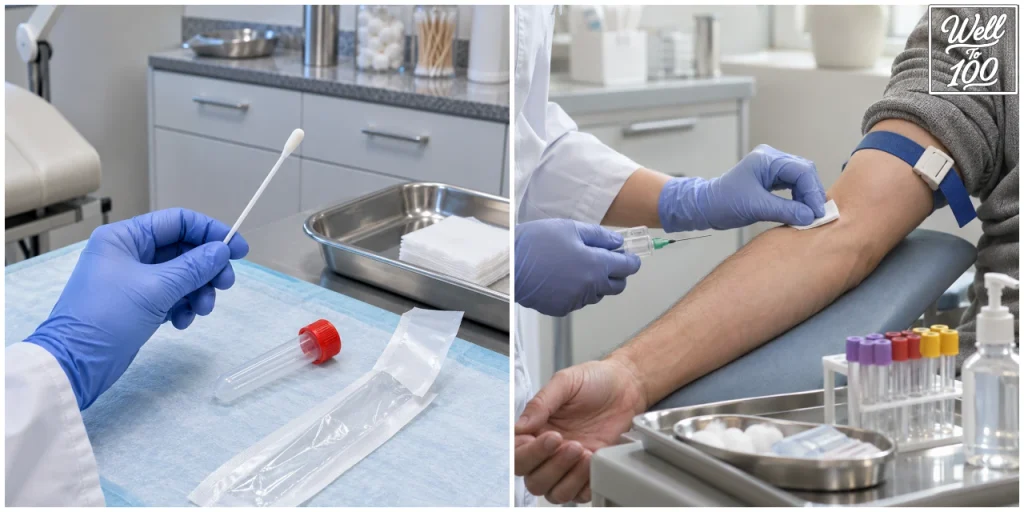
If you have a new genital blister or ulcer, contact a healthcare provider before it heals. The preferred test is usually a swab collected directly from the affected area and tested using a nucleic acid amplification test (NAAT), often called PCR.
This test looks for genetic material from the herpes virus. It can detect HSV-1 or HSV-2 and identify which type is present.
Fresh blisters and open sores provide the best opportunity to collect a useful specimen. Once a lesion begins to crust or heal, the amount of detectable virus may decrease, making a negative result less reliable.
Can a negative PCR test rule out herpes?
Not always. A negative result means the virus was not detected in the collected sample. It does not necessarily prove that you have never been infected.
HSV is released intermittently, and an older lesion may contain too little virus for detection. A healthcare provider may consider additional testing if your symptoms strongly suggest genital herpes despite a negative swab result.
A random genital swab when no sore is present is not a reliable way to rule out HSV-2. The CDC advises against using these blind swabs to diagnose genital herpes because a negative result cannot exclude infection.
When is HSV-2 testing useful without sores?
A type-specific HSV-2 IgG blood test may be helpful when there is a particular reason to suspect infection, even if no active sore is available for testing. The test looks for antibodies that your immune system produces after exposure to HSV-2.
The CDC identifies several situations in which type-specific antibody testing can help:
- You have had recurring or unusual genital symptoms, but a swab test was negative.
- A clinician previously suspected genital herpes without laboratory confirmation.
- Your current or former sexual partner has been diagnosed with genital herpes.
An antibody test does not require an active outbreak. However, detecting antibodies is different from detecting the virus in a sore.
A positive HSV-2 antibody result, when properly confirmed, generally indicates an existing infection. It does not show whether the virus is currently active or whether you are having an outbreak.
Should you get a herpes blood test with every STI screening?
Usually not.
The CDC and the U.S. Preventive Services Task Force (USPSTF) advise against routine genital herpes blood screening for people without symptoms or a known history suggesting infection. This includes asymptomatic pregnant patients.
One reason is the possibility of false-positive results. In people with a low likelihood of infection, an initial positive blood test may not accurately represent their infection status.
HSV testing also may not be included in a standard STI screening panel. If you request testing for all STIs, ask your provider which infections are actually included. HSV-2 testing should be selected based on your symptoms, exposure history, and the limitations of available tests.
HSV-2 PCR vs. blood test: What is the difference?
Both tests can help diagnose herpes, but they answer different questions.
| Feature | HSV PCR / NAAT swab | Type-specific HSV-2 IgG blood test |
|---|---|---|
| Sample | Swab from a blister or sore | Blood |
| Best used when | An active lesion is present | No lesion is available and testing is clinically appropriate |
| Detects | Viral genetic material | Antibodies to HSV-2 |
| Identifies HSV type | Yes, when type-specific testing is performed | Yes, for HSV-2 antibodies |
| Main limitation | Older or healing lesions may test negative | Early infections may test negative; false positives can occur |
| Can identify infection date? | No | No |
A swab from an active lesion provides direct evidence that HSV is present at that location. A blood test looks for an immune response to a past or existing infection.
There is also an important distinction between antibody tests. HSV IgM testing is not recommended because it does not reliably distinguish HSV-1 from HSV-2 and can be positive during recurrent infections. When antibody testing is appropriate, clinicians generally use a type-specific IgG assay.
How soon after exposure can HSV-2 blood tests detect infection?
Your body needs time to develop detectable antibodies after infection. Testing immediately after sexual contact may therefore produce a negative result even if transmission occurred.
The CDC’s clinical treatment guidelines advise repeat type-specific antibody testing 12 weeks after the presumed time of infection when recent HSV-2 acquisition is suspected.
The CDC’s patient information also notes that current tests may take up to 16 weeks or longer after exposure to detect infection. These statements reflect the limitations of antibody development and testing rather than a guarantee that everyone will test positive by a particular date.
For example, if you receive a negative antibody result only two weeks after a possible exposure, that result may be too early to rule out a new infection. Your provider can help determine whether repeat testing is appropriate and when to schedule it.
Why can an HSV-2 IgG test be falsely positive?
Some HSV-2 antibody assays have difficulty distinguishing a true positive from a false positive when the reported value is close to the test’s cutoff.
The CDC specifically identifies the HerpeSelect HSV-2 enzyme immunoassay (EIA) as having a substantial false-positive problem at low index values, particularly from approximately 1.1 to 3.0. These numbers apply to that assay and should not be used to interpret every laboratory’s HSV-2 test.
The FDA has also warned healthcare professionals that false-reactive HSV-2 blood test results can occur, especially when testing is performed too early, the person has a low likelihood of infection, or the result is near the cutoff.
If your initial result is low-positive, ask which assay was used and whether a second, different method is available. The CDC identifies Biokit and Western blot as confirmatory options. Simply repeating the same antibody method does not necessarily resolve a questionable result.
An HSV-2 blood test should be interpreted in the context of your symptoms, sexual history, possible exposure, and the specific laboratory method.
Can HSV-2 testing tell you when you were infected?
No. Neither a PCR swab nor a blood antibody test can establish the exact date of HSV-2 infection.
A person can carry HSV-2 without recognizing symptoms for months or years. The first noticeable genital outbreak may therefore occur long after the virus was acquired.
A positive antibody test does not identify the person who transmitted the infection. Even when symptoms appear after a recent sexual encounter, the timing alone cannot establish the source.
If you have had symptoms or previous test results, tell your healthcare provider when they occurred. This information can help determine which test is appropriate, although it cannot reliably identify the original infection date.
What else should be tested when you have genital sores?
Genital ulcers are not always caused by herpes. Syphilis can also produce genital or anal sores, and several non-STI skin conditions may cause similar symptoms.
Herpes sores are often painful and may begin as small blisters. Early syphilis can produce a painless ulcer, but neither infection can be diagnosed accurately from appearance alone.
The CDC advises that people with genital, anal, or perianal ulcers receive a medical evaluation that includes appropriate herpes and syphilis testing. HIV testing is also recommended for people presenting with these ulcers who are not already known to have HIV.
If you are unsure how the conditions differ, our guide to syphilis symptoms in men and women explains how genital sores, rashes, and testing fit into the diagnosis.
A herpes PCR test does not detect every sexually transmitted infection. Ask your clinician whether additional STI testing is appropriate rather than assuming one negative result rules out other causes.
Can you spread HSV-2 without visible blisters?
Yes. HSV-2 can spread through sexual contact even when the infected person has no visible sores.
This is called asymptomatic viral shedding. The virus can be present on genital skin or mucous membranes without producing noticeable symptoms.
Condoms reduce the risk of transmission but cannot eliminate it because HSV can be released from skin that a condom does not cover. Avoid vaginal, anal, and oral sex when sores or warning symptoms such as tingling and burning are present.
If you have been diagnosed with HSV-2, discussing the infection with sexual partners can help both of you make informed decisions about testing and prevention.
Does a positive HSV-2 test mean you need medication?
Treatment depends on whether you have symptoms, how often outbreaks occur, and your individual medical circumstances.
Prescription antivirals such as acyclovir, valacyclovir, and famciclovir can shorten or help control genital herpes outbreaks. They do not eliminate the virus from the body.
Treatment generally falls into three approaches:
- First-episode treatment: Antiviral medication is prescribed for an initial clinical episode of genital herpes.
- Episodic treatment: Medication is started when a recurrent outbreak begins or during its earliest warning symptoms.
- Suppressive treatment: Medication is taken daily to reduce symptomatic recurrences.
Daily suppressive valacyclovir has also been shown to reduce HSV-2 transmission in heterosexual couples in which one partner has a history of symptomatic genital HSV-2 and the other is not infected.
However, evidence is insufficient to establish the same transmission-prevention benefit for people whose HSV-2 infection was discovered only through antibody testing and who have never had symptoms. Suppressive treatment is not routinely indicated solely to prevent recurrences in those without a history of symptomatic outbreaks.
A clinician can discuss whether treatment is needed and which approach fits your health history and circumstances.
What should you do if you suspect HSV-2?
If you currently have a genital blister or ulcer, arrange an examination while the lesion is still present. A healthcare provider can collect a swab and assess whether testing for syphilis, HIV, or other conditions is also needed.
If you have no visible sores but previously experienced unusual genital symptoms, or your partner has genital herpes, discuss whether type-specific HSV-2 testing would be useful. Include the approximate timing of any suspected exposure and any previous test results.
If an antibody result comes back positive, ask whether confirmatory testing is needed before accepting the diagnosis. A single low-positive result should not automatically be treated as definitive.
Pregnant patients should also tell their prenatal healthcare provider about any history of genital herpes, suspicious symptoms, or possible exposure, even if no sores are visible.
Ultimately, the most useful test depends on what you are trying to find out. A fresh lesion is best evaluated with a swab, while selected situations without lesions may justify a carefully interpreted blood test. Choosing the appropriate test and understanding its limits can help you make informed decisions about care and prevention.
Source
- Centers for Disease Control and Prevention (CDC): Screening for Genital Herpes
- Centers for Disease Control and Prevention (CDC): About Genital Herpes
- Centers for Disease Control and Prevention (CDC): Genital Herpes — STI Treatment Guidelines
- Centers for Disease Control and Prevention (CDC): Diseases Characterized by Genital, Anal, or Perianal Ulcers
- U.S. Preventive Services Task Force (USPSTF): Genital Herpes Infection: Serologic Screening
- U.S. Food and Drug Administration (FDA): HSV-2 Tests for Genital Herpes Can Produce False Reactive Results