HMM stock: Freight Rates and the 2027 Earnings Outlook
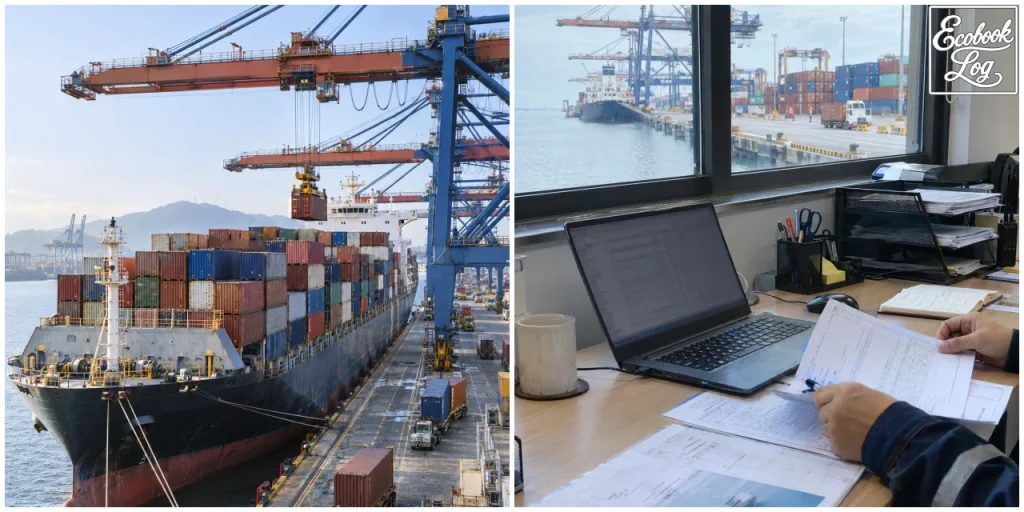
HMM stock has a stronger earnings foundation following the recovery in global container freight rates in 2026. South Korea’s major container shipping company reported a 370% year-over-year increase in third-quarter operating profit on November 12, 2026. A day earlier, German shipping company Hapag-Lloyd raised its annual earnings guidance for the third time this year.
Both developments suggest improved profitability in the container shipping industry. Yet declining spot freight rates in November raise questions about how long these earnings can last. For international investors, the outlook for 2027 depends on shipping capacity, cargo demand, operating costs, and the sustainability of current profit margins.
What Is HMM and How Does It Make Money?
HMM Co., Ltd. (KRX: 011200), formerly Hyundai Merchant Marine, is a South Korean shipping and logistics company. Its shares trade on the Korea Exchange in South Korean won (KRW). The company operates international container shipping services and a bulk shipping business.
Container shipping generates most of HMM’s operating profit. The business earns revenue by transporting manufactured goods, consumer products, industrial equipment, and other containerized cargo across international trade routes.
Its bulk shipping operations provide additional revenue from transporting commodities and other non-containerized cargo. Long-term shipping contracts in this segment can reduce exposure to short-term fluctuations in container freight rates.
The profitability of HMM stock is therefore closely connected to the global shipping cycle, although fleet management and cost efficiency also influence financial performance.
HMM Q3 2026 Earnings: Operating Profit Surges 370%
HMM reported a sharp recovery in its third-quarter consolidated financial results on November 12, 2026. Higher freight rates, increased container volumes, and improved cost efficiency contributed to the earnings growth.
| Financial metric | Q3 2026 |
|---|---|
| Consolidated revenue | KRW 4.1271 trillion |
| Operating profit | Approximately KRW 1.395 trillion |
| Operating margin | 33.8% |
| Net profit | KRW 1.5352 trillion |
| Container segment operating profit | KRW 1.2515 trillion |
| Average container freight rate | $1,953 per TEU |
TEU stands for twenty-foot equivalent unit, a standard measurement of container shipping capacity.
According to Mirae Asset Securities’ November 13 research report, HMM’s average container freight rate increased 48.2% from the previous quarter, while its transportation volume rose 10.4%. The combination increased shipping revenue and helped the company generate more profit from its operations.
The container segment accounted for approximately 90% of consolidated operating profit during the quarter. This concentration explains why changes in container freight rates remain particularly important to the HMM stock outlook.
The third-quarter operating margin of 33.8% also illustrates how quickly shipping profitability can improve when freight revenue rises while operating costs remain controlled.
Why Hapag-Lloyd’s Higher Earnings Guidance Matters
On November 11, 2026, Hapag-Lloyd increased its full-year group earnings forecast following stronger-than-expected business conditions during the fourth quarter.
The revised guidance represents the company’s third upward earnings adjustment in 2026, following earlier revisions in July and September.
| 2026 earnings guidance | Previous forecast | Revised forecast | Midpoint increase |
|---|---|---|---|
| Group EBITDA | $3.9–4.4 billion | $4.6–5.0 billion | 15.7% |
| Group EBIT | $1.25–1.75 billion | $2.0–2.4 billion | 46.7% |
EBITDA measures earnings before interest, taxes, depreciation, and amortization. EBIT measures earnings before interest and taxes, including the effect of depreciation and amortization.
The larger increase in projected EBIT indicates that Hapag-Lloyd expects considerably better operating earnings than it previously anticipated. Its third-quarter group EBIT reached approximately $1.085 billion, compared with $228 million during the same period in 2025.
For investors following HMM stock, Hapag-Lloyd’s results provide useful evidence about conditions across the international container shipping market. Both companies benefit when freight revenue increases sufficiently to cover transportation costs.
Their earnings cannot be expected to rise at identical rates because their shipping networks, customer contracts, vessel ownership, and operating expenses differ.
Why Shipping Profits Can Rise While the SCFI Falls
The Shanghai Containerized Freight Index (SCFI) measures spot freight rates for container shipments departing from Shanghai across major international shipping routes.
Despite improved shipping company earnings, the index declined during the first three weeks of November 2026.
| Date | SCFI |
|---|---|
| October 30, 2026 | 3,687.35 |
| November 6, 2026 | 3,633.45 |
| November 13, 2026 | 3,572.33 |
| November 20, 2026 | 3,503.78 |
The index declined approximately 5% between October 30 and November 20. This movement deserves attention from investors evaluating future shipping earnings.
Spot Rates and Contract Rates
Shipping companies transport cargo under both spot bookings and longer-term freight agreements. Spot rates reflect current market prices, while contracted rates follow previously negotiated terms.
As a result, changes in weekly freight indexes do not immediately appear in a carrier’s average realized freight rate. Previously booked shipments and existing contracts can support earnings even after market rates begin declining.
HMM stock may react to changing expectations for future freight revenue before those changes become visible in quarterly financial statements.
Investors also need to distinguish the SCFI composite index, which is expressed in index points, from a shipping company’s actual freight revenue per container, which is typically expressed in US dollars per TEU.
Higher Freight Rates Do Not Always Mean Stronger Global Trade
Container freight rates respond to both cargo demand and the availability of shipping capacity. A shortage of available vessel space can increase transportation prices even when global trade volumes grow slowly.
Hapag-Lloyd’s performance during the first nine months of 2026 illustrates this relationship.
| Liner shipping metric | First nine months of 2026 | Year-over-year change |
|---|---|---|
| Container transportation volume | Approximately 10.07 million TEU | +0.8% |
| Average freight rate | $1,541 per TEU | +8.4% |
Freight rates increased much faster than transportation volumes. Port congestion and geopolitical disruptions reduced the efficiency of shipping networks while increasing transportation expenses.
When ships spend more time traveling or waiting at ports, they complete fewer voyages within the same period. This reduces the amount of effective shipping capacity available to customers.
The relationship follows the economic principle of scarcity and limited supply. When available transportation capacity becomes insufficient to meet demand, shipping prices can increase without a comparable rise in cargo volumes.
For HMM stock, the distinction matters because freight rates supported by temporary supply disruptions could decline when shipping networks return to normal operating conditions.
HMM stock Valuation: Are Current Earnings Sustainable?
Shipping companies are cyclical businesses, meaning their earnings fluctuate as freight rates, transportation demand, and vessel supply change.
A shipping stock can appear inexpensive during a period of unusually strong earnings. Its valuation may become less attractive if profits subsequently decline.
According to Mirae Asset Securities’ November 13, 2026, report, HMM’s valuation metrics were as follows, based on the November 12 share price.
| Valuation metric | Value |
|---|---|
| Share price | KRW 20,700 |
| Estimated 2026 P/E ratio | 6.1 |
| Price-to-book ratio | Approximately 0.71 |
| Estimated 2026 operating profit | KRW 2.872 trillion |
The price-to-earnings ratio (P/E) compares a company’s share price with its earnings per share. The price-to-book ratio (P/B) compares its market valuation with its accounting equity value.
A P/E ratio of 6.1 indicates that investors were paying approximately 6.1 times the estimated annual earnings per share at the reference date. That valuation was based on an analyst’s earnings forecast, which could change as shipping conditions develop.
A P/B ratio below 1 also does not automatically establish that HMM stock is undervalued. Vessel values, future profitability, capital expenditures, and returns on shareholder equity all affect how investors value a shipping business.
Dividend and Shareholder Return Outlook
HMM revised its shareholder return policy in November 2026. According to Mirae Asset Securities, the company established a minimum shareholder return threshold based on a payout ratio of at least 30%.
The change improves the connection between annual earnings and potential shareholder distributions. However, actual cash dividends and other shareholder returns remain subject to company decisions and the applicable financial conditions.
Future fleet investments also deserve attention because vessel purchases require substantial capital that could otherwise be available for shareholder distributions.
Three Major Risks for Container Shipping in 2027
The HMM stock outlook for 2027 depends heavily on whether global shipping capacity expands faster than cargo demand.
1. Red Sea and Suez Canal Route Normalization
Ships avoiding the Red Sea and Suez Canal may travel around the Cape of Good Hope, increasing voyage distances and reducing the number of trips each vessel can complete.
A sustained return to shorter shipping routes would release effective capacity into the market. If cargo demand remains unchanged, the additional available space could put downward pressure on freight rates.
The financial impact would also depend on savings in fuel consumption and other voyage-related expenses.
2. New Container Ship Deliveries
New vessels increase the total carrying capacity of the global shipping fleet. If fleet expansion exceeds growth in container transportation demand, shipping companies may face increased competition for cargo.
Carriers could respond by canceling selected sailings, retiring older vessels, or adjusting service networks. The effectiveness of these measures will influence freight rates and operating margins.
3. Slower Global Trade and Higher Operating Costs
Container shipping demand depends on international merchandise trade. Weaker consumer spending, manufacturing activity, or import demand can reduce cargo volumes.
Fuel prices, charter expenses, port charges, and maintenance costs also influence profitability. Even when freight rates remain relatively elevated, increasing transportation costs can reduce the amount of revenue that becomes operating profit.
What Investors Should Monitor in HMM’s Next Earnings Report
The following indicators can help explain whether HMM’s third-quarter earnings recovery is continuing or beginning to weaken.
| Indicator | What it reveals |
|---|---|
| Average realized freight rate | Actual shipping revenue per container |
| Container transportation volume | Changes in cargo demand and utilization |
| Container operating margin | Profitability after operating expenses |
| SCFI and individual route rates | Changes in market freight prices |
| Bulk shipping earnings | Diversification of operating profit |
| Free cash flow | Cash available after capital expenditures |
| Shareholder return announcements | Actual dividend and capital return decisions |
International investors should also consider exchange-rate exposure. HMM shares trade in KRW, while many international shipping transactions are priced in US dollars. Currency movements can affect corporate financial results as well as investment returns measured in an investor’s home currency.
HMM stock Outlook Beyond the 2026 Earnings Recovery
HMM enters the final quarter of 2026 with substantially improved operating profitability. Its ability to maintain attractive margins in 2027 will depend on realized freight rates, effective fleet capacity, transportation costs, and demand across its major shipping routes.
Hapag-Lloyd’s upgraded earnings forecast supports the assessment that container shipping conditions improved during the second half of 2026. The subsequent decline in the SCFI, however, highlights the risk of assuming that peak quarterly earnings will continue indefinitely.
A more complete assessment of HMM stock will emerge when subsequent earnings reports show how declining spot rates affect actual container revenue, operating margins, cash generation, and shareholder returns.
Information reviewed as of November 25, 2026. This article is for informational purposes and does not constitute an investment recommendation.
Source:
- Hapag-Lloyd — Investor Presentation: Nine Months 2026
- Hapag-Lloyd — Revised Financial Year 2026 Earnings Outlook
- Mirae Asset Securities — HMM Equity Research, November 13, 2026 (Korean)
- Shanghai Shipping Exchange — Shanghai Containerized Freight Index (SCFI)
- Xinhua Finance — Shanghai Containerized Freight Index Update, November 20, 2026