YOURGREEN OcuFlow AREDS Review: 20 mg Lutein + Omega-3
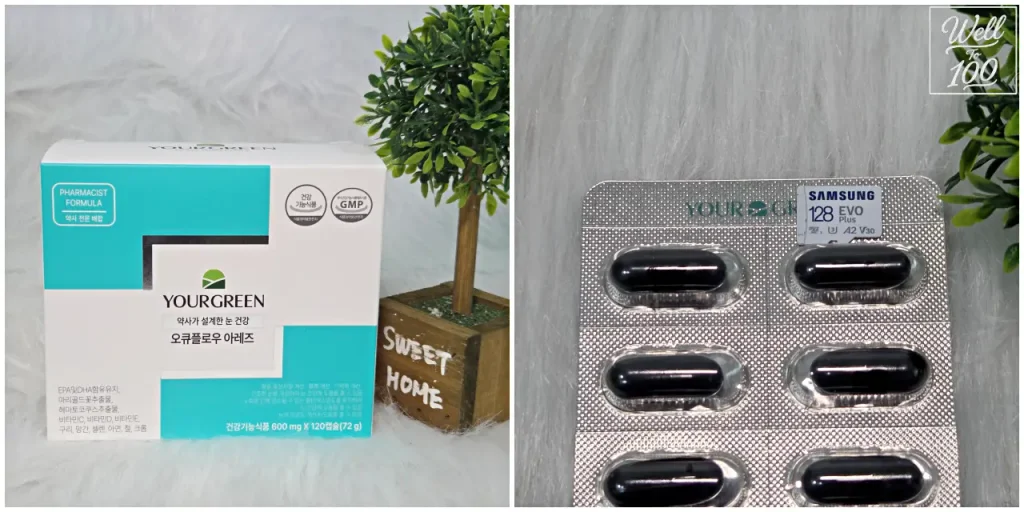
I had been thinking about adding an eye supplement because I spend more time on a computer now and have become more conscious of eye dryness and occasional blurry vision as I get older. OcuFlow AREDS caught my attention because it combines lutein with astaxanthin, omega-3 fatty acids, and vitamin C instead of focusing on lutein alone.
I originally planned to try OcuFlow AREDS myself, but my daughter is in an intensive exam-prep period and spends long hours studying and looking at screens. When she said she wanted an eye supplement, I gave the sponsored box to her. That means this review combines my evaluation of the formula and packaging with her short-term experience taking the capsules.
What Is in OcuFlow AREDS?
The labeled daily serving is four capsules: two capsules twice a day with water. One box contains 120 capsules, so the full labeled serving provides 30 days.
Based on the product information I received, the four-capsule daily serving provides 20 mg lutein, 6 mg astaxanthin, 1,000 mg combined EPA and DHA, and 300 mg vitamin C. The vitamin C source is listed as DSM Quali-C. The formula also uses lutein from marigold flower extract and astaxanthin from Haematococcus extract.
What I liked about OcuFlow AREDS is the combined formula. If I were buying lutein and omega-3 separately, I would have two products to remember and two labels to compare. A combined formula can be convenient, although it also means I need to check for duplicate ingredients if I am already taking fish oil, a multivitamin, or another eye supplement.
The manufacturer describes the product as an eye-health supplement designed with AREDS2 research in mind and identifies lutein, astaxanthin, and omega-3 as its major ingredients.
Lutein and zeaxanthin are carotenoids found in the retina, and they also occur naturally in foods. For a food-based example, I also covered how yellow corn provides carotenoids in my guide to corn, blood sugar, and carotenoids.
OcuFlow AREDS Is Not the Same as the Standard AREDS2 Formula
The name can be confusing. OcuFlow AREDS is described as a product designed around AREDS2 research, but that does not mean its ingredient profile is identical to the AREDS2 formula studied by the U.S. National Eye Institute.
The standard AREDS2 formula contains 500 mg vitamin C, 400 IU vitamin E, 80 mg zinc, 2 mg copper, 10 mg lutein, and 2 mg zeaxanthin. Omega-3 fatty acids and astaxanthin are not components of that standard formula.
Here is the most useful comparison based on the amounts provided for this product:
| Ingredient | OcuFlow AREDS daily serving | Standard AREDS2 formula |
|---|---|---|
| Lutein | 20 mg | 10 mg |
| Astaxanthin | 6 mg | Not part of the formula |
| EPA + DHA | 1,000 mg | Not part of the formula |
| Vitamin C | 300 mg | 500 mg |
The NEI standard formula also includes vitamin E, zinc, copper, and zeaxanthin. Because I do not have a complete U.S.-style Supplement Facts panel for OcuFlow AREDS, I would not assume an ingredient is absent simply because I have not included it in this comparison. The full Korean package label should be checked before comparing the two formulas ingredient by ingredient.
This distinction matters because AREDS2 supplements were studied for specific stages of age-related macular degeneration (AMD). They are not simply general supplements for anyone who spends a lot of time looking at a computer or phone. NEI recommends asking an eye-care professional whether an AREDS2 supplement is appropriate for you.
If someone already has diagnosed AMD and is specifically looking for an AREDS2 supplement, I would therefore compare the label with the NEI formula rather than choosing OcuFlow AREDS only because AREDS appears in the product name.
Capsule Size, Blister Packaging, and Daily Use
OcuFlow AREDS comes in individual blister packaging rather than a loose bottle. I liked this more than I expected. My daughter usually leaves for school without eating breakfast, so the blister format makes it easier for her to take a capsule with her without carrying the whole box.
The capsules are dark and oblong. I photographed them next to a microSD card because that gives a better sense of scale than a close-up product photo alone. They are fairly large, although my daughter said they were easier to swallow than they looked.
The four-capsule labeled serving is the main convenience issue for me. If someone already takes several supplements or medications every day, four additional capsules can feel like a lot. That is one reason I would look at serving size as carefully as ingredient amounts when comparing OcuFlow AREDS with another eye supplement.
I also prefer reading more than the large number printed on the front of a supplement package. Ingredient form and the rest of the formula can matter when products are compared. I use a similar approach in my guide to reading vitamin A and carotenoid supplement labels, which explains why the total number alone does not always tell you everything about a supplement.
My Daughter Used OcuFlow AREDS for About 10 Days
My daughter used OcuFlow AREDS for about 10 days. After several days, she told me that her eyes, which often felt dry and uncomfortable, seemed to feel smoother and more comfortable.
There is an important limitation to that experience. She was taking one capsule per day during this short period, not the labeled four-capsule daily serving. I am not recommending one capsule as an alternative dose, and her experience cannot be used to evaluate the product at its labeled serving.
We did not measure tear production, visual function, or any other objective eye-health outcome. Her comment is simply her personal observation. I would not describe it as proof that OcuFlow AREDS treats dry eye, improves vision, or will produce the same experience for someone else.
That distinction matters even more in a sponsored review. I can report what my daughter told me and explain what I liked about the product, but a positive experience over several days should not be turned into a medical claim.
AREDS2 research also should not be used as evidence that omega-3 automatically makes an eye supplement more effective for AMD. In the NEI trial, adding omega-3 fatty acids to the original AREDS formulation did not provide an additional overall reduction in progression to advanced AMD.
Who May Like This OcuFlow AREDS Formula?
For me, OcuFlow AREDS makes the most sense for someone who specifically prefers a multi-ingredient eye supplement rather than a lutein-only product. The combination of 20 mg lutein, 6 mg astaxanthin, 1,000 mg EPA+DHA, and vitamin C is the main reason I found the formula interesting.
It may also appeal to people who like individually sealed capsules and do not mind taking four capsules at the labeled daily serving. The blister packaging is convenient for carrying capsules outside the home, and the capsule size was manageable for my daughter even though it looked large.
On the other hand, I would check my current supplements before adding OcuFlow AREDS if I were already taking a separate omega-3 product, multivitamin, or another eye formula. I would write down the daily amounts from each product and look for ingredients that overlap.
The product information also lists mackerel and soy, so anyone with allergies to those ingredients should read the package carefully.
Medication use deserves attention as well. NIH’s Office of Dietary Supplements notes that high doses of omega-3 supplements can interact with warfarin and other anticoagulant medicines. If you take prescription medication, especially medication that affects blood clotting, I would show the full supplement label to a doctor or pharmacist before adding it.
Would I Use OcuFlow AREDS Myself?
Yes. After seeing the formula and my daughter’s experience with the sponsored product, I would consider purchasing OcuFlow AREDS for myself.
The part I like most is the combination. I would rather not manage separate lutein and omega-3 products if one product already provides both in amounts that fit the rest of my supplement routine.
For my parents, I would be more cautious. I would first check their current medications, other supplements, and whether an eye doctor has diagnosed AMD. If the goal were specifically to use an AREDS2 supplement for AMD, I would compare the product against the NEI formula and ask their eye-care professional which formulation is appropriate.
My overall OcuFlow AREDS experience is positive when I look at the combined ingredients, blister packaging, and everyday convenience. The drawbacks are the relatively large capsules and the four-capsule labeled daily serving. The sponsored box also gave my family only a short period of use, so I would not use that experience to make claims about long-term results.
For me, the best reason to consider OcuFlow AREDS is not simply that the product name references AREDS. I would decide based on the actual ingredient amounts, daily capsule count, allergen information, other supplements I already use, and whether I am looking for a general multi-ingredient eye supplement or the specific AREDS2 formula recommended for certain people with AMD.
Source
- NIH Office of Dietary Supplements — Omega-3 Fatty Acids Fact Sheet
- YOURGREEN — OcuFlow AREDS official product page
- National Eye Institute — AREDS/AREDS2 Clinical Trials
- National Eye Institute — AREDS/AREDS2 Frequently Asked Questions
- National Eye Institute — AREDS2 Supplements for Age-Related Macular Degeneration