Winter Pet Beds: Do Dogs and Cats Need Extra Heat?
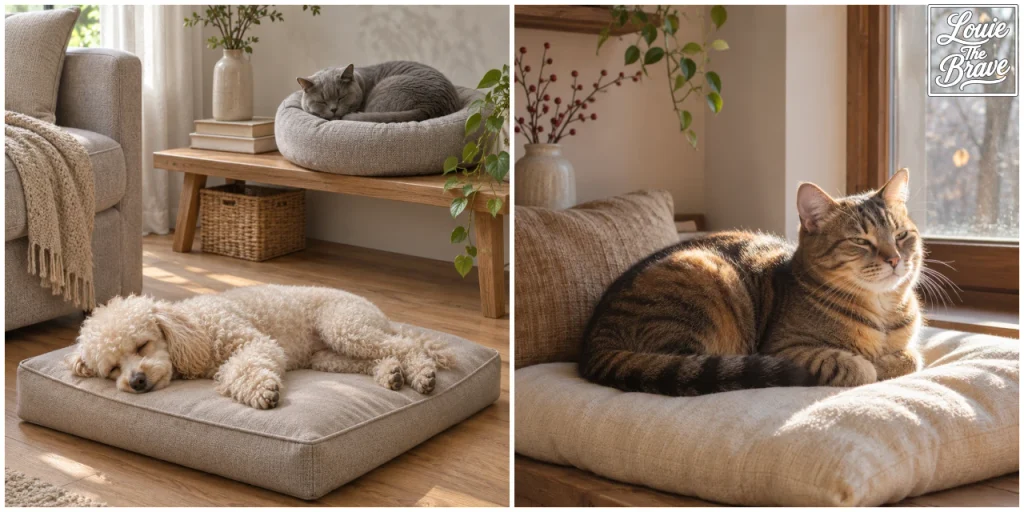
Winter pet beds can help dogs and cats stay comfortable when indoor temperatures drop, but most healthy pets living in a well-heated home do not need an electric heating pad. A supportive bed, dry bedding, and a sleeping area away from drafts are usually enough.
Puppies, kittens, senior pets, small dogs, and animals with thin coats may need extra warmth. Their sleeping habits, mobility, and the temperature around their bed can help you decide whether to add a blanket, buy a self-warming bed, or change where they sleep.
Does Your Pet Need a Warmer Bed in Winter?
Before buying new bedding, check your pet’s sleeping area when your home is at its coldest. A bed near a drafty window, exterior door, or uninsulated floor can feel considerably cooler than the rest of the room.
Your pet may benefit from a warmer sleeping area if you notice changes such as:
- Curling up more tightly than usual
- Seeking blankets or covered sleeping spaces
- Moving to sunny areas throughout the day
- Avoiding a previously favored bed on a cold floor
- Shivering in a chilly environment
Cats naturally seek warm resting places, and many dogs enjoy sleeping under blankets throughout the year. Compare these behaviors with your pet’s usual habits before deciding that additional warmth is necessary.
There is no single indoor temperature that suits every dog and cat. Age, body size, coat thickness, health, and individual cold tolerance all affect how comfortable an animal feels.
How to Choose Winter Pet Beds for Dogs and Cats
A good winter bed should provide insulation from cold surfaces, support the body, and allow your pet to change sleeping positions comfortably. Observe how your dog or cat normally sleeps before choosing a bed style.
| Sleeping habit or physical condition | Suitable bed type |
|---|---|
| Sleeps stretched out on one side | Large, flat mattress-style bed |
| Sleeps curled into a ball | Donut bed or round nest bed |
| Rests the head on an elevated surface | Bolster bed |
| Burrows under blankets | Cave bed or covered bed |
| Has arthritis or limited mobility | Supportive orthopedic bed with a low entrance |
| Frequently seeks warm surfaces | Non-electric self-warming bed |
When comparing winter pet beds, measure the usable sleeping surface inside the raised edges. A large-looking donut bed may have very little space in the center once you account for its thick surrounding cushion.
Check the mattress or filling by pressing down on it. If it compresses easily enough for you to feel the hard floor underneath, it may provide insufficient cushioning for your pet. Older dogs and cats with stiff joints benefit from a stable sleeping surface that is easy to enter and leave.
My Yorkshire Terrier, Louie, regularly uses his MONGZE pet bed despite having several sleeping options. After more than two years of use, I have continued to appreciate its supportive structure and ease of maintenance. You can read more about its durability in my long-term MONGZE pet bed review.
Are Cave Beds and Sleeping Bags Good for Pets?
Cave beds, hooded beds, and pet sleeping bags create partially enclosed spaces that retain some of the warmth generated by an animal’s body. They are particularly appealing to pets that naturally burrow beneath blankets or prefer sheltered resting areas.
A dog sleeping bag usually combines a padded base with an attached fabric cover. A cat cave or covered pet bed has a more structured enclosure that provides privacy as well as protection from drafts.
Choosing a covered bed
Look for an entrance wide enough for your pet to enter and leave without difficulty. There should be sufficient room inside to turn around and settle into a comfortable position. The bedding and cover should also allow adequate airflow.
Place covered beds in dry, quiet areas away from exterior doors and drafty windows. For older cats or dogs with mobility problems, avoid designs that require climbing over a high edge or squeezing through a narrow opening.
Not every pet enjoys an enclosed bed. Louie used his little pet house as a hiding place for stolen objects instead of sleeping in it, so I eventually removed it. Watching how your pet uses an enclosed space can save you from buying bedding that never gets used.
What Type of Blanket Is Best for Dogs and Cats?
You can turn an existing pet bed into a warmer winter sleeping area by adding suitable bedding. Choose a blanket according to how your pet sleeps, whether the room is heated, and how frequently the bedding needs washing.
| Blanket material or type | Best use |
|---|---|
| Microfleece | Soft, warm bedding for cooler rooms |
| Cotton muslin | Lightweight coverage in heated homes |
| Sherpa fleece | Additional insulation on a bed |
| Waterproof pet blanket | Protecting bedding from moisture and accidents |
| Quilted blanket | Adding a padded layer beneath your pet |
Lightweight blankets are easier for dogs and cats to move away from when they become warm. Leave blankets loosely arranged so your pet can burrow underneath or sleep on top without becoming trapped.
Waterproof blankets are useful for pets that drool or experience urinary accidents. Check whether the waterproof layer can withstand machine washing and drying, and make sure the entire blanket is dry before returning it to the bed.
Be careful with pets that chew bedding
Blankets with loose threads, tassels, exposed stuffing, or easily damaged seams are unsuitable for pets that regularly tear apart fabric. Swallowed material can obstruct the digestive tract, and long pieces of string or thread can cause serious intestinal injuries.
Louie dislikes being covered with blankets and tends to chew and pull at the fabric. After trying several types, a lightweight cotton muslin blanket was the only one that survived. Even lightweight fabrics require supervision if a pet has a habit of chewing or swallowing them.
Self-Warming vs. Electric Heated Pet Beds
Pet beds marketed for cold weather use different methods to provide warmth. Some reduce heat loss through insulation, while others contain an electrical heating element.
| Bed type | How it works | Main consideration |
|---|---|---|
| Insulated pet bed | Reduces heat loss to cold surfaces | Suitable for everyday use |
| Self-warming pet bed | Retains or reflects the pet’s body heat | No electrical cord or powered heating element |
| Electric heated pet bed | Produces heat using electricity | Requires supervision and electrical safety precautions |
| Pet heating pad | Provides localized warmth | Risk of prolonged heat exposure and burns |
Non-electric self-warming winter pet beds are worth considering when you want extra insulation without an electrical device. They still need to be checked for damage, particularly if your pet scratches or chews the lining.
An electric heated bed provides an active heat source. It requires additional precautions for animals that sleep deeply, have reduced sensation, or struggle to stand and move independently.
Are Heating Pads Safe for Dogs and Cats Overnight?
Electric heating pads should not be left on while your pet sleeps unattended overnight. Prolonged contact with a heated surface can damage the skin, even when the surface initially feels comfortably warm.
Senior pets, animals with arthritis, and pets recovering from illness or surgery are particularly vulnerable because they may have difficulty moving away from excessive heat. Puppies and kittens also require additional care around heating devices.
Human heating pads and electric blankets are not designed specifically for pets. Their operating temperatures and safety features may be unsuitable for an animal lying on them for extended periods.
If your veterinarian considers supplemental heat appropriate for your pet, follow these precautions:
- Choose a heating product specifically designed for pets.
- Use the lowest available heat setting.
- Use the protective cover specified by the manufacturer.
- Keep electrical cords inaccessible to your pet.
- Provide an unheated sleeping area within easy reach.
- Inspect the heating surface and cord for damage.
- Supervise your pet whenever the device is operating.
- Switch it off before going to sleep or leaving home.
Do not place an electric heating pad inside a closed crate, carrier, or enclosed sleeping bag where your pet cannot easily escape the heat. Avoid adding thick blankets over an electric device unless the manufacturer explicitly permits them, as excess insulation can interfere with safe heat release.
A thermostat or automatic shutoff feature adds protection, but it does not eliminate the possibility of burns or electrical damage.
How to Set Up a Warm Sleeping Area Without Electricity
Start with the location of your pet’s existing bed. Moving it away from a drafty window or cold tile floor may improve sleeping comfort without requiring new equipment.
Add a supportive mattress or an insulating layer beneath the bed if the floor feels cold. Keep sleeping areas away from fireplaces, space heaters, and other appliances that produce direct heat. Cats that enjoy window-side naps should have another resting place available when the window area becomes cold after sunset.
Provide more than one sleeping option when possible. A warm, insulated bed and an uncovered resting area allow your pet to move between different temperatures throughout the day and night.
After washing blankets or cleaning bedding, let everything dry completely. Damp bedding can make an otherwise comfortable sleeping area feel cold.
When Is a Cold Pet a Medical Concern?
A pet that briefly shivers in a cold room but becomes comfortable after moving somewhere warmer may simply need better protection from the cold. Persistent shivering, unusual weakness, pale gums, marked lethargy, and slow breathing are more concerning.
These symptoms can occur with hypothermia, a dangerous drop in body temperature, or other medical conditions. If you suspect hypothermia, move your pet indoors, wrap them in dry, warm blankets, and seek emergency veterinary care. Do not attempt to warm them rapidly with a hot heating pad or direct heat.
Let Your Pet Choose Where to Sleep
You do not need to replace all your pet’s bedding when winter arrives. A well-maintained mattress, a suitable blanket, and a draft-free sleeping area can provide sufficient warmth for many indoor dogs and cats.
When choosing winter pet beds, consider how easily your pet can enter, leave, and change positions. Keep familiar sleeping places available when introducing new bedding, and give your pet the freedom to move somewhere cooler whenever they become too warm.
Source:
- American Animal Hospital Association (AAHA): Cold Weather Pet Safety Tips for Dogs and Cats
- Cornell University, Riney Canine Health Center: Winter Safety – January 2026
- Cornell University College of Veterinary Medicine: Loving Care for Older Cats
- American Kennel Club (AKC): Heated Dog Beds: Safety and Choosing the Right One
- VCA Animal Hospitals: Heating Pads and Pet Safety
- VCA Animal Hospitals: Ingestion of Foreign Bodies in Cats
- VCA Animal Hospitals: Pica in Dogs