Mounjaro After Ozempic: Can Tirzepatide Work Better?
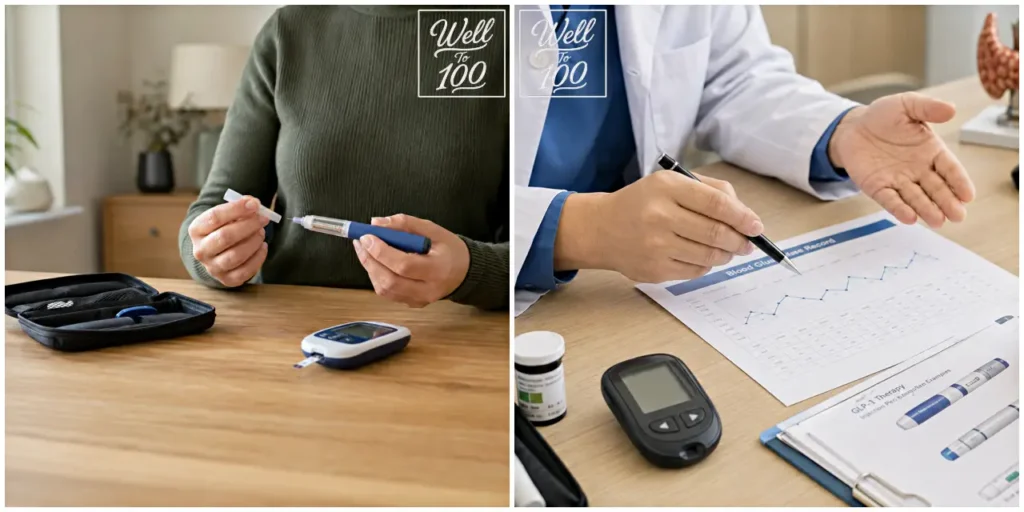
If you lost little or no weight on Ozempic, it is reasonable to wonder whether trying Mounjaro tirzepatide would be any different. My own experience made me ask the same question.
After pituitary adenoma surgery, I was followed by an endocrinologist and took diabetes medication for about a year. I also used Ozempic injection under my doctor’s guidance. I started at 0.25 mg and then, as I remember it, used 0.5 mg before stopping because my diabetes numbers had improved. During that time, I lost less than about 2.2 pounds.
That experience does not mean tirzepatide would automatically fail for me. It also does not prove that I was a true “nonresponder” to semaglutide for weight management. The drugs work differently, and my short course of lower-dose Ozempic was very different from the treatment used in obesity trials.
First, Mounjaro and Zepbound are not interchangeable names in the U.S.
For U.S. readers, one distinction matters immediately: Mounjaro and Zepbound contain the same active ingredient, tirzepatide, but they have different FDA-approved uses.
Mounjaro is FDA-approved to improve blood sugar control in people with type 2 diabetes. Zepbound is the tirzepatide brand approved for long-term weight reduction in adults with obesity or adults with overweight who have at least one weight-related health condition.
The same distinction applies to semaglutide. Ozempic is used for type 2 diabetes and certain cardiovascular and kidney-related indications, while Wegovy is the semaglutide product specifically approved for long-term weight reduction.
| Medication | Active ingredient | Main U.S. role discussed here |
|---|---|---|
| Ozempic | Semaglutide | Type 2 diabetes |
| Wegovy | Semaglutide | Weight management |
| Mounjaro | Tirzepatide | Type 2 diabetes |
| Zepbound | Tirzepatide | Weight management |
This is why a comparison between “Mounjaro and Ozempic for weight loss” can be misleading. For an FDA-approved obesity-treatment comparison, Zepbound versus Wegovy is the closer match.
Why my low-dose Ozempic experience does not predict the next result
Ozempic injection is a GLP-1 receptor agonist. The FDA dosing schedule begins at 0.25 mg once weekly for four weeks and then increases to 0.5 mg. Higher doses may be used when additional blood sugar control is needed.
My treatment stopped relatively early because the goal was diabetes management, not a full obesity-treatment course. I did not continue increasing semaglutide specifically to reach the doses used for chronic weight management.
That matters because Wegovy treatment for weight reduction uses a different dose-escalation program. The injectable version starts at 0.25 mg weekly and is gradually increased, with 1.7 mg or 2.4 mg used as maintenance doses for weight reduction.
So losing almost no weight during a relatively short course of 0.25 mg and 0.5 mg Ozempic does not tell me what would have happened after months of obesity-dose semaglutide treatment. Because my Ozempic treatment was for diabetes rather than a full obesity-treatment course, it also helps to understand how diabetes can be present without obvious weight loss and which blood tests are used to check glucose levels.
Tirzepatide works differently from semaglutide
Semaglutide acts on the GLP-1 receptor. Tirzepatide activates both GIP and GLP-1 receptors. FDA prescribing information describes tirzepatide as a dual GIP and GLP-1 receptor agonist.
That difference does not guarantee that someone who had little response to semaglutide will lose a certain amount of weight with tirzepatide. Individual results still vary.
However, it does mean that poor weight loss during one treatment should not automatically be treated as proof that the other medication cannot work.
What the head-to-head SURMOUNT-5 trial found
The SURMOUNT-5 trial provides a much better comparison than my personal Ozempic experience.
Researchers randomized 751 adults with obesity or overweight and related health conditions who did not have type 2 diabetes. Participants received their maximum tolerated dose of tirzepatide, either 10 mg or 15 mg weekly, or semaglutide, either 1.7 mg or 2.4 mg weekly, for 72 weeks.
At week 72, average body-weight change was:
- Tirzepatide: -20.2%
- Semaglutide: -13.7%
Tirzepatide produced greater average weight reduction in this head-to-head trial. Gastrointestinal problems were the most common adverse events with both treatments and were generally mild to moderate.
But those percentages are study averages, not personal weight-loss predictions. The participants received obesity-treatment doses for about 17 months. That is very different from using low-dose Ozempic for diabetes and stopping after blood sugar improves.
For someone with an experience like mine, the most useful conclusion is not “tirzepatide will make me lose 20.2%.” It is that my earlier Ozempic result and the SURMOUNT-5 results represent very different treatment situations.
What to review before considering tirzepatide
For weight management in the U.S., Zepbound begins at 2.5 mg once weekly for four weeks. The dose is then increased gradually in 2.5 mg steps after at least four weeks at the current dose. The FDA-approved maintenance doses for long-term weight reduction are 5 mg, 10 mg, or 15 mg weekly, with 15 mg as the maximum recommended dose.
Before treatment, the prescriber needs your complete medical history and medication list. Zepbound carries a boxed warning related to thyroid C-cell tumors seen in rats, although it is unknown whether the same risk occurs in humans. It is contraindicated in people with a personal or family history of medullary thyroid carcinoma (MTC) or Multiple Endocrine Neoplasia syndrome type 2 (MEN 2), as well as those with a known serious hypersensitivity to tirzepatide.
I have Hashimoto’s thyroiditis, so I paid particular attention to the thyroid warning. Hashimoto’s thyroiditis is not the thyroid condition named in this FDA contraindication; the warning specifically identifies MTC and MEN 2. A thyroid history should still be discussed with the prescribing clinician rather than left off the medical history. If blood sugar and weight are both part of the treatment discussion, food choices still matter alongside medication; this guide to fresh and dried figs explains how drying concentrates sugar, calories, and portion size.
No weight loss on Ozempic does not settle the tirzepatide question
I really did lose less than 2.2 pounds while using Ozempic. But I also stopped after relatively low doses because my diabetes treatment goals had been met.
That is not enough information to conclude that tirzepatide would also produce little or no weight loss.
At the same time, the 20.2% average loss seen with tirzepatide in SURMOUNT-5 should not become a personal expectation. Medication choice should account for the actual indication, previous treatment, dose and duration, medical history, other medications, side effects, and the response observed after treatment begins.
If Ozempic did little for your weight, the more useful question for your prescriber is not simply, “Will Mounjaro work better?” Ask whether your previous semaglutide treatment was comparable to an obesity-treatment course and whether tirzepatide is appropriate for your current medical situation.
Source:
- U.S. Food and Drug Administration — Zepbound Prescribing Information
- U.S. Food and Drug Administration — Mounjaro Prescribing Information
- U.S. Food and Drug Administration — Ozempic Prescribing Information
- U.S. Food and Drug Administration — Wegovy Prescribing Information
- Aronne et al., The New England Journal of Medicine — Tirzepatide as Compared with Semaglutide for the Treatment of Obesity