Black Fly Bites: Why They Hurt, Bleed, and What to Do
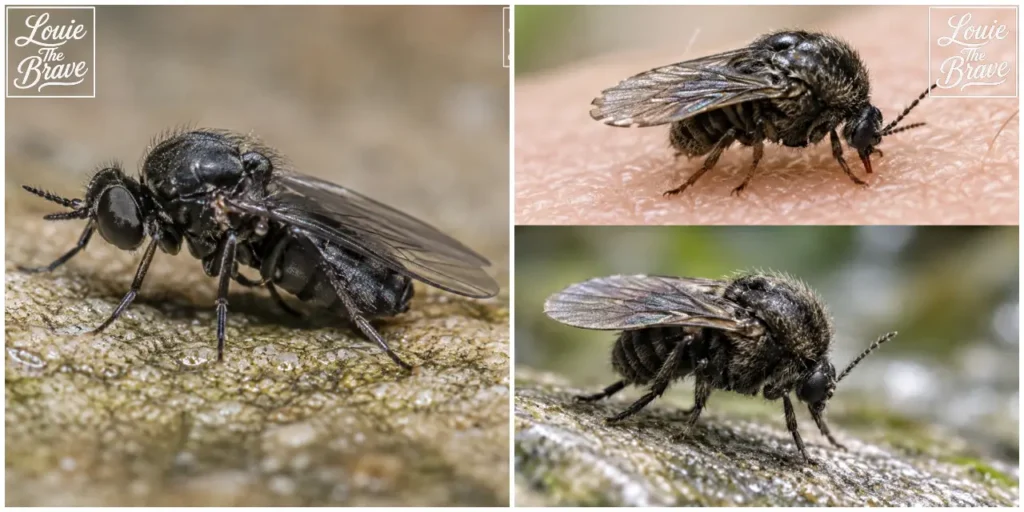
Black fly bites can feel sharper than mosquito bites because the insect does not feed through a needle-like proboscis. Female black flies use blade-like mouthparts to cut the skin and take blood from the small wound. That feeding method can leave a tiny bleeding point, redness, swelling, itching, or burning. Bite appearance alone cannot confirm that a black fly caused it.
Black flies are especially relevant around streams and rivers. Their immature stages develop in running water, where larvae attach to submerged rocks, plants, and other surfaces. Only females take blood meals, and adults may bite people as well as animals.
Why Can a Black Fly Bite Bleed?
A mosquito inserts narrow mouthparts into the skin. A black fly feeds differently. Its mouthparts lacerate the surface, creating a small pool of blood to feed from. Saliva from blood-feeding flies also contains compounds that help keep blood from clotting during feeding.
That is why a black fly bite may hurt immediately and leave a small hemorrhagic spot rather than only an itchy bump. Reactions vary from a small red mark to a larger swollen, itchy area.
A tiny bleeding spot does not prove the insect was a black fly. Other biting insects and minor skin injuries can look similar, so location, timing, insect exposure, and how the reaction changes are more useful than the mark alone. Because different insects and minor skin irritation can leave similar-looking marks, identifying the insect from the skin lesion alone can be misleading. A similar example is explained in why cigarette beetles do not necessarily explain unexplained red marks.
What to Do After a Black Fly Bite
For an uncomplicated bite, wash the area with soap and water. Apply a cold pack wrapped in cloth for about 10 minutes, then remove it before repeating if needed. Avoid scratching because broken skin can increase the chance of infection.
If itching is bothersome, an over-the-counter antihistamine or anti-itch product may be appropriate for some people. Follow the label and ask a pharmacist or clinician if age, pregnancy, medications, or health conditions could affect safe use.
Take a photo when you first notice the bite. It can help you compare redness, swelling, warmth, or pain later.
| What you notice | What to do |
|---|---|
| Mild redness, itching, limited swelling | Wash, use a cold pack, avoid scratching |
| Swelling or pain keeps increasing | Contact a healthcare professional |
| Increasing warmth, spreading redness, drainage, or fever | Seek medical care |
| Face or mouth swelling, throat tightness, trouble breathing, fainting | Call 911 |
Severe allergic reactions to insect bites can develop quickly. Difficulty breathing, swelling of the face or mouth, throat tightness, weakness, or fainting requires emergency care.
Why Black Flies Are Common Near Moving Water
Black flies are strongly tied to flowing water. Eggs are laid in rivers, streams, and similar habitats, and larvae attach to objects below the surface while they develop. This differs from many mosquitoes that commonly use standing water.
Because adults can move away from breeding sites, emptying buckets or removing small containers of standing water will not control black flies the way it can reduce some mosquito populations. Personal protection matters more during outdoor exposure.
Long sleeves, long pants, socks, and a hat reduce exposed skin. Light-colored clothing may be less attractive than dark clothing for some black flies, and a head net can help where flies swarm around the face.
For people, choose an EPA-registered insect repellent and follow the label. Repellents may not work equally well in every setting, so clothing and less time in heavily infested streamside areas still matter.
Can Black Flies Bite Dogs?
Yes. Black flies can feed on dogs, and biting flies may cause painful skin reactions or allergic responses. In dogs, insect-bite dermatitis often affects areas such as the ears, head, neck, and abdomen.
After a hike near a creek or river, check under the coat rather than looking only at the surface. With Louie, I part the longer hair under his ears and along his legs so small red marks or crusts are easier to see. Multiple lesions, intense itching, facial swelling, weakness, or breathing changes should be discussed with a veterinarian promptly.
Do not spray a human insect repellent on your dog unless the label specifically says it is intended for animals. The U.S. Environmental Protection Agency advises against using repellent products on pets unless the label clearly allows animal use. Ask your veterinarian about products labeled for dogs and the pests you need to prevent.
The Bottom Line
A black fly bite can sting and bleed because the fly cuts the skin instead of feeding through a mosquito-like needle. Most local reactions can be managed with washing, a cold pack, and avoiding scratching, but rapidly worsening swelling, infection signs, or a bodywide allergic reaction changes what you should do.
For dogs, post-walk skin checks are especially useful after time around moving water. Look under the fur, check the ears and belly, and use only repellents labeled for pets.
Source:
- University of Minnesota Extension — Black flies and gnats
- MSD Veterinary Manual — Flies and Mosquitoes of Dogs
- MSD Veterinary Manual — Insect Bite Dermatitis Affecting the Pinna in Animals
- MedlinePlus Medical Encyclopedia — Insect bites and stings
- NCBI Bookshelf, StatPearls — Insect Bites
- U.S. Environmental Protection Agency — Using Insect Repellents Safely and Effectively