Managing diabetes in dogs: 2026 AAHA care guidance
Managing diabetes in dogs usually means daily insulin, a predictable feeding routine, and close attention to changes at home. The 2026 American Animal Hospital Association (AAHA) Diabetes Management Guidelines for Dogs, published August 31, 2026, emphasize three practical goals: control the symptoms, maintain a healthy body weight, and prevent low blood sugar. A single glucose reading cannot tell you whether the entire treatment plan is working.
Most dogs with diabetes have an insulin deficiency and need ongoing insulin treatment. With the right medication, monitoring, and veterinary support, many can maintain a good quality of life. Understanding when to call the veterinarian—and what information to bring—makes that care more manageable.
Signs of diabetes in dogs that warrant testing
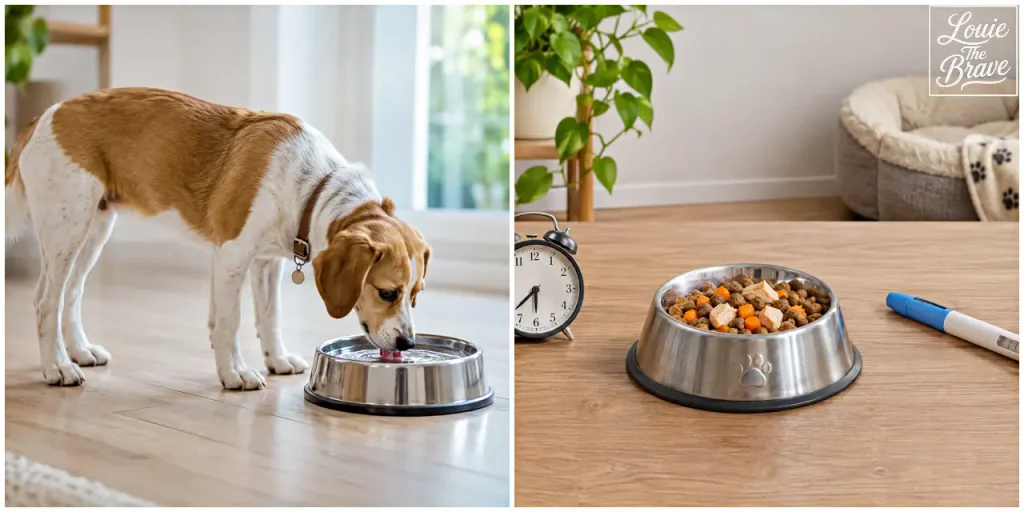
The most recognizable combination is drinking more water, urinating more, and losing weight even when appetite increases. When blood glucose becomes high enough, glucose spills into the urine and draws water with it. A dog may empty the water bowl more quickly, ask to go outside more often, or have accidents after previously being house-trained.
Because the body cannot use glucose effectively without enough insulin, a dog may eat eagerly while losing weight and muscle. Other possible changes include unusual tiredness, weakness, and cloudy eyes caused by cataracts. Not every affected dog has all these signs, and some changes develop gradually enough to escape notice at first.
These symptoms are not exclusive to diabetes. Cushing’s disease, for example, can also cause increased thirst, urination, and appetite. Dogs with Cushing’s may additionally show a pot-bellied appearance, panting, or skin and coat changes. If those signs overlap, a veterinarian can investigate both possibilities; our guide to testing for Cushing’s disease and monitoring treatment explains the different tests used for that condition.
Arrange a veterinary appointment promptly if your dog is drinking and urinating noticeably more, especially when weight loss or a change in appetite accompanies it. A dog that is vomiting, refusing food, severely weak, or collapsing needs urgent care rather than a routine appointment.
How veterinarians confirm diabetes in dogs
Veterinarians diagnose canine diabetes by combining characteristic symptoms with high blood glucose and glucose in the urine. The 2026 AAHA guidelines describe a blood glucose value of at least 200 mg/dL, together with glucosuria and typical signs or a hyperglycemic crisis, as diagnostic in an appropriate clinical setting. One high reading without the rest of the clinical picture is not a reason for an owner to start treatment.
A blood chemistry panel and urinalysis also help assess dehydration, kidney function, and other problems. The veterinarian may look for urine ketones and consider additional tests when pancreatitis, infection, or another condition is suspected. This matters because concurrent diseases can affect appetite, insulin response, and the safest feeding plan.
If diabetes is confirmed, treatment generally begins promptly with insulin. The veterinarian should also discuss the dog’s ideal weight, current food intake, any medications, and how the family will manage injections and rechecks.
What successful diabetes treatment looks like
The goal when treating diabetes in dogs is not to make every glucose number resemble a person’s normal reading. AAHA considers diabetes reasonably controlled when excessive thirst, urination, and hunger have settled and body weight is stable or improving, without dangerous episodes of hypoglycemia. Some day-to-day glucose variation is expected even when the dog is doing well.
A spot glucose check gives only one moment in the day. Glucose changes after food, exercise, and insulin, so an unexpectedly high result does not automatically mean the dose should be increased. A veterinarian may use a blood glucose curve or a continuous glucose monitor (CGM) to see the low point, duration of insulin action, and overall pattern before adjusting treatment.
A dog can also look well while glucose drops too low between checks. For that reason, the veterinary team must interpret glucose data alongside appetite, water intake, urination, weight, activity, and any signs of low blood sugar. Never increase an insulin dose based only on a home spot check unless your veterinarian has specifically instructed you to do so.
How insulin type changes the feeding schedule
For diabetes in dogs, the 2026 guidelines distinguish between conventional intermediate-acting insulin, commonly used twice a day, and newer longer-acting basal options. Both require veterinary prescribing and monitoring, but their relationship to meals is different.
| Insulin approach | Examples discussed by AAHA | Relationship to meals | Practical consideration |
|---|---|---|---|
| Intermediate-acting (bolus) insulin | Porcine lente insulin (Vetsulin), NPH | Generally given after the dog eats, as directed by the veterinarian | Food intake affects the risk of hypoglycemia; keep meals and doses consistent |
| Long-acting basal insulin | Insulin degludec, glargine U-300 | Does not necessarily have to be timed with meals | Some dogs may be managed once daily, but others need twice-daily dosing; CGM helps establish the appropriate plan |
Basal options such as degludec and glargine U-300 are not FDA-approved for dogs, although veterinarians may prescribe them when appropriate. They do not mean that feeding can become unpredictable or that missed meals are harmless. The correct dose and schedule depend on the individual dog’s response. Different insulin concentrations and devices also matter: the 2026 AAHA guidance notes that certain concentrated basal insulins must be given with their supplied pens rather than an interchangeable syringe.
For a dog using conventional intermediate-acting insulin, a consistent amount of food and an agreed injection schedule make results easier to interpret. AAHA notes that occasional shifts within about two hours of the usual mealtime and dose time may be acceptable, but owners should agree on an appropriate window with their own veterinarian rather than adjusting doses and timing from day to day.
What if your dog eats less or vomits?
Do not automatically give the usual insulin dose to a dog that has eaten very little or vomited. The 2026 AAHA guidance includes a reduced-dose approach for some intermediate-acting regimens when less than half a meal is eaten. That published guidance is not a substitute for the individual sick-day instructions provided for your dog’s prescribed insulin.
Ask your veterinarian in advance exactly what to do if a meal is partly eaten, missed, or vomited, or if an injection is delayed. Record the amount actually eaten and any insulin already administered. Contact the veterinary team promptly when appetite is poor; repeated food refusal or vomiting, especially with lethargy, may indicate a medical emergency.
Choosing food for a diabetic dog
Food management for diabetes in dogs is not based on one mandatory “diabetes diet.” AAHA recommends a complete and balanced food the dog will reliably eat, in appropriate portions and on a consistent schedule. Diet selection also depends on whether the dog needs to lose weight, maintain it, or regain lost weight and muscle.
| Dog’s condition | Nutrition priority | What to discuss with the veterinarian |
|---|---|---|
| Ideal body weight | Maintain weight and a reliable meal routine | Consistent portions and treat calories |
| Overweight or obese | Gradual, supervised fat loss | A higher-fiber diet or other calorie-control plan |
| Underweight or losing muscle | Supply enough calories to rebuild body and muscle | An energy-appropriate diet rather than an automatic weight-loss formula |
| Pancreatitis, kidney disease, or another condition | Meet the needs of both conditions | Fat content, nutrients, and possible diet adjustments |
Higher-fiber diets may help reduce the blood sugar rise after meals and support weight loss in overweight dogs. But a low-calorie, high-fiber weight-loss food could make it harder for an underweight dog to recover. The AAHA guidelines also note that canned diets may offer advantages over dry food in some cases; neither format guarantees good glucose control on its own.
Include treats in the daily calorie total, and keep exercise reasonably consistent. Body weight, body condition score (BCS), and muscle condition should be reassessed regularly; AAHA recommends checking weight and body condition at least once or twice a month. If you are unsure whether your dog needs weight loss, the guide to checking the ribs, waist, and body condition score shows what to examine before reducing portions.
What to record at home and when to recheck
Home monitoring of diabetes in dogs starts with a short daily record that can reveal changes a clinic glucose result cannot. Keep the same categories each day, even when everything seems normal:
- Meals: Food offered, amount actually eaten, and treats.
- Insulin: Product name, dose, injection time, and any missed or unusual dose.
- Symptoms: Changes in drinking, urination, appetite, activity, and behavior.
- Other health changes: Vomiting, diarrhea, weakness, or suspected low blood sugar.
- Weight: Measurements made on the same scale, along with body and muscle condition checks.
A CGM attaches a small sensor to the skin and records glucose trends in the fluid between cells. It can reveal highs and lows that occasional checks miss. However, a low CGM value in a dog with no symptoms may need confirmation with a veterinary-calibrated blood glucose meter before a treatment change.
Your veterinarian may also use a fructosamine test, which reflects average glucose over approximately the previous 7–10 days. This is not the same as a single blood glucose reading or the A1C test commonly used in people. AAHA emphasizes interpreting fructosamine trends with the dog’s symptoms, because an isolated result can be misleading.
The 2026 recommendations call for glucose assessment about 5–14 days after starting insulin or changing the dose, and whenever signs recur or hypoglycemia is suspected. Once the dog is stable, routine veterinary rechecks are generally recommended every 3–6 months, with additional testing when needed. Do not wait for the next scheduled visit if drinking, urination, appetite, weight, or energy changes unexpectedly.
Hypoglycemia and diabetic ketoacidosis: emergencies to recognize
Insulin can lower blood sugar too far. Signs of hypoglycemia include weakness, trembling, unusual sleepiness or behavior, staggering, collapse, and seizures. Acting quickly matters because a severely affected dog may not be able to swallow safely.
If the dog is alert, has mild symptoms, and can swallow normally, AAHA recommends offering a small carbohydrate-rich meal and getting veterinary care promptly. If the dog is poorly responsive or has more severe signs, call an emergency veterinarian immediately. AAHA describes regular corn syrup applied carefully to the cheek-and-gum area as an emergency measure when it can be done safely, but do not pour liquid into the mouth, force it to swallow, or put your fingers or a swab into the mouth of a seizing dog. Avoid delaying transport to an emergency hospital to attempt first aid.
Another life-threatening complication of diabetes in dogs is diabetic ketoacidosis (DKA), which develops when severe insulin deficiency leads to ketone buildup and metabolic illness. A diabetic dog that stops eating, vomits, becomes profoundly lethargic, appears dehydrated, or breathes abnormally needs immediate veterinary evaluation. These signs are not a situation to manage by changing insulin at home.
Ask your veterinarian for written instructions covering suspected hypoglycemia, missed meals, vomiting, and after-hours emergencies. Keep the clinic and emergency hospital phone numbers where anyone caring for the dog can find them.
Building a care plan that fits your dog
For most families managing diabetes in dogs, a good plan is one the entire household can follow. Ask the veterinary team to demonstrate the insulin device, storage and mixing instructions, injection technique, and what to do if food or medication timing changes. Make sure everyone who feeds the dog knows where the log is and which symptoms require an urgent phone call.
My young Yorkshire Terrier, Louie, does not have diabetes. Still, learning the early signs matters to me because changes in drinking, urination, appetite, and weight can be easy to overlook. For a dog already receiving treatment, those ordinary daily observations can help the veterinarian decide whether the plan is working safely and when it needs to change.
Source
- American Animal Hospital Association — 2026 Guidelines, Section 2: Recognizing and Diagnosing Diabetes
- American Animal Hospital Association — Section 3: Diabetic Ketoacidosis
- American Animal Hospital Association — Section 4: Insulin Treatment
- American Animal Hospital Association — Section 5: Monitoring Dogs Receiving Insulin
- American Animal Hospital Association — Section 6: Dietary Management
- American Animal Hospital Association — Section 8: Client Education
- American Animal Hospital Association — Section 9: Glucose Monitoring
- American Animal Hospital Association — Section 10: Other Methods for Monitoring Glycemic Status