Left Flank Pain: Muscle Strain vs. Kidney Stone Clues
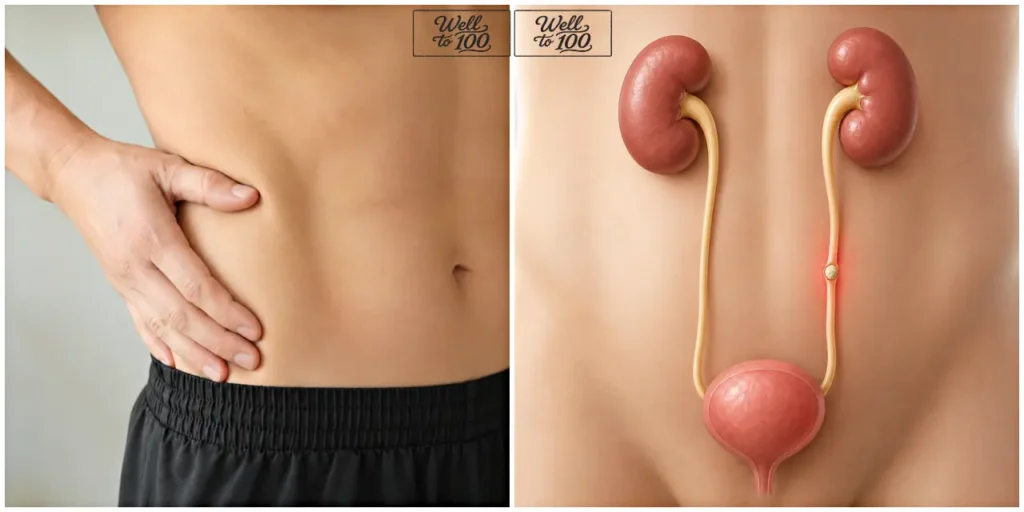
Left flank pain can start after something as simple as stretching, twisting, or exercising. When that happens, it is reasonable to wonder whether you pulled a muscle. But pain in the same general area can also occur with a kidney stone, so the location alone does not tell you the cause.
I once developed pain on my left side while stretching. Because it started during the movement and felt like a muscle had tightened or caught, the timing made a muscle problem seem more likely. Still, when pain lasts longer than expected, it is easy to start wondering whether something else is going on.
The most useful clues are what you were doing when the pain began, whether movement changes the pain, whether it travels toward the lower abdomen or groin, and whether you notice changes in urination. Kidney stones can cause sharp pain in the back or side along with urinary symptoms, while muscle strains are commonly associated with physical activity, sudden movement, tenderness, swelling, and difficulty moving the affected muscle.
Did the pain start after exercise or stretching?
A muscle strain happens when muscle fibers are stretched or torn. Exercise, excessive physical effort, poor flexibility, or a sudden movement can cause a strain. Typical symptoms include pain, tenderness or tightness, swelling, and difficulty moving the injured muscle normally.
That makes the events immediately before your left flank pain useful information.
Think about whether you:
- twisted your torso suddenly
- stretched farther than usual
- lifted something heavy
- started a new workout
- increased your exercise intensity
- felt the pain begin during a particular movement
Pain that repeatedly appears when you contract, stretch, twist, or press on the same muscle may support a musculoskeletal explanation. It still does not prove that the pain is only muscular.
This is particularly relevant if you are normally inactive and suddenly do aggressive stretching. I have had this happen when I went straight from sitting at a desk to twisting or stretching hard. Starting slowly and gradually increasing a stretch is a much better approach than forcing the movement.
What does kidney stone pain feel like?
Kidney stones can cause sharp pain in the back or side, and the pain may also be felt in the lower abdomen or groin. Other possible symptoms include pink, red, or brown urine, a constant urge to urinate, pain with urination, passing only a small amount of urine, nausea, and vomiting. Some small kidney stones may cause few or no symptoms.
Because of that, left flank pain becomes more concerning for a urinary tract problem when it is accompanied by symptoms such as:
- pain extending toward the lower abdomen or groin
- visible blood in the urine
- burning or pain during urination
- frequent or urgent urination
- difficulty passing urine
- nausea or vomiting
Not seeing blood does not rule out a kidney stone. Urinalysis can detect blood that may not be obvious just by looking at the urine.
Muscle strain vs. kidney stone: what should you compare?
No single symptom can reliably diagnose either condition at home. Instead, compare several features together.
| What to check | Muscle strain may be more likely | Kidney stone may be more concerning |
|---|---|---|
| What happened before pain | Exercise, stretching, lifting, or sudden movement | May begin without a clear muscle injury |
| Main pain area | A specific muscle or nearby soft tissue | Back or flank |
| Pain spreading elsewhere | Usually stays around the injured muscle | May extend toward the lower abdomen or groin |
| Other symptoms | Tenderness, tightness, swelling, difficulty moving | Blood in urine, urinary urgency, painful urination, nausea, vomiting |
| Movement | May reproduce or worsen pain in the injured muscle | Movement alone cannot determine whether a stone is present |
Muscle strains are commonly linked with physical effort and impaired movement, while kidney stones can produce flank pain together with urinary or gastrointestinal symptoms. These patterns are useful clues, but they are not substitutes for an examination when symptoms are severe, unusual, or persistent.
How are kidney stones checked?
A clinician does not diagnose a kidney stone from the location of pain alone. The evaluation can include your medical history, a physical exam, laboratory testing, and imaging.
Urine testing can identify blood and other findings that may help evaluate urinary symptoms. Imaging can then help locate a stone and determine whether it is blocking the urinary tract. CT scans can show a stone’s size and location as well as urinary tract obstruction, while ultrasound can also detect kidney stones and blockages in some situations.
Before an appointment, it can be useful to write down:
- exactly when the pain started
- what you were doing at the time
- which movements make it worse
- whether pressing the area reproduces the pain
- whether the pain travels toward your abdomen or groin
- any changes in urine color or urination
- whether you have nausea, vomiting, fever, or chills
That information gives a clinician more to work with than simply saying, “My left side hurts.”
When should left flank pain be evaluated promptly?
Severe flank pain, inability to urinate or passing only a small amount, significant vomiting, or symptoms that suggest urinary obstruction deserve medical evaluation. Kidney stones that block urine flow or cause severe pain may require urgent treatment, and persistent vomiting can lead to dehydration.
Fever or chills with back or flank pain and urinary symptoms are also important. Those symptoms can occur with a kidney infection, which should be evaluated by a health care professional rather than assumed to be a simple muscle strain.
If your left flank pain clearly began during stretching and repeatedly changes with the same muscle movement, a strain is one possibility. If the pain is severe, travels toward the groin, or occurs with blood in the urine, painful urination, vomiting, fever, chills, or trouble urinating, the safer next step is medical evaluation.
The location of the pain is only the starting point. How the pain began, where it travels, what movements affect it, and what is happening when you urinate provide much more useful information.
Sources:
National Institute of Diabetes and Digestive and Kidney Diseases (NIDDK) — Symptoms & Causes of Kidney Stones
National Institute of Diabetes and Digestive and Kidney Diseases (NIDDK) — Diagnosis of Kidney Stones
National Institute of Diabetes and Digestive and Kidney Diseases (NIDDK) — Urinary Tract Imaging
National Institute of Diabetes and Digestive and Kidney Diseases (NIDDK) — Symptoms & Causes of Kidney Infection (Pyelonephritis)
MedlinePlus — Muscle Strain