Peach Nutrition: Are Soft Peaches Different From Firm Peaches?
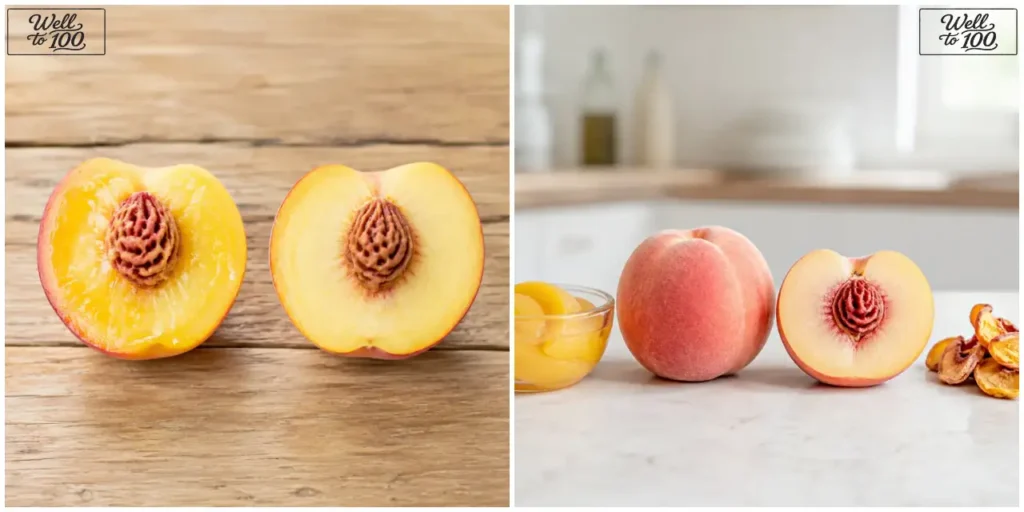
A soft, juicy peach is not automatically higher in sugar, calories, or nutrients than a firm, crisp peach. Peach firmness is mainly affected by the cultivar, ripeness, and storage conditions. For nutrition, fruit size and whether the peach is fresh, canned, dried, or juiced matter more than texture.
I prefer peaches that are soft enough to eat with a spoon. Their sweetness and juiciness once made me wonder whether they contained more sugar than firm peaches. The difference is not that simple. A ripe firm-flesh peach can still be sweet, while a softer peach may taste sweeter because its acidity, aroma, and texture have changed during ripening.
Soft and Firm Peaches Are Texture Descriptions
“Soft peach” and “firm peach” are not official varieties or nutrition categories in the United States. They describe how the fruit feels when eaten.
Peach cultivars naturally soften in different ways. Some develop melting flesh that becomes very tender. Others keep a firmer texture even when fully ripe and ready to eat.
Ripeness also affects firmness. A peach may feel crisp when purchased and become softer after sitting at room temperature. This change does not turn it into a nutritionally different type of fruit.
USDA FoodData Central classifies peaches by identifiable food form, such as raw, canned, frozen, or dried. It does not provide one nutrient profile for soft peaches and another for firm peaches.
What Does One Medium Peach Provide?
The USDA SNAP-Ed produce guide lists one medium peach as approximately 150 grams. That serving provides about:
- 58 calories
- 13 grams of total sugar
- 2 grams of dietary fiber
These numbers are estimates for a typical peach. Individual fruits vary in size, cultivar, maturity, and growing conditions.
Comparing peaches by count can therefore be misleading. A large firm peach may contain more total carbohydrate than a small soft peach simply because there is more fruit to eat.
For a closer comparison, remove the pit and compare the edible weight. Two peaches with similar edible weights are more useful nutritionally than two fruits selected only because one feels soft and the other feels firm.
Why Does a Soft Peach Sometimes Taste Sweeter?
Sweetness is not determined by sugar alone. Flavor is also influenced by acidity, aroma, temperature, and juiciness.
As a peach ripens, the flesh usually softens and its aroma becomes stronger. A reduction in tartness can make the fruit taste sweeter even when the change in total sugar is not large.
Cultivar makes a difference as well. White-flesh peaches are often perceived as mild and sweet because many have lower acidity. Yellow-flesh peaches frequently have a more noticeable sweet-tart flavor.
This does not mean every white peach contains more sugar than every yellow peach. Taste cannot accurately measure grams of sugar.
Nectarines are another example. A nectarine belongs to the same species as a peach but has smooth skin. Its sweetness, firmness, and nutrient content still depend on cultivar, maturity, and portion size.
Does a Firm Peach Have More Fiber?
Firmness does not reliably show which peach has more fiber, vitamin C, potassium, or plant compounds. Nutrient amounts can vary with the cultivar, growing environment, maturity at harvest, storage, and edible portion.
The peel contributes some of the fruit’s fiber and plant compounds. Eating a well-washed peach with its skin keeps more of the whole fruit intact.
Peeling may be preferable for someone who dislikes the fuzz or develops skin irritation when handling peaches. However, removing the peel also removes part of the outer fiber-containing layer.
Peaches contribute water, fiber, vitamin C, potassium, and naturally occurring carbohydrate. They are best understood as a whole-fruit snack rather than a treatment for fatigue, constipation, high blood pressure, or another health condition.
Portion and Food Form Matter for Blood Sugar
People managing diabetes or prediabetes do not automatically need to avoid peaches. The amount of carbohydrate eaten at one time is more useful than whether the fruit is soft or firm.
The American Diabetes Association notes that a small piece of whole fruit or about ½ cup of canned or frozen fruit generally provides around 15 grams of carbohydrate. A typical medium peach is close to that amount.
Consider four details when planning a serving:
- Fruit sizeA very large peach may provide more carbohydrate than a small or medium peach.
- Fresh versus juiceWhole fruit retains its natural structure and fiber. Juice is easier to consume quickly and usually requires a smaller serving for the same amount of carbohydrate.
- Canned packing liquidPeaches packed in heavy syrup may contain added sugar. Check the Nutrition Facts label and ingredient list. Products packed in water or without added sugar can make carbohydrate counting easier.
- Dried fruit portionsDrying removes much of the water. A small amount of dried peach can therefore contain as much carbohydrate as a much larger portion of fresh fruit.
A soft fresh peach is not automatically a worse blood sugar choice than a firm one. Serving size and food form provide more useful information.
Mouth Itching May Be an Allergy Symptom
Peaches can trigger pollen-food allergy syndrome, also known as oral allergy syndrome. This reaction is more likely in some people with pollen allergies and often occurs after eating raw fruit.
Possible symptoms include:
- Itching or tingling inside the mouth
- Lip or tongue discomfort
- Mild swelling
- Throat irritation
Repeated symptoms should be discussed with an allergist rather than tested by eating a larger amount at home.
Stop eating the peach and seek urgent medical care for trouble breathing, increasing throat swelling, faintness, widespread hives, or symptoms involving more than the mouth. Anyone with a previous severe reaction needs individualized medical advice before trying peeled, cooked, canned, or raw peaches again.
Choose Texture for Taste and Portion for Nutrition
Choose a soft peach when you want juicy fruit for yogurt, oatmeal, or eating with a spoon. Pick a firm peach when you want neat slices, a crisp snack, or fruit that holds its shape in a salad.
For nutrition, check the edible portion, fruit size, skin, and food form. These details are more informative than assuming that soft peaches are higher in sugar or firm peaches are higher in fiber.
I still prefer soft peaches for their aroma and texture. The difference is that I no longer use softness to estimate calories or sugar. Firmness is a taste preference; portion size is the nutritional decision.
Sources
U.S. Department of Agriculture, FoodData Central — Peaches, Yellow, Raw
U.S. Department of Agriculture, SNAP-Ed Connection — Peaches
University of California, Davis Postharvest Research and Extension Center — Nectarine & Peach
American Diabetes Association — Best Fruit Choices for Diabetes
American Academy of Allergy, Asthma & Immunology — Oral Allergy Syndrome