Shingles Symptoms: Itching, Blisters, and When to Treat
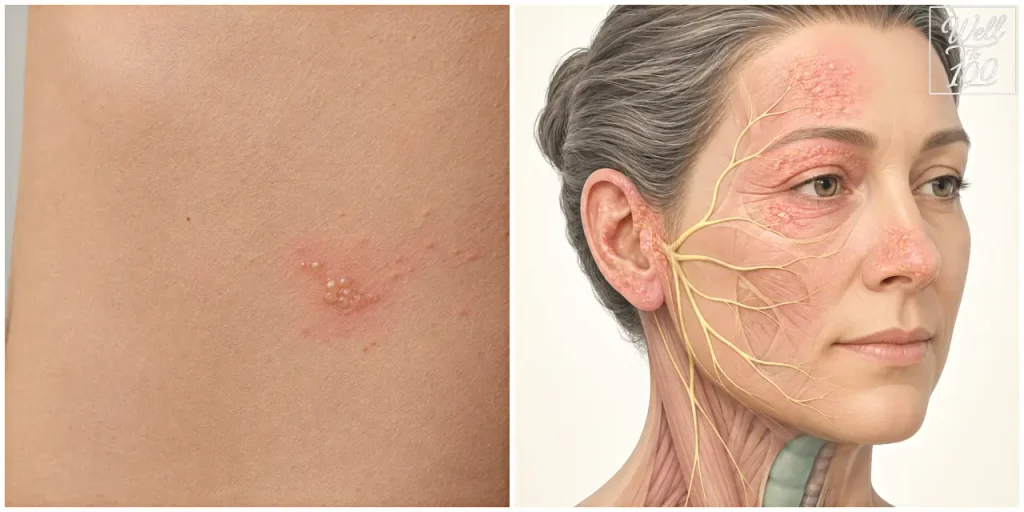
Shingles symptoms do not always begin with severe pain. Itching, tingling, burning, or unusual skin sensitivity can start several days before the rash appears, and some people notice itching more than pain. Once the rash develops, shingles typically causes clusters of fluid-filled blisters on one side of the body or face.
When I had Shingles symptoms in my 20s, itching was much more noticeable than pain. Scratching made the irritated skin and blisters harder to leave alone. Later, I occasionally developed blisters and discomfort in the same area and assumed shingles had returned, but repeated blisters in one location are not automatically recurrent shingles. Several other skin conditions can look similar, so a clinician may need to examine the rash or test a blister when the diagnosis is unclear.
Can Shingles Symptoms Start With Itching Instead of Pain?
Yes. Pain is strongly associated with shingles, but it is not the only early symptom.
Before a visible rash appears, the affected area may feel:
- itchy
- tingly or numb
- burning or stinging
- unusually sensitive to touch
Some people also develop headache, fever, chills, fatigue, or an upset stomach. These Shingles symptoms can begin a few days before the skin changes become obvious.
This means that severe pain is not required for Shingles symptoms to be possible. A new patch of unexplained itching or tingling becomes more suspicious when a one-sided blistering rash appears in the same area.
What Do Shingles Blisters Usually Look Like?
The rash often begins as red or discolored spots that develop into clusters of small fluid-filled blisters. It commonly follows the path of a sensory nerve, called a dermatome.
A typical rash is usually found on one side of the trunk or one side of the face and generally does not cross the center of the body. New blisters may continue appearing for about 3 to 5 days. The blisters typically scab over within 7 to 10 days, and the skin usually heals within 2 to 4 weeks.
| Stage | What you may notice |
|---|---|
| Before the rash | Itching, tingling, burning, pain, or skin sensitivity |
| Early rash | Red or discolored bumps in a limited area |
| Blister stage | Groups of fluid-filled blisters, usually on one side |
| Healing | Blisters dry and scab, followed by gradual skin recovery |
A rash pattern alone cannot confirm shingles. Herpes simplex, contact dermatitis, folliculitis, insect bites, and several other conditions may resemble it. Not every itchy blistering rash is shingles; this guide to rove beetle dermatitis explains how an irritant skin reaction can also cause delayed itching, burning, and fluid-filled blisters.
How Is Shingles Diagnosed, and Is a Test Needed?
Once a characteristic blistering rash appears, a healthcare professional can often diagnose shingles from the symptoms and appearance of the rash.
Testing can be useful when the rash is unusual or the diagnosis is uncertain. PCR testing for varicella-zoster virus (VZV) from material collected from a blister or lesion is the most useful laboratory method for confirming shingles.
Testing can be especially helpful when recurring blisters repeatedly appear in the same place, because shingles can sometimes be confused with herpes simplex or another skin condition.
When Should Shingles Treatment Start?
Antiviral medicines used for shingles include acyclovir, valacyclovir, and famciclovir. They can shorten the illness and reduce the severity of acute symptoms when treatment begins promptly.
Treatment is generally most effective when started within about 72 hours of the rash appearing. However, passing the 72-hour point does not mean you should skip medical care. Treatment may still be appropriate when new blisters are continuing to form or when eye or neurologic complications are suspected.
Do not restart leftover antiviral medication from an earlier episode without medical advice. A new blistering rash may have a different cause, and the appropriate treatment depends on the diagnosis and your medical history.
Shingles Around the Eye, Face, or Ear Needs Prompt Attention
Shingles on the face can involve the eye and may threaten vision. Seek prompt medical evaluation if a facial or forehead rash occurs with eye pain, redness, eyelid swelling, light sensitivity, or blurred vision.
Shingles affecting nerves near the ear can cause severe ear pain, a rash around the ear, facial weakness, hearing loss, tinnitus, or vertigo. These symptoms can occur with herpes zoster oticus, also called Ramsay Hunt syndrome, and warrant prompt medical care.
People with weakened immune systems should also contact a healthcare professional promptly because shingles can be more extensive and complications are more likely.
Can You Give Someone Else Shingles?
You do not directly “give” another person shingles. However, someone with active shingles can spread varicella-zoster virus to a person who has never had chickenpox or the chickenpox vaccine. That person can then develop chickenpox, not shingles.
Until the rash has completely scabbed over:
- keep the rash covered when possible
- avoid scratching or touching the blisters
- wash your hands frequently
- avoid close contact with pregnant people without chickenpox immunity, premature or low-birth-weight infants, and people with weakened immune systems
Once the lesions have dried and crusted, shingles is no longer considered contagious.
Pain After the Rash and Shingles Vaccination
The most common long-term complication is postherpetic neuralgia (PHN), nerve pain that continues in the same area after the rash has healed. CDC estimates that about 10% to 18% of people who develop shingles experience PHN, with risk increasing substantially with age.
Having shingles once does not guarantee that it will never happen again. CDC currently recommends two doses of Shingrix for adults age 50 and older and for adults age 19 and older who have weakened immune systems because of disease or treatment. The recommendation also applies to people who previously had shingles. Shingrix should not be given during an active shingles episode; CDC advises waiting until the rash has gone away.
If you develop new one-sided itching, tingling, or clustered blisters, especially around the face, eye, or ear, contact a healthcare professional rather than waiting for severe pain to appear. Early evaluation gives you the best chance to identify the cause and start appropriate treatment while antiviral therapy is most effective.
Source:
- CDC — Shingles Symptoms and Complications
- CDC — About Shingles (Herpes Zoster)
- CDC — Clinical Features of Shingles (Herpes Zoster)
- CDC — Clinical Overview of Shingles (Herpes Zoster)
- CDC — Shingles Vaccination
- CDC — Laboratory Testing for Varicella-Zoster Virus (VZV)
- American Academy of Family Physicians — Herpes Zoster and Postherpetic Neuralgia: Prevention and Management
- National Institute of Neurological Disorders and Stroke — Herpes Zoster Oticus