Rove Beetle Bite: Symptoms, First Aid, and Dog Safety
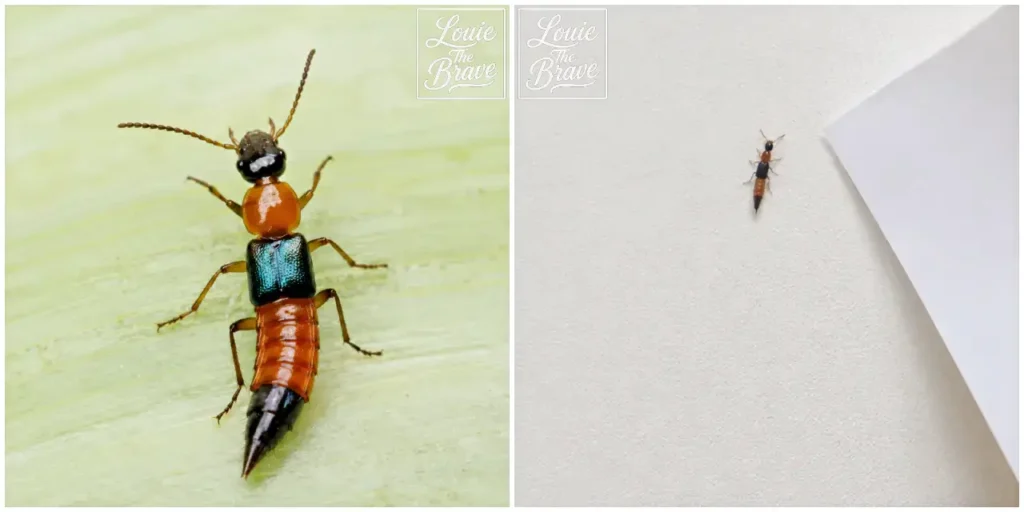
A small black-and-red beetle crawling across a wall or bed can look threatening. Many people instinctively slap it or brush it away with their hands. That reaction can cause the very skin injury they were trying to avoid.
Paederus rove beetles do not bite or sting. The problem begins when a beetle is crushed or rubbed against the skin. Its body fluid may contain pederin, a powerful irritant that can cause a delayed rash, burning, and blisters known as Paederus dermatitis.
What Does a Paederus Rove Beetle Look Like?
Paederus beetles are small, slender members of the rove beetle family. Species vary, but many have a noticeable combination of black or dark blue body sections with orange or reddish areas.
Their wing covers are shorter than the abdomen, leaving much of the segmented body exposed. They are more active at night and may enter homes after being attracted to artificial light.
However, not every small red-and-black beetle is a Paederus beetle, and only certain species are associated with pederin-related dermatitis. Identification should consider the beetle’s body shape, color pattern, short wing covers, and location rather than color alone.
Why Can It Cause Blisters Without Biting?
The injury is a form of irritant contact dermatitis, not an insect bite.
When someone slaps, squeezes, or drags the beetle across the skin, its body fluid can spread over the contact area. Pederin in that fluid damages surface skin cells and may create a long, streak-like lesion.
The rash itself is not contagious. However, pederin can be transferred to another body part if contaminated fingers touch the face, eyes, neck, or folded skin before they are washed. Two skin surfaces touching each other may also develop matching or “kissing” lesions.
Symptoms May Appear Hours Later
The skin may look normal immediately after contact. This delay is one reason people mistake Paederus dermatitis for a spider bite, allergic reaction, infection, or burn.
Typical changes can include:
| Time or change | What may happen |
|---|---|
| Immediately after contact | No visible mark or only mild irritation |
| About 12–36 hours later | Redness, burning, stinging, itching, or a linear rash |
| As the reaction develops | Small blisters, larger fluid-filled blisters, crusting, or peeling |
| During healing | Temporary darkening or discoloration of the affected skin |
Lesions frequently appear on exposed areas such as the face, neck, arms, and upper chest. Some cases improve within several days, while more irritated areas may take two to three weeks to settle.
What to Do After Rove Beetle Contact
If a beetle is crawling on your skin, do not slap or squeeze it.
- Blow it away gently or encourage it to walk onto a piece of paper.
- Wash the exposed skin with soap and plenty of water.
- Wash your hands before touching your face, eyes, or another person.
- Use a cool compress for mild burning or discomfort.
- Avoid breaking blisters or applying prescription creams without medical advice.
Prompt washing helps remove any pederin that has not yet remained in contact with the skin for long. Even when the area does not hurt immediately, washing should not be delayed.
Seek medical care when the rash covers a large area, pain is severe, blisters are extensive, or the diagnosis is uncertain. Increasing warmth, pus, fever, or worsening swelling also needs professional evaluation because another skin condition or a secondary infection may be present.
Eye exposure requires prompt medical attention. Pederin near the eye can cause eyelid inflammation, conjunctivitis, corneal injury, pain, and vision changes. Do not rub the eye. Rinse it carefully with clean water or sterile saline and obtain urgent medical advice.
What If a Rove Beetle Contacts a Dog?
Published veterinary guidance specifically addressing Paederus exposure in dogs is limited. Therefore, the human symptom timeline should not be assumed to apply exactly to every dog.
Use the first-aid approach recommended for irritating substances on an animal’s skin:
- Remove the beetle without crushing it.
- Rinse the exposed coat and skin thoroughly with lukewarm water.
- Prevent licking until the affected fur has been rinsed.
- Do not apply human steroid, antibiotic, pain-relief, or burn creams without veterinary instructions.
If exposure may have occurred around the eyes, flush gently with water or sterile saline and contact a veterinarian. Squinting, excessive tearing, eyelid swelling, eye redness, visible skin damage, marked pain, or worsening irritation should be examined promptly. Veterinary guidance for chemical skin and eye exposures emphasizes immediate flushing because the severity of local tissue damage can increase with contact time.
Remove Live and Dead Beetles Carefully
A dead Paederus beetle may still have irritating body fluid on or inside it. Do not pick it up with bare fingers.
Use paper, disposable gloves, or tweezers to remove the beetle. Clean the surface afterward and wash your hands. At night, closing curtains, repairing damaged window screens, and sealing gaps around windows can reduce the number of insects entering toward indoor lights.
The most useful rule is simple: do not crush the beetle, and wash exposed skin or fur promptly. A delayed red streak does not mean the beetle bit you. It may be a contact reaction caused by pederin.