Basenji Temperament: What “Barkless” Really Means at Home
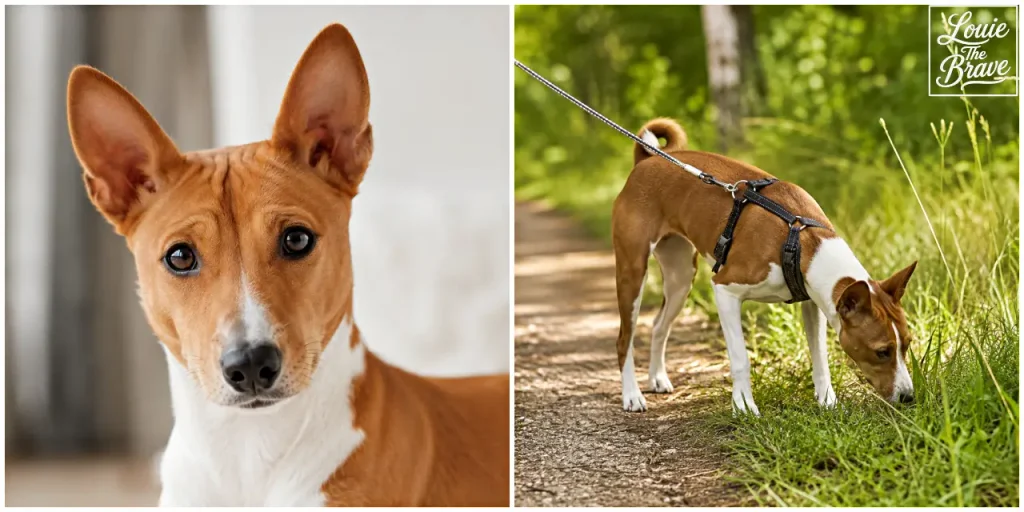
Basenji temperament is best described as intelligent, independent, alert, and affectionate with familiar people. The breed is famous for being “barkless,” but that does not mean silent. A Basenji can yodel, chortle, whine, growl, and even scream, so choosing one only because you want a quiet apartment dog can lead to the wrong match.
Are Basenjis Really Barkless?
Yes—in the specific sense that the Basenji does not produce the typical bark associated with most dogs. The official American Kennel Club standard says the breed should not bark but is not mute, while the Basenji Club of America describes yodels, whines, growls, and other vocal sounds.
That makes “barkless” a breed trait, not a promise of silence. Some Basenjis may be relatively quiet at home, but their unusual vocalizations can still be surprisingly noticeable.
The Basenji is a compact African hunting dog. Under the AKC standard, the ideal male is about 17 inches tall and 24 pounds, while the ideal female is about 16 inches and 22 pounds. Typical features include erect ears, forehead wrinkles, a defined waist, a tightly curled tail, and a short, fine coat.
What Is Basenji Temperament Like?
The Basenji Club of America standard describes the breed as intelligent, independent, affectionate, alert, and sometimes aloof with strangers. That combination helps explain why owners often call the Basenji “catlike.”
Catlike does not mean detached. Basenjis can be affectionate with their families, but they may not constantly seek direction or approval. Their hunting background favored dogs capable of working and making decisions away from their handlers.
This is why intelligence should not be confused with easy obedience.
Are Basenjis Difficult to Train?
They can be challenging for owners who expect a highly biddable dog. Reward-based training, short sessions, clear household rules, and variety generally fit this independent breed better than repetitive drills. The Basenji Club of America specifically recommends positive-reinforcement training.
Prey drive is another major ownership consideration. Basenjis historically hunted using both sight and scent, and the breed retains a strong instinct to pursue moving animals. The breed club recommends keeping Basenjis on leash or behind secure fencing rather than assuming recall will override the urge to chase.
A secure home matters too. An under-stimulated Basenji can become inventive about chewing household items, getting into trash, or finding its own entertainment.
Can a Basenji Live in an Apartment?
Possibly, but low barking alone does not make a Basenji an effortless apartment dog. AKC describes the breed as needing exercise, while the breed club emphasizes that physical activity and mental engagement are important parts of living successfully with one.
Daily life should include physical exercise, opportunities to sniff and explore, play, and training or other mental work. A brief potty walk is unlikely to satisfy an athletic hunting dog by itself.
Apartment owners should also consider hallway traffic, elevator encounters, visitors, and safe containment. A compact dog can still be demanding when independence, prey drive, and curiosity are part of the package.
Do Basenjis Shed or Need Much Grooming?
Basenjis have short, fine coats and generally require relatively little coat care. AKC describes them as minimal shedders, with occasional brushing usually sufficient for basic coat maintenance.
Their habit of grooming themselves is another reason for the catlike comparison. However, Basenjis are not hypoallergenic. The Basenji Club of America notes that some people with dog allergies tolerate individual Basenjis while others do not, so spending time around the breed before bringing one home is a better test than relying on the short coat alone.
What Health Tests Should a Basenji Breeder Show You?
Two breed-specific concerns deserve particular attention: Fanconi syndrome and progressive retinal atrophy (PRA).
The Basenji Club of America recommends DNA testing for Fanconi syndrome and PRA-BJ1. Fanconi DNA results are reported as Clear/Normal, Carrier, or Affected. A Carrier is not the same as an affected dog, but the result matters in breeding because the mutation can be passed to offspring.
PRA-BJ1 testing is important, but it does not detect every form of PRA found in Basenjis. The breed club states that PRA-BJ1 accounts for about half of PRA cases, so regular veterinary ophthalmology examinations remain important alongside DNA testing. Recommended screening for breeding dogs also includes eye, thyroid, and orthopedic evaluations.
Is a Basenji the Right Dog for You?
A Basenji can be an excellent match for someone who likes an athletic, clean, compact dog and is comfortable with independent behavior. The harder match is a household expecting effortless obedience, reliable off-leash freedom, very low exercise needs, or complete silence.
The key question is not simply, “Do Basenjis bark?” It is whether you would enjoy living with a clever hunting dog that may be quiet in one moment, yodeling in the next, and making its own decisions throughout the day.
Source:
American Kennel Club — Official Standard for the Basenji
American Kennel Club — Basenji Dog Breed Information
American Kennel Club — Small Dogs That Don’t Shed
Basenji Club of America — Breed Standard
Basenji Club of America — The Basenji
Basenji Club of America — Basenji Health
Basenji Club of America — For Owners