PizzleGrip Bully Stick Holder Review for a Small Yorkie
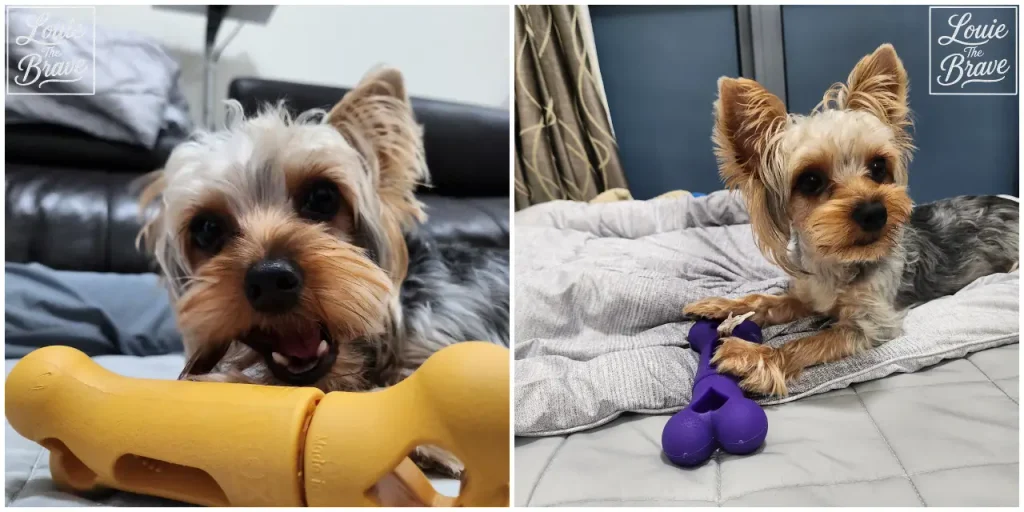
A bully stick holder only earns a place in my home if it does two things well: it keeps the chew secured and it survives repeated use. PizzleGrip did both for Louie, my small Yorkshire Terrier.
After several months of use, the holder had not broken, the chew stayed firmly attached when I tightened it properly, and Louie could use it comfortably even though the body looked oversized for him at first.
That does not make any holder a substitute for supervision. The American Kennel Club notes that dogs can choke on chew pieces and specifically recommends supervising dogs with chews. It also suggests using a bully stick holder to help prevent a dog from swallowing the final chew stub whole.
I still watch Louie while he chews. What PizzleGrip changed was how often I had to worry about the holder itself failing.
Why I Switched From Spring-Style Food Clips
Before PizzleGrip, I used the common spring-style clips that clamp onto long treats. They were smaller, lighter, and much cheaper. In my experience, however, those advantages did not make up for the repeated failures.
Louie went through about eight spring-style clips. Thick treats were the biggest problem because tightening the clip around them made breakage more likely. Thin treats created the opposite problem: they could slip out too easily.
Cleaning was also awkward because the spring mechanism was difficult to wash thoroughly.
When I bought PizzleGrip, it cost roughly three to four times as much as the spring clips I had been using. I hesitated because of that price difference and because the holder looked large for a Yorkie.
After months of use, the higher initial cost made more sense to me because I was no longer replacing broken clips.
For me, this was the main reason the PizzleGrip bully stick holder felt different from the cheaper option. A bully stick holder has to stay dependable through repeated tightening, not just look sturdy on the first day.
How the PizzleGrip Bully Stick Holder Works
PizzleGrip uses a twist-to-tighten design instead of a spring clamp.
The product listing describes the holder as being made from polyamide. Its instructions say to turn the holder counterclockwise to create space for the chew, insert the stick, and then turn it clockwise to secure it.
In daily use, the key is tightening it until the chew no longer moves. I hold the chew in place with one hand and turn the holder firmly with the other.
With the bully sticks I used for Louie, that kept the chew from pulling out during normal chewing.
This is also where fit matters. A bully stick holder is only useful when the treat can be secured tightly enough for your individual dog. Bully sticks naturally vary in thickness and shape, so I would not assume that every stick will fit every holder equally well.
I check the grip before giving it to Louie instead of treating the first twist as enough.
The American Kennel Club also advises taking away a bully stick once the remaining piece is small enough for the dog to swallow. A holder can limit access to that final piece, but it does not turn chew time into an unsupervised activity.
What I Liked After Months of Use
The biggest advantage was durability.
Louie chewed on the PizzleGrip itself, carried it around, and played with it after the treat was gone. I did not see the kind of failure I had repeatedly experienced with spring clips.
I would not call any dog product indestructible, but this bully stick holder did not break during the months I used it.
The second advantage was cleaning. Because there was no exposed spring mechanism to trap residue in the same way, it was much easier for me to wash than the older clips.
The third advantage was stability.
The body sits low enough that Louie can brace it with his front paws while lying down. That mattered more than I expected. A holder that is technically secure but constantly tips, rolls, or feels awkward can make a small dog give up on the chew.
This bully stick holder also gave Louie something to hold onto. He often rests a paw on the body while chewing.
When the bully stick becomes too short to reach, he sometimes carries the holder, mouths it, or tosses it around as a toy.
Is It Too Big for a Small Dog?
That was my biggest concern before buying it.
PizzleGrip looked bulky next to Louie, and I assumed the weight would be inconvenient. In practice, the size worked better than I expected.
Louie could lift it, move it, and settle down with it without help. The wider body actually gave him a stable base for his paws.
For my Yorkie, large-looking did not automatically mean too large to use.
Still, I would not use Louie’s experience as proof that every toy-breed dog will like the same bully stick holder design. Small dogs differ in jaw strength, paw use, chew style, and willingness to manipulate a larger object.
Before buying any bully stick holder, I would check three things:
- Can your usual chew be secured firmly?
- Can your dog position and hold the device comfortably?
- Does your dog focus on the edible chew rather than aggressively chewing the holder itself?
If you are also choosing chews for a toy breed, my Breezen Good Night Chew size comparison shows another example of why the package size alone does not always predict how comfortably a small dog will actually eat a chew.
What I Would Check Before Buying
First, think about the treats you actually use.
If your bully sticks are extremely thin, very thick, irregular, or different from one package to the next, the gripping range matters more than the color or appearance of the holder.
Second, think about your dog’s chewing style.
A dog that calmly gnaws one end is different from a dog that pulls hard, tries to swallow the final section, or aggressively chews the holder body. Inspect the holder during every session and remove the chew if it becomes loose.
Third, do not buy a bully stick holder because you expect it to make long periods of unsupervised chewing safe. Chews can still become choking hazards, and supervision remains part of safer chew use.
Finally, decide whether the higher price is justified by how often you use long chews.
PizzleGrip made sense in our house because Louie used food clips regularly and I had already replaced many cheaper ones. If your dog only gets a bully stick occasionally and never tries to gulp the end, you may not value the same features as much.
PizzleGrip vs. the Spring Clips I Used
For Louie, the difference came down to reliability.
| What I noticed | Spring-style clips | PizzleGrip |
|---|---|---|
| Durability in our use | About eight eventually failed | No breakage during months of use |
| Thick chews | More likely to cause problems when tightened | Worked with the chews I used |
| Thin chews | Could slip out | Stayed secure when tightened firmly |
| Cleaning | Spring area was difficult to clean | Easier for me to wash |
| Size | Small and light | Larger and heavier |
| Stability for Louie | Less substantial | Easy to brace with his paws |
| Price when I bought them | Much cheaper | About 3–4 times more expensive |
The spring clips were compact and inexpensive, but I repeatedly dealt with broken mechanisms, poor fit with thicker treats, slipping with thinner treats, and difficult cleaning.
PizzleGrip was larger and more expensive, yet it held the chew more securely in my use and stayed intact for months.
That is why I kept using the PizzleGrip bully stick holder. It solved the specific problems I had with the previous style instead of simply giving me another version of the same clip.
Louie also treats the empty PizzleGrip like a toy.
Final Verdict
I would buy PizzleGrip again for Louie.
My reason is not that a bully stick holder makes chewing risk-free. It does not. My reason is that this design stayed secure and usable after months of repeated use, while the spring-style clips I owned kept failing.
For a small dog, I would not reject it based on size alone. Louie was able to carry it, brace it with his paws, and use it comfortably.
The more important question is whether your dog’s usual chews fit tightly and whether the dog can use the bully stick holder without damaging it.
If you regularly give bully sticks or other long, stick-shaped chews and want a durable way to secure the end, PizzleGrip is the bully stick holder I would choose again based on my own experience.
Just keep the same rule I use at home: tighten the chew firmly, check the holder before every session, and stay nearby while your dog chews.
Source:
American Kennel Club — Dog Choking Prevention: Everything You Need to Know
American Kennel Club — How to Choose Edible Dog Chews That Are Also Safe
BuyKOREA — Pizzle Grib product listing and use instructions