Bukangi shark in Busan: Species and October 2026 Update
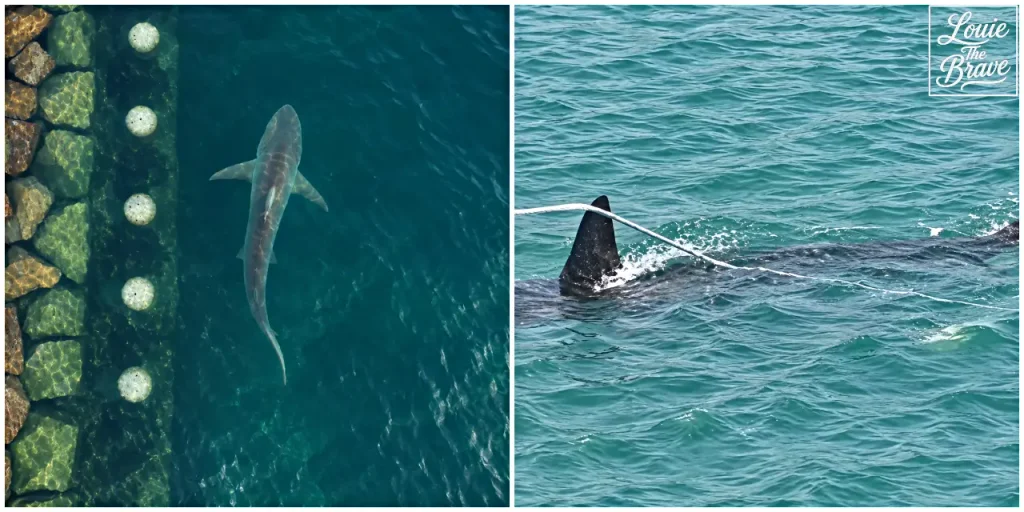
A large shark has been swimming through an artificial canal in Busan, South Korea, drawing enormous crowds to a waterfront park. Nicknamed Bukangi, the animal has become a local celebrity, but its extended stay has also raised concerns about its health and ability to return to the ocean.
The Bukangi shark is a female dusky shark (Carcharhinus obscurus) measuring approximately 9.8 feet (3 meters). South Korea’s National Institute of Fisheries Science confirmed its identity on October 6, 2026. As of October 11, the shark was still swimming in the canal at Busan’s North Port Waterfront Park, despite two unsuccessful attempts to guide it toward the open sea.
What Is the Bukangi Shark, and Where Was It Found?
Bukangi was first spotted on September 18, 2026, in an artificial waterway at North Port Waterfront Park in Busan’s Dong District.
The park is part of the redeveloped North Port waterfront. Its canal connects to the surrounding harbor waters, allowing marine animals to enter from the sea.
However, the canal’s enclosed layout creates a very different environment from the open coastal waters where large sharks normally travel.
Visitors began noticing a sizable shark moving through the waterway, sometimes swimming close enough to the surface for its dorsal fin to become visible.
As sightings continued over several days, videos spread across Korean social media. The unusual scene attracted people who wanted to see a wild shark without boarding a boat or visiting an aquarium.
The shark’s continued presence turned what began as a local wildlife sighting into a nationally followed story.
What Does the Name Bukangi Mean?
The nickname Bukangi (부캉이) comes from Bukhang-i (북항이), a friendly Korean expression referring to North Port.
In Korean, buk means north, while hang means port or harbor. The name therefore connects the shark directly to the place where it appeared.
According to Korean reporting, the Busan Infrastructure Corporation, which manages the park, was already using the nickname by September 21.
Residents and social media users subsequently adopted it.
English-language reports use slightly different spellings, including Bukangi, Bukang-i, and Bukang. These names refer to the same shark.
Why Was Bukangi Identified as a Dusky Shark?
The Bukangi shark was initially reported as a copper shark, also known as a bronze whaler.
That identification was provisional.
Copper sharks and dusky sharks belong to the same genus, Carcharhinus, and have similar streamlined bodies, pointed dorsal fins, and grayish coloring.
Their appearances can be difficult to distinguish from footage taken at a distance, particularly when the animals remain underwater.
Scientists therefore continued examining closer images of the shark.
On October 6, the National Institute of Fisheries Science announced that its analysis had confirmed a different species: the dusky shark (Carcharhinus obscurus).
The Physical Feature That Confirmed Its Identity
The decisive feature was an interdorsal ridge.
This is a raised line of tissue running along the shark’s back between its first and second dorsal fins.
The two species can be distinguished by this feature:
| Feature | Dusky shark | Copper shark |
|---|---|---|
| Scientific name | Carcharhinus obscurus | Carcharhinus brachyurus |
| Ridge between dorsal fins | Distinctly developed | Absent |
| Appearance | Gray to dusky brown | Gray to bronze |
| Initial identification of Bukangi | Confirmed October 6 | Earlier possibility |
Close-up footage revealed a clearly developed interdorsal ridge on Bukangi, allowing researchers to identify the shark as a dusky shark.
Scientists also examined reproductive features on the underside of the animal and determined that it was female.
Its estimated body length was approximately 9.8 feet (3 meters).
These findings replaced the earlier uncertain species identification. News articles published before October 6 may still describe Bukangi as a copper shark or bronze whaler.
Is the Bukangi Shark Still in Busan as of October 11?
Yes. As of October 11, 2026, Bukangi remained in the artificial canal at North Port Waterfront Park.
The date marked the 24th day of its observed stay, counting September 18 as the first day.
According to an October 11 report from Yonhap News Agency, the shark had continued swimming within the canal despite two previous attempts by authorities to guide it out.
Officials had not announced that Bukangi had returned to the open sea.
The animal’s extended stay has made its condition an important concern for marine researchers.
Scientists have been monitoring its movements, swimming behavior, visible injuries, and environmental conditions in the waterway.
These observations are intended to help officials determine whether the shark can continue remaining in the canal safely or whether further intervention might become necessary.
Because this is an ongoing wildlife event, the shark’s location and condition may change after the October 11 update.
Why Have Attempts to Return Bukangi to the Ocean Failed?
Authorities have tried twice to move Bukangi toward open water.
Both operations attempted to influence the shark’s direction without physically capturing and transporting it.
Neither produced a lasting return to the sea.
September 29: Water Jets and Boats
The first operation took place on September 29.
The Busan Coast Guard and other agencies deployed vessels into the artificial waterway and used water streams to encourage the shark to move toward the canal’s exit.
The idea was to create a disturbance behind or beside the animal that would guide it in the desired direction.
However, Bukangi repeatedly avoided the water streams.
The shark maneuvered around the boats and continued swimming within the canal.
After approximately five hours, authorities ended the operation without successfully guiding it into the open harbor.
October 2: A Large Net Nearly Worked
A second operation followed on October 2.
This time, crews used a specialized net approximately 164 feet (50 meters) long and 22 feet (6.8 meters) high.
The net was moved gradually through the canal to guide Bukangi toward the outlet.
During the approximately two-hour operation, the shark moved substantially closer to the open-water exit.
However, the net became caught on underwater obstacles, preventing crews from safely continuing.
Authorities stopped the operation and temporarily left the barrier positioned to discourage the shark from moving farther back into the canal.
October 3: Bukangi Crossed the Barrier
The following day, rising water levels during high tide changed the situation.
Bukangi passed over the temporary net barrier and returned to the interior section of the canal where it had previously been swimming.
The unsuccessful operation demonstrated how difficult it was to control the animal’s movements within the changing tidal environment.
The barrier was subsequently removed so the shark would have an unobstructed opportunity to leave on its own.
Following the two unsuccessful operations, authorities shifted toward continued observation rather than immediately attempting another intervention.
Why Does the Shark Keep Swimming in the Canal?
The exact reason Bukangi entered the canal and has remained there is unknown.
Marine experts have suggested that the shark may have followed fish into the waterway and then had difficulty navigating back toward the harbor.
This remains a hypothesis, not a confirmed explanation of its behavior.
Several features of the environment could complicate its movements.
Unlike open coastal waters, the artificial canal contains walls, underwater structures, and a restricted route toward the harbor.
Water levels also change with the tides, affecting how the shark moves through different sections.
The failed rescue attempts show that the animal is capable of traveling toward the exit. They do not establish why it subsequently returned to the interior of the canal.
It would be misleading to describe Bukangi as choosing to live in the park or enjoying the attention.
The animal is a wild shark in an unfamiliar human-built environment. Its continued presence does not necessarily indicate that the location is suitable for long-term habitation.
Is Bukangi an Endangered Shark?
Yes. The dusky shark is classified as Endangered (EN) on the International Union for Conservation of Nature (IUCN) Red List.
Dusky sharks inhabit tropical and warm-temperate waters in several regions of the world. They occupy coastal and offshore habitats and can make long-distance movements.
The species is known for its relatively slow growth and reproduction.
Females take many years to mature, and their reproductive cycle is lengthy compared with those of many other fish species.
These characteristics make population recovery difficult when excessive numbers are removed through fishing.
Dusky sharks can reach approximately 13.8 feet (4.2 meters) in total length, according to Shark Trust species information.
Bukangi, at approximately 9.8 feet, is therefore a large individual, although not close to the maximum recorded size.
Its conservation classification also matters when considering how authorities should respond to its extended stay.
Any attempt to relocate a large wild shark carries potential risks. Handling, crowding, and sudden disturbances can cause injuries, especially in a confined waterway.
The IUCN Endangered classification describes the species’ global conservation status. It should not be confused with a listing under the U.S. Endangered Species Act, which uses a separate legal assessment process.
Is Bukangi Injured or in Danger?
On October 7, researchers from the National Institute of Fisheries Science identified abrasions near Bukangi’s snout.
The injuries raised concerns about possible contact with structures inside the shallow canal.
Researchers considered the possibility that sudden turns or abrupt movements caused the shark to scrape against the canal floor or other hard surfaces.
However, the exact cause of the injuries has not been established.
Reports from the area also documented visitors shining powerful lights toward the shark at night.
In some footage, Bukangi appeared to react with sudden movements after exposure to bright light.
These observations raised concern that external disturbances could contribute to additional injuries.
Researchers did not establish that a particular visitor or light exposure directly caused the abrasions.
At the time of the October 7 observations, the shark was reportedly continuing to swim without a major change in its usual movement pattern.
Officials planned to keep monitoring the injuries and its overall condition.
An apparently normal swimming pattern, however, does not independently establish that a wild animal is free from stress or other health problems.
The animal’s condition must be assessed through continued observation and appropriate scientific measurements.
A similar concern arose with Angmoki, a wild dolphin in South Korea that repeatedly approached people and boats before suffering a serious injury. Its story shows how close human contact can put marine wildlife at risk, as explained in this report on Angmoki’s injuries and interactions with people
How Many People Have Visited the Park to See Bukangi?
Bukangi’s appearance has produced extraordinary visitor numbers at North Port Waterfront Park.
According to figures released by the Busan Infrastructure Corporation and reported by Yonhap News Agency on October 11, attendance reached:
| Reporting period | Park visitors |
|---|---|
| October 9–11, 2026 | 205,000 |
| September 18–October 11, 2026 | 1,348,800 |
The October 11 figures were reported as of 6 p.m. local time.
During the three-day Hangeul Day holiday weekend, approximately 74,000 people visited on October 9, 75,000 on October 10, and 56,000 on October 11.
These are park attendance figures, not verified counts of people who actually saw the shark.
Some visitors may have arrived for other recreational activities, while others may have visited repeatedly or left without seeing Bukangi.
Still, the figures demonstrate the scale of public interest surrounding the animal.
For many visitors, the possibility of seeing a large wild shark from a pedestrian-accessible waterfront has been a rare attraction.
Can Visitors Safely Watch the Shark?
People can observe the canal from permitted public areas, but visitors should follow all current restrictions and maintain an appropriate distance from the water.
Authorities have restricted access to some sections of the park as crowds have increased.
Visitors should not assume that every walkway or viewing location is accessible.
The following precautions protect both people and the shark:
- Do not throw food into the canal. Feeding can alter the animal’s behavior and attract it toward people.
- Avoid bright lights. Do not direct flashlights, powerful phone lights, or reflected light at the shark.
- Do not attempt to provoke movement. Avoid shouting, throwing objects, or creating disturbances to make the shark surface.
- Keep away from the water’s edge. Use designated walkways and remain behind barriers.
- Respect closed areas. Follow temporary safety signs, crowd controls, and instructions from park personnel.
Visitors should also understand that Bukangi’s appearance near the surface cannot be predicted reliably.
Online reports about frequent sighting locations or particular hours do not guarantee that the shark will appear.
For anyone planning to visit, checking the latest park access information is more useful than relying on older social media videos.
What Happens Next to the Bukangi Shark?
There is no confirmed date for Bukangi’s return to the ocean.
The canal remains connected to the harbor, and authorities have removed the temporary barrier that had been used during the second guidance operation.
This means the shark has a possible route back to open water.
Officials have expressed hope that Bukangi will eventually swim out voluntarily.
Researchers are also observing changing environmental conditions, including water temperature.
Dusky sharks generally occupy warmer temperate and tropical waters, with Korean fisheries officials identifying approximately 64–79°F (18–26°C) as a commonly preferred temperature range.
As seasonal temperatures fall, the suitability of the canal may change. However, cooler water does not guarantee that Bukangi will find the exit or leave on a particular day.
Further intervention would require authorities to weigh the risks of remaining in the canal against the risks associated with another effort to move the animal.
For now, the safest immediate contribution visitors can make is to avoid disturbing the shark while researchers continue their work.
The Bukangi shark has become an unexpected symbol of Busan’s waterfront. Its story also illustrates how quickly public fascination with a wild animal can create new challenges for its welfare.
Whether Bukangi leaves independently or eventually requires additional assistance remains uncertain. The best outcome would be for the shark to return safely to suitable marine habitat without unnecessary injury or stress.
Source
- National Institute of Fisheries Science (South Korea) — October 6, 2026 announcement confirming Bukangi as a dusky shark
- Yonhap News Agency — October 11, 2026 report on Bukangi and North Port Waterfront Park attendance
- Yonhap News Agency — September 29, 2026 report on the first attempt to guide the shark to sea
- SBS News — October 3, 2026 report on Bukangi returning to the canal after the net operation
- Aju Press — October 10, 2026 report on Bukangi’s identity, condition, and rescue attempts
- Yonhap News Agency — October 7, 2026 report on injuries near Bukangi’s snout
- Weekly Kyunghyang — October 7, 2026 fact-check on the origin of Bukangi’s nickname and shark identification
- The Shark Trust — Dusky Shark species profile, size, habitat, and conservation status