Dog Vomiting Yellow Bile? How to Adjust Meal Times
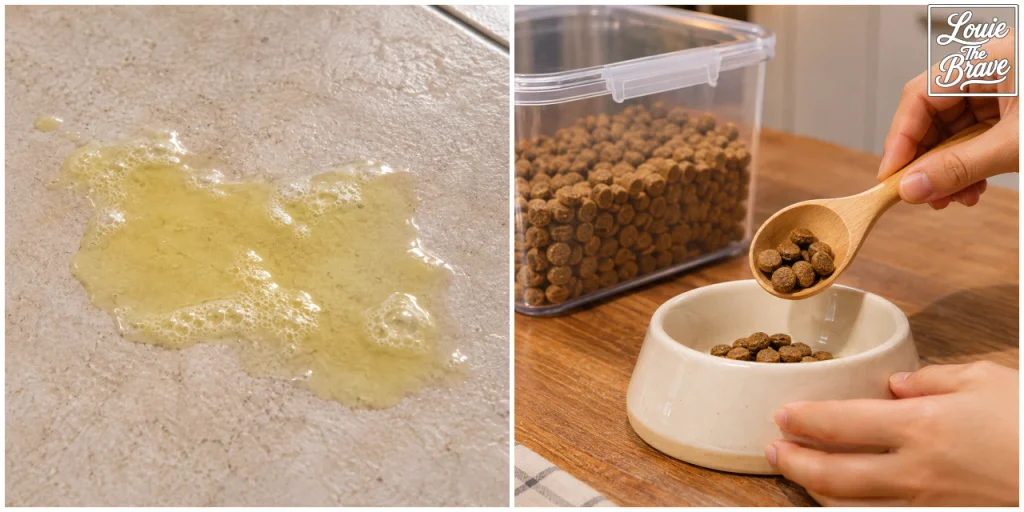
A dog vomiting yellow bile before breakfast may have an empty stomach irritated by bile, especially when the episodes happen in the early morning. In dogs that otherwise eat, drink, and act normally, adjusting meal timing may help. However, yellow vomit alone cannot confirm the cause, and repeated vomiting deserves veterinary evaluation.
The first thing to check is when your dog last ate and whether the vomiting happens at a similar time. A dog that vomits yellow foam before breakfast presents a different pattern from one that vomits after meals, has diarrhea, or refuses food. Those details help determine whether a feeding adjustment is reasonable or a veterinary examination is needed.
Why Does a Dog Vomit Yellow Foam on an Empty Stomach?
Bile is a digestive fluid produced by the liver and released into the small intestine to help digest fats. It normally ranges from yellow to greenish in color. When bile moves backward from the intestine into the stomach, it may irritate the stomach lining and trigger vomiting.
This process is associated with bilious vomiting syndrome (BVS). Veterinarians may suspect the condition when a dog repeatedly vomits small amounts of yellow liquid or foam early in the morning but otherwise appears healthy.
According to the University of Illinois College of Veterinary Medicine, bilious vomiting syndrome is generally considered after other causes of vomiting have been excluded. The typical pattern involves intermittent early-morning vomiting without additional symptoms.
Does yellow foam always mean the stomach is empty?
No. Yellow or greenish vomit may contain bile, but the presence of bile does not identify why the dog vomited. Dogs with gastrointestinal inflammation, pancreatitis, intestinal obstruction, or other illnesses can also bring up yellow fluid.
Foam forms when fluid mixes with mucus, air, or stomach contents during vomiting. It may appear pale yellow, cream-colored, or almost white. Neither the color nor the amount of foam is sufficient to distinguish a harmless episode from a medical problem.
If your dog vomits yellow foam, pay attention to the timing, frequency, appetite, energy level, and accompanying symptoms. The appearance of the vomit provides one clue, but the circumstances surrounding it are equally useful.
Dog Vomiting Yellow Bile Before Breakfast: Is It Bilious Vomiting Syndrome?
Bilious vomiting syndrome becomes a stronger possibility when a dog vomits after several hours without food, particularly during the early morning. The dog may seem completely normal afterward and remain interested in breakfast. This pattern can occur intermittently rather than every day.
For a veterinarian to consider BVS, there should generally be no other concerning clinical signs. A dog with ongoing diarrhea, weight loss, abdominal pain, or reduced appetite needs evaluation for other possible causes.
Not every dog that goes through the night without eating develops this condition. Some dogs tolerate long intervals between meals, while others experience digestive symptoms on their usual schedules.
There is no universal fasting duration that causes bilious vomiting in every dog. Twelve hours between meals is not automatically excessive, and vomiting after a shorter interval is not automatically caused by hunger.
An example from my Yorkshire Terrier, Louie
My Yorkshire Terrier, Louie, usually eats breakfast at 7 a.m. and dinner at 7 p.m. His regular meals are approximately 12 hours apart, and he often has a small afternoon snack around 2 p.m. His breakfast and dinner portions are generally similar, although I sometimes add a little topping to dinner.
I have noticed an interesting difference in his mornings. On days when Louie slept beside me until around 11 a.m., he sometimes managed the delayed breakfast without vomiting. Yet on mornings when he woke earlier and walked around the house, he occasionally vomited even before his regular 7 a.m. meal.
That observation made me more attentive to his waking time as well as the hours between meals. It does not prove that waking early caused his vomiting or that sleeping longer prevents it. I now try to keep his 7 a.m. breakfast consistent, even after a late night.
His experience illustrates why a feeding record can reveal details that a simple calculation of fasting hours may miss.
Yellow Bile, Undigested Food, and Regurgitation: How to Tell Them Apart
When a dog brings up food or liquid, the appearance can provide useful information. However, the physical action is particularly important when distinguishing vomiting from regurgitation.
Vomiting involves active abdominal contractions that push material out of the stomach. Regurgitation is a more passive process in which food or liquid comes back up from the esophagus, often without noticeable heaving.
The following observations can help describe the event accurately.
| What you notice | What it may suggest | What else to check |
|---|---|---|
| Small amount of yellow or greenish liquid, sometimes foamy | Bile may be present | Time since the last meal and other symptoms |
| Pale or white foam | Stomach fluid, mucus, or other material | Repeated episodes, coughing, and breathing changes |
| Partially digested food with abdominal heaving | Vomiting | Time after eating and signs of nausea |
| Undigested food coming up without obvious effort | Possible regurgitation | Whether it happens immediately after eating or drinking |
| Red blood or dark material resembling coffee grounds | Possible bleeding | Contact a veterinarian promptly |
A dog may lick its lips, drool, swallow repeatedly, or become restless before vomiting. During the episode, its abdomen may visibly contract. Regurgitation can occur suddenly, sometimes shortly after a meal, without those warning signs.
If you cannot tell which occurred, a short video of a future spontaneous episode can help your veterinarian. Do not attempt to provoke vomiting or regurgitation for documentation.
Photograph the material when possible, and record how long after eating it appeared. This information is useful even when the vomit is no longer available for examination.
How to Adjust Feeding Times for Morning Bile Vomiting
If a veterinarian considers bilious vomiting syndrome likely, modifying the feeding schedule is often an early management approach. The University of Illinois notes that many dogs with suspected BVS respond to a small meal offered late in the evening, close to bedtime.
The goal is to reduce the time the stomach remains empty overnight. The adjustment should preserve appropriate daily nutrition rather than introduce unnecessary extra calories.
1. Move a portion of dinner to bedtime
One option is to reserve a small amount of your dog’s usual evening food and offer it shortly before bed. This changes when the food is consumed without increasing the day’s total amount.
For example, consider a dog normally eating at 7 a.m. and 7 p.m. If the dog goes to bed around 10:30 p.m., the owner could discuss moving a small part of the 7 p.m. meal to that time.
| Feeding time | Original schedule | Adjusted schedule |
|---|---|---|
| 7 a.m. | Breakfast | Breakfast |
| 7 p.m. | Full dinner portion | Dinner minus reserved food |
| 10:30 p.m. | No meal | Reserved portion of dinner |
| Daily total | Usual daily amount | Same daily amount |
This is an illustrative schedule, not a prescribed feeding plan. The appropriate portion depends on the dog’s calorie needs, health, current food, and veterinary recommendations.
Use the dog’s regular complete and balanced food when appropriate. Adding cheese, fatty treats, or an entirely new food introduces other variables and may complicate the assessment.
2. Offer breakfast earlier when needed
If vomiting tends to happen shortly before the usual morning meal, offering breakfast earlier may be another option. Owners can also discuss dividing the morning allowance into two smaller feedings if the dog’s schedule allows.
An automatic feeder may be useful for dogs eating suitable dry food when an early feeding is difficult to manage manually. The feeder should dispense part of the measured daily allowance rather than an additional uncounted meal.
Changing the morning feeding time should not mean sacrificing consistent daily intake. The amount served throughout the day still needs to match the dog’s individual nutritional requirements.
3. Consider smaller, more frequent meals
Some dogs do better when their daily food is divided into several portions. This approach may shorten the interval between meals while reducing the size of any single feeding.
The feeding pattern must still accommodate medication timing, prescription diets, activity, and any diagnosed digestive conditions. Puppies and dogs with illnesses may require a more individualized schedule.
For owners who prepare homemade food, the distinction between daily calories and individual servings is especially relevant. My guide to calculating homemade dog food portions and meal sizes explains how the daily allowance can be divided without confusing meal size with total intake.
How soon should the feeding change help?
There is no guaranteed number of days or a universal response rate. If a veterinarian recommends a feeding adjustment, record what happens after the schedule changes and follow the agreed review plan.
Persistent vomiting despite an adjusted schedule should lead to veterinary reassessment. Repeatedly moving meals later or offering extra food without investigating the symptoms can delay diagnosis of another condition.
What to Do After a Single Episode of Yellow Vomiting
A healthy adult dog that vomits once and immediately returns to normal may be monitored at home, provided there are no concerning symptoms. Observe whether the dog remains alert, drinks normally, and shows its usual interest in food. Also watch for another episode or a change in bowel movements.
You do not need to assume every isolated episode requires a prolonged fast. Similarly, completely withholding water without veterinary guidance can increase the risk of dehydration. If your dog is eager to drink, offer manageable amounts and make sure the water stays down.
If vomiting continues or even small amounts of water trigger another episode, contact your veterinarian promptly. Do not force your dog to drink or give human nausea or acid-reducing medication without veterinary instructions.
Puppies, senior dogs, very small dogs, and dogs with existing medical conditions require greater caution. In these animals, even an apparently isolated episode may justify an earlier veterinary consultation.
Young puppies have different nutritional needs and may require more frequent meals. For more information on age-appropriate routines, see my guide to feeding and caring for an 8-week-old puppy.
When Is Yellow Vomiting a Reason to Call the Vet?
A dog vomiting yellow bile repeatedly should not automatically be treated as a dog that is simply hungry. The same appearance can occur with several medical conditions, including intestinal inflammation, parasites, pancreatic disease, and gastrointestinal obstruction.
A veterinarian may need to perform a physical examination and consider fecal tests, bloodwork, X-rays, or ultrasound. The tests depend on the history, examination findings, and accompanying symptoms.
Situations that require different responses
| Situation | Recommended response |
|---|---|
| One episode, normal appetite and energy, no additional symptoms | Monitor closely if the dog is otherwise a healthy adult |
| Yellow vomiting on several mornings | Schedule a veterinary consultation |
| Vomiting after meals or during the day | Contact your veterinarian for assessment |
| Vomiting with diarrhea, poor appetite, or weight loss | Seek prompt veterinary evaluation |
| Repeated vomiting or inability to keep water down | Seek urgent veterinary care |
| Blood in vomit, marked weakness, severe abdominal pain, or suspected toxin or foreign-object ingestion | Seek immediate veterinary care |
| Repeated attempts to vomit with little or nothing produced, especially with a swollen abdomen | Go to an emergency veterinary hospital immediately |
Repeated unproductive retching is an emergency warning sign. Dogs with gastric dilatation-volvulus (GDV), also called bloat with stomach twisting, may repeatedly attempt to vomit without bringing anything up. A swollen abdomen, distress, drooling, weakness, or collapse can also occur.
GDV is more common in large, deep-chested breeds, but a dog’s size should not be used to dismiss repeated unproductive retching.
Blood in vomit also requires prompt medical attention. Fresh blood may appear red, while partially digested blood can resemble dark coffee grounds. Dark vomit is not always blood, so photographs and a record of recently eaten foods help the veterinarian assess its appearance.
Keep a Feeding and Vomiting Log Before Changing the Routine Again
When a dog vomits around breakfast, a written record can help identify whether there is a consistent relationship with meal timing.
Start with the previous evening’s dinner and continue through the following morning. Record snacks, medication, waking time, and what happened before and after the vomiting.
A useful log includes:
- Last meal: Time and approximate amount eaten.
- Snacks and toppers: What was offered and when.
- Waking time: When the dog first became active.
- Vomiting: Time, number of episodes, appearance, and whether abdominal heaving occurred.
- Condition afterward: Appetite, drinking, energy, stool, and any signs of discomfort.
- Feeding adjustments: What changed and whether further vomiting occurred.
Consider a dog that eats dinner at 7 p.m., wakes at 5:30 a.m., and vomits yellow fluid at 6 a.m. That record tells the veterinarian more than simply reporting that the dog vomited because its stomach was empty.
If a bedtime portion is introduced under veterinary guidance, note the new feeding time and any changes in symptoms. Avoid making several diet and schedule changes simultaneously, since doing so makes it harder to identify what affected the dog’s response.
A feeding log does not establish a diagnosis. Its value is in providing a clear history so that a veterinarian can decide whether meal timing, further testing, or another treatment approach is appropriate.
Does Every Dog Need a Bedtime Snack?
No. The University of Illinois specifically notes that there is no evidence to support changing the feeding schedule of a dog without symptoms solely to prevent bilious vomiting syndrome.
For dogs that eat normally and have no digestive symptoms, maintaining a consistent, nutritionally appropriate feeding routine is generally reasonable.
For dogs with recurring early-morning vomiting, a small late meal may be useful after a veterinarian has considered other causes. If the problem persists or occurs alongside other symptoms, feeding changes alone are not sufficient.
Louie’s morning experiences have made me more consistent about his breakfast time and more attentive to when he wakes. They also remind me that the same 12-hour meal interval does not always produce the same experience in an individual dog.
If your dog brings up yellow foam before breakfast, begin by recording the episode, the last feeding time, and how your dog behaves afterward. Discuss recurring episodes with your veterinarian before treating them as routine hunger-related vomiting.
Source
- University of Illinois College of Veterinary Medicine — Why Is My Pet Vomiting? Here’s One Option (Bilious Vomiting Syndrome)
- VCA Animal Hospitals — Vomiting in Dogs
- VCA Animal Hospitals — Bloat: Gastric Dilatation and Volvulus in Dogs
- VCA Animal Hospitals — Gastroenteritis in Dogs
- MSD Veterinary Manual — Vomiting in Dogs