Stress Diarrhea in Dogs: Symptoms, Causes, and Gut Health
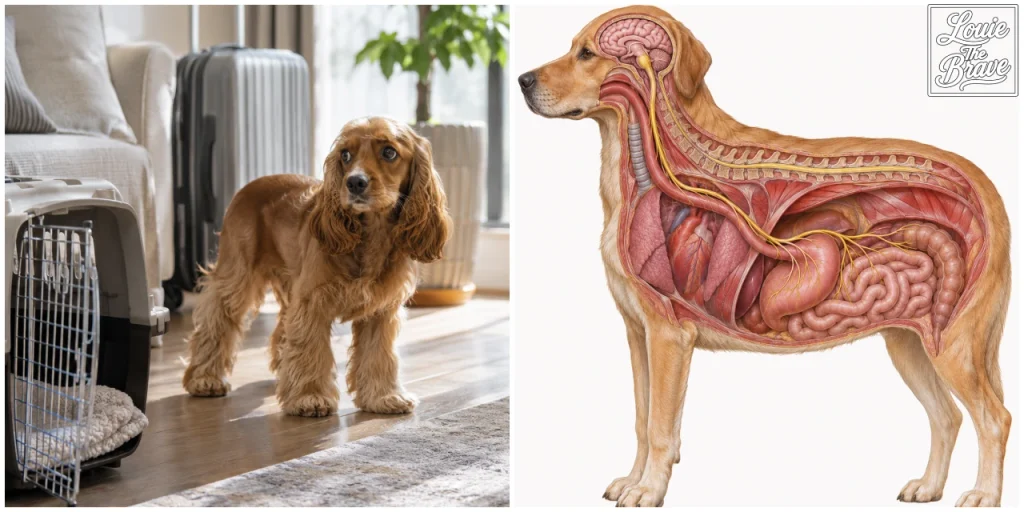
Stress diarrhea in dogs can develop after boarding, traveling, visiting the vet, or experiencing an unfamiliar situation. When a dog feels anxious or frightened, its nervous system and stress hormones can affect intestinal movement, water absorption, and inflammation. These changes can result in loose stools, frequent bowel movements, and sometimes mucus or fresh blood in the stool.
Stress can also affect the community of microorganisms living in the digestive tract, known as the gut microbiota. Researchers are studying how these microorganisms communicate with the brain and influence digestive health. Recent canine studies suggest that the intensity and duration of stress may help explain why some dogs experience digestive changes while others do not.
What Does Stress Diarrhea in Dogs Look Like?
Stress is one possible trigger for colitis, an inflammation of the large intestine. The colon normally absorbs water and stores stool until a dog is ready to have a bowel movement. When the colon becomes inflamed, these functions are disrupted.
A dog with stress-related colitis may ask to go outside repeatedly, pass small amounts of loose stool, or squat several times during a single walk. Mucus and small amounts of bright red blood may also appear.
The following table compares typical signs of large-bowel and small-bowel diarrhea.
| Symptom | Large-bowel diarrhea | Small-bowel diarrhea |
|---|---|---|
| Stool volume | Small amounts | Larger amounts |
| Bowel movement frequency | Noticeably increased | Normal to increased |
| Mucus | Frequently present | Less typical |
| Blood, if present | May be bright red | May appear dark or black |
| Straining | Frequently observed | Less typical |
| Urgency | Often increased | Variable |
Stress-related colitis typically produces a large-bowel pattern. Parasites, infections, dietary changes, and other intestinal conditions can produce similar symptoms, so stool appearance cannot establish the underlying cause.
Why Does Stress Affect a Dog’s Digestive System?
The brain and digestive system communicate through a two-way network called the gut-brain axis. This network includes the nervous system, hormones, immune responses, and chemical substances produced within the body and digestive tract.
During a stressful event, the brain activates systems that prepare the body to respond to a perceived threat. Hormones such as cortisol are released, and the autonomic nervous system adjusts functions that happen without conscious control, including digestion.
These responses can alter intestinal contractions and the environment inside the digestive tract. Inflammation and changes in intestinal movement can interfere with normal stool formation and contribute to diarrhea.
How Gut Bacteria Communicate With the Brain
A dog’s intestines contain a complex community of bacteria and other microorganisms. They participate in digestion, produce substances involved in immune regulation, and interact with the intestinal lining.
Some bacteria produce short-chain fatty acids when they break down certain dietary fibers. These substances support intestinal health and participate in communication between the digestive system and other parts of the body.
Changes in the composition or activity of intestinal microorganisms are sometimes described as dysbiosis. Researchers are investigating whether stress-related dysbiosis contributes to digestive problems and whether intestinal health also influences how dogs respond to stressful situations.
Does Stress Always Change a Dog’s Gut Microbiome?
Research on the canine gut microbiome has produced different findings under different conditions. A brief stressful event does not necessarily cause measurable changes in intestinal bacteria, even when a dog experiences a physiological stress response.
Three studies help illustrate what researchers currently know.
| Research | Study design | Main findings |
|---|---|---|
| August 2024 | Experiment involving 20 healthy adult dogs | No meaningful changes in stool quality, fecal pH, or microbial diversity following the tested stress events |
| April 2026 | Seven-day observation following road transportation | Changes in gut microbial communities and metabolites continued during the recovery period |
| November 2026 | Scientific review of existing research | Examined associations between stress, microbial diversity, inflammation, and gut-brain communication |
The studies examined different populations and circumstances. Their findings do not establish a universal microbiome response to stress.
The 2024 Study: Short Periods of Travel and Separation
A study published in Scientific Reports examined 20 healthy adult dogs. Ten experienced a 10-minute car ride, while the other ten were separated from their caregivers for 45 minutes. Each group experienced its assigned situation three times, with eight weeks between sessions.
The car travel group showed a measurable cortisol response. Despite this, researchers did not detect meaningful changes in stool consistency, fecal pH, or gut microbial diversity under the study conditions.
The dogs were healthy, received a controlled diet, and had previously been introduced to the testing environments. The findings therefore do not establish how dogs with chronic anxiety or existing digestive disease would respond.
The April 2026 Study: Recovery After Transportation
A study published in the Journal of Animal Science and Biotechnology examined digestive, behavioral, and microbial changes during the seven days following road transportation.
Stool consistency improved during the observation period, while the gut microbial community continued to change. Some microbial and metabolic measurements remained different on day seven compared with the day of arrival.
The researchers did not have samples collected before transportation. Consequently, they could not determine whether the dogs had returned to their original microbial condition or isolate the effects of transportation from other environmental changes.
The November 2026 Review: Stress and Microbial Health
A November 2026 review published in the Journal of Veterinary Medical Science examined how acute and chronic stress may affect intestinal microorganisms in dogs. It discussed reduced microbial diversity, changes involving inflammation-associated bacteria, and communication between the gut and brain.
The review also considered dietary interventions, prebiotics, and probiotics as possible approaches to supporting digestive health and stress resilience. More clinical research is needed to establish which interventions benefit dogs with stress-related digestive symptoms.
How Can You Tell If Your Dog’s Diarrhea Is Caused by Stress?
The timing of diarrhea and changes in your dog’s behavior can provide useful clues. Consider what happened before the first abnormal bowel movement and whether your dog appeared uncomfortable during that experience.
Situations associated with stress can include:
- Staying at a boarding kennel or daycare
- Traveling by car or plane
- Moving into a new home
- Being separated from family members
- Experiencing thunderstorms or fireworks
- Encountering unfamiliar people or animals
During these situations, your dog may pace, tremble, hold its body stiffly, pant without being overheated, lick its lips without food being present, or yawn when it is not tired.
These behaviors need to be interpreted in context because physical discomfort can also cause them. A dog experiencing intestinal pain or nausea may appear restless even when emotional stress was not the original trigger.
Check for Other Changes
Boarding and traveling frequently involve several changes at once. Your dog may encounter unfamiliar food, receive extra treats, drink from shared water bowls, or come into contact with other animals.
These circumstances can introduce dietary and infectious causes of diarrhea alongside emotional stress. A record of meals, medications, bowel movements, and recent activities can help your veterinarian investigate the possible causes.
My Yorkshire Terrier, Louie, is sensitive to unfamiliar sounds and people. He has experienced diarrhea associated with suspected dietary changes or overeating, but I have not identified an episode that was clearly caused by stress. His sensitivity alone would not be enough to establish the cause of a digestive problem.
How Long Does Stress-Related Diarrhea Last?
Uncomplicated episodes of acute diarrhea can improve within a few days. A healthy adult dog that passes one loose stool but continues eating, drinking, and behaving normally may be suitable for brief home observation.
Cornell University’s College of Veterinary Medicine recommends contacting a veterinarian when loose stools persist for more than two days. Dogs with worsening symptoms or additional health concerns should be evaluated sooner.
| Your dog’s condition | What to do |
|---|---|
| One loose stool with normal appetite and energy | Monitor closely and provide fresh water |
| Repeated watery stools, fresh blood, vomiting, or reduced appetite | Contact your veterinarian promptly |
| Diarrhea persisting beyond 48 hours | Arrange a veterinary examination |
| Black, tarry stools, collapse, severe weakness, or inability to keep water down | Seek urgent veterinary care |
| Diarrhea in a young puppy or medically vulnerable dog | Contact your veterinarian early |
Suspected stress should never delay veterinary care when warning signs are present. Diarrhea can cause dehydration, particularly when accompanied by vomiting or reduced water intake.
What Can You Do at Home?
For a mild episode in an otherwise healthy adult dog, provide unrestricted access to fresh water and a comfortable place to rest. Offer additional opportunities to go outside, since intestinal irritation can make bowel movements more urgent.
Avoid rich treats, unfamiliar foods, and sudden dietary changes. Your veterinarian may recommend an easily digestible gastrointestinal diet if your dog’s stools remain loose.
Do not administer human antidiarrheal medications such as Imodium or Pepto-Bismol without veterinary guidance. These products can be unsuitable for certain dogs or interact with other medications.
Can Probiotics Help Prevent Stress Diarrhea in Dogs?
Probiotics contain live microorganisms intended to support health when administered in appropriate amounts. Prebiotics provide substances that selected microorganisms can use, while synbiotics combine probiotics and prebiotics.
Veterinarians sometimes recommend canine probiotics as part of the management of acute diarrhea. However, research has not established that giving a probiotic before a stressful event will reliably prevent stress-related diarrhea.
The 2024 ENOVAT guidelines reviewed evidence concerning probiotic treatment for acute canine diarrhea. The available evidence was insufficient for the panel to issue a recommendation for or against their use.
I have used Pro-Kolin when Louie experienced diarrhea and observed that his stools improved afterward. You can read more about my experience with Pro-Kolin Advanced for dogs. This personal experience does not establish whether the product would prevent diarrhea associated with anxiety or stress.
If you are considering a probiotic, discuss the specific product with your veterinarian, particularly if your dog experiences recurring digestive problems.
Reducing Stress Before Boarding or Traveling
If your dog becomes anxious during predictable events, preparation can reduce unnecessary discomfort. Start with short, manageable experiences and gradually introduce unfamiliar environments while your dog remains comfortable.
For boarding, ask whether the facility allows you to bring your dog’s regular food and familiar bedding. Maintaining familiar feeding and exercise routines can reduce the number of changes your dog experiences at once.
Dogs with severe separation distress, travel anxiety, or recurring digestive symptoms may benefit from an individualized veterinary behavior plan. Avoid deliberately exposing your dog to frightening situations to test whether stress causes diarrhea.
Understanding Your Dog’s Digestive Patterns
Recognizing stress diarrhea in dogs involves paying attention to both digestive symptoms and the circumstances surrounding them. A record of stressful events, dietary changes, and stool consistency can reveal patterns that would otherwise be difficult to identify.
Research on the gut-brain axis continues to improve our understanding of how emotional experiences and digestive health interact. For dogs experiencing repeated episodes of diarrhea, investigating the underlying medical and behavioral causes offers a better foundation for long-term management than relying on supplements alone.
Source:
- VCA Animal Hospitals — Colitis in Dogs
- Cornell University College of Veterinary Medicine — Diarrhea
- VCA Animal Hospitals — Signs Your Dog Is Stressed and How to Relieve It
- Scientific Reports (2024) — Impact of Acute Stress on the Canine Gut Microbiota
- Journal of Animal Science and Biotechnology (2026) — Post-transport Recovery Trajectory of the Canine Gut Microbiome and Metabolome
- Journal of Veterinary Medical Science (2026) — The Role of the Gut Microbiome in Stress Responses of Dogs: Gut-Brain Axis and Microbiome-Targeted Interventions
- Veterinary Clinics of North America: Small Animal Practice (2026) — Bidirectional Communication: The Gut-Brain Axis in Companion Animal Health
- The Veterinary Journal (2024) — ENOVAT Guidelines for Antimicrobial Use in Canine Acute Diarrhoea
※ 기존 원고를 하나의 글쓰기 블록으로 재출력했습니다. 이번에는 출처의 재검증을 별도로 진행하지 않았습니다.