Your household budget: Plan spending and build savings
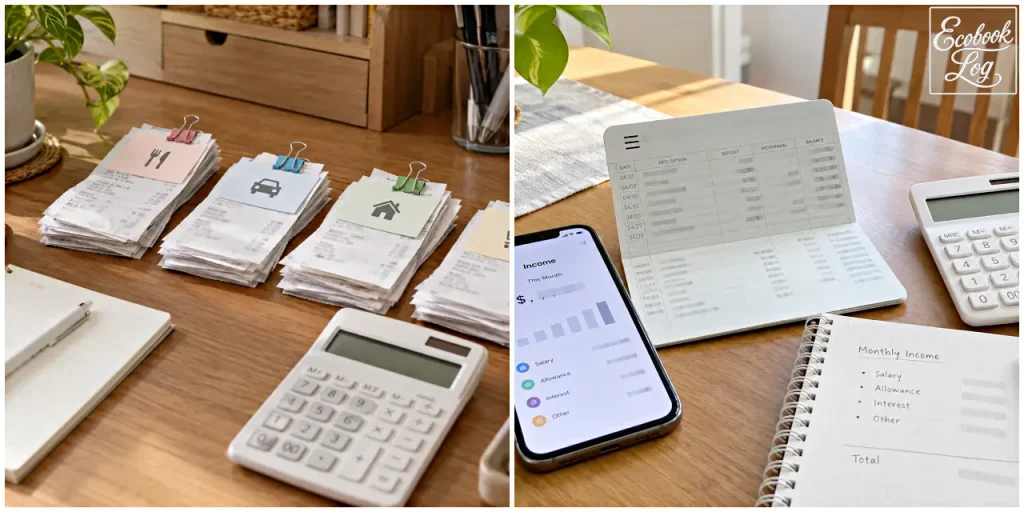
A household budget is a monthly plan for managing the money your household receives, spends, and saves. It shows how much you can afford to spend on everyday needs, how much you can set aside for future expenses, and whether your current income covers your bills. You can start with your bank statements, a notebook, or a simple spreadsheet.
The first month is a chance to learn what your household actually spends. Once you have reliable numbers, you can set limits for the following month and make room for expenses that are easy to overlook. This approach works whether you live alone, share expenses with a partner, or support a family.
What does a household budget include?
A useful budget covers the money available to your household and the commitments that money needs to cover. Income includes earnings and other funds you can use. Expenses include living costs and required debt payments, while savings cover money set aside for future needs.
An expense tracker records purchases and payments that have already happened. A budget assigns money to categories before you spend it. When you use both, you can compare your original plan with what actually happened and identify where the numbers need to change.
Households also participate in the wider economy through their spending, work, and saving. Understanding the role of households among economic agents provides some background for why these everyday financial decisions matter.
Start with your monthly take-home income
Build your household budget around the income you can actually use. For employees, this usually means net pay, the amount received after payroll deductions. If you receive money from multiple jobs, regular family support, or other sources, include the amounts available for household expenses.
Keep irregular earnings separate from predictable income when making your plan. A year-end bonus that has not arrived cannot cover a bill due this week. If your earnings fluctuate, last year’s total income divided by 12 provides an estimate of your average month, but your actual deposits may be lower in some months.
For a household with inconsistent earnings, plan essential bills around a conservative income estimate and adjust flexible spending as payments arrive. Self-employed workers should also account for business costs and money reserved for taxes before deciding how much income is available for personal use. Transfers between your own accounts and borrowed money should not be counted as new earnings.
Group expenses by how they behave
Organizing your household budget by expense type makes it easier to identify what you can change. Rent may remain the same for months, while grocery costs fluctuate from week to week. An annual insurance payment may be predictable even though it does not appear on every monthly statement.
The following categories cover many common household expenses.
| Category | Examples | How to plan |
|---|---|---|
| Fixed recurring costs | Rent, internet plan, loan payments | Record the amount and due date. |
| Variable essentials | Groceries, utilities, fuel | Use recent actual spending to estimate costs. |
| Discretionary spending | Dining out, hobbies, entertainment | Set a spending limit you can maintain. |
| Periodic expenses | Annual fees, insurance, school supplies | Reserve money before the payment is due. |
Fixed does not always mean essential, and variable does not always mean optional. A streaming subscription can have a fixed monthly price, while groceries are essential even when their cost changes. Use both the payment pattern and the purpose of an expense when deciding what to adjust.
Review several months of records to find charges that appear only occasionally. If a $600 insurance bill is due in six months and you have nothing reserved for it, setting aside $100 each month would cover it by the due date. Recording this allocation in your household budget prevents the bill from competing unexpectedly with everyday expenses.
Make savings part of the monthly plan
Savings can serve several purposes, including emergencies, planned purchases, and longer-term goals. An emergency fund covers unexpected costs, while money reserved for an upcoming known expense has a specific purpose and payment date. Keeping track of these amounts separately helps you avoid spending money already committed to another goal.
Choose a savings contribution that fits your household budget after accounting for essential living costs and required payments. A fixed savings percentage is optional. If your income changes or an essential bill increases, revise the contribution instead of assuming the same amount will remain affordable.
Monthly household budget example
The following example uses a hypothetical monthly take-home income of $3,000 in US dollars. The figures are illustrative, not average household costs or recommended spending limits.
| Monthly category | Planned amount |
|---|---|
| Take-home income | $3,000 |
| Housing | $1,050 |
| Utilities and communications | $200 |
| Groceries and household supplies | $450 |
| Transportation | $250 |
| Required debt payments | $200 |
| Personal spending and entertainment | $250 |
| Reserve for periodic expenses | $150 |
| Savings contributions | $300 |
| Total planned allocations | $2,850 |
| Unallocated money | $150 |
The $150 remaining is available as a buffer, additional savings, or extra debt repayment. The $150 reserved for periodic expenses is already assigned to future bills and is separate from the unallocated money. If grocery spending comes in $80 above the plan and everything else stays unchanged, the buffer falls to $70.
A household budget can show a positive balance for the month while still leaving you short on a particular day. If rent is due before payday, you need enough money available at the time of payment. Keep a calendar of income dates and bill deadlines alongside your household budget.
What if expenses are higher than income?
When your household budget shows a shortfall, check whether it comes from recurring expenses, a temporary loss of income, or a one-time bill. A recurring deficit calls for changes that will carry over into future months. A one-time shortfall may call for using money previously reserved for that purpose.
Start by reviewing flexible expenses and checking for subscriptions or fees you no longer need. If the shortfall continues, examine larger recurring commitments and realistic ways to increase income. Avoid treating a credit card balance or a new loan as a permanent solution to an ongoing income gap.
Review your budget at the end of each month
Compare the planned and actual amounts in each category. Look at where the differences came from and decide whether the original estimate was unrealistic or spending exceeded a limit you could reasonably maintain. Use the findings to update next month’s household budget.
Keep transaction records consistent. If you record credit card purchases when they occur, do not count the full payment of those same purchases as a second expense; separately account for interest, fees, and repayment of older balances. Likewise, a transfer into savings is a planned allocation of available money, not a purchase.
A notebook is enough if you prefer writing things down, while a spreadsheet makes monthly comparisons easier. Budgeting apps can reduce manual work, although you still need to check that transactions are categorized correctly. Choose a method you can keep using when life gets busy.
Start with a plan you can maintain
Your first household budget does not need dozens of categories. Gather your income records and recent statements, record essential bills, and estimate the spending categories that matter most to your household. Set aside a manageable amount for future needs if your current finances allow it.
After one month, you will have a more realistic picture of your spending than you had when you began. Use that information to adjust the next month’s limits and savings plans. A household budget becomes more useful as it reflects your actual financial circumstances.
Source:
- Federal Trade Commission (FTC) — Making a Budget
- Consumer Financial Protection Bureau (CFPB) — Budgeting: How to Create a Budget and Stick With It
- Consumer Financial Protection Bureau (CFPB) — Assess Your Spending