Skaga Liquid Omega-3 Review: Easy Dosing vs. Strong Smell

Skaga liquid omega-3 for dogs was easy to add to food, and my dog accepted it without hesitation. However, the strong fish smell and the extra attention required after opening made it less convenient than individually packaged gel supplements.
Liquid fish oil can be useful for dogs that will not swallow capsules or need an adjustable serving. It is not automatically better absorbed than every capsule or gel product. The EPA and DHA content, molecular form, formulation, and serving size matter more than whether the container holds a liquid or a softgel.
What I Tested
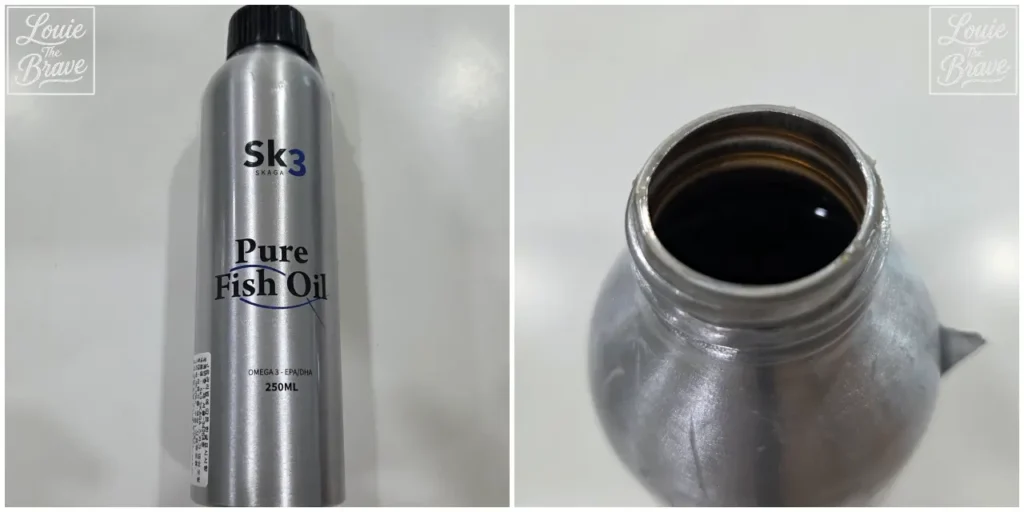
Skaga is a liquid omega-3 supplement made with Danish fish oil. The bottle uses a pump that dispenses approximately 1 mL at a time. I added the oil directly to Louie’s fresh food or placed it on a treat.
Louie is a two-year-old Yorkshire Terrier who already eats gel-type omega-3 supplements without difficulty. Because he accepted both formats, I could compare the handling, smell, and storage rather than judging the product only by palatability.
I did not track this trial as a fixed multiweek skin or coat study. This review therefore focuses on the everyday experience of serving and storing the product, not on claiming a long-term health result.
What Worked Well
It Was Easy to Add to Food
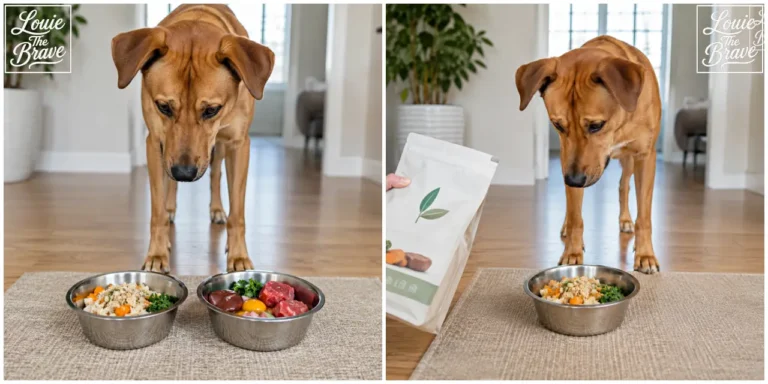
The pump made feeding simple. I did not have to cut open a capsule, hide a pill, or convince Louie to chew anything. The oil spread easily over his meal, and he ate the food normally.
This format may be helpful for dogs that spit out capsules or have difficulty swallowing firm supplements. It also allows the owner to measure a serving in milliliters instead of being limited to one whole capsule.
Louie Accepted the Flavor
Louie did not refuse his food after I added the oil. For him, palatability was not a disadvantage. A dog that already enjoys fish-based foods or treats may accept a liquid fish oil just as easily.
That result is specific to Louie. Dogs that are sensitive to new smells may react differently, so adding a full serving to an entire meal on the first attempt could waste the food if the dog refuses it.
The Bottle Was More Flexible Than a Fixed-Dose Gel
A liquid product can be easier to adjust for a small dog than a large, fixed-dose capsule. However, a partial pump is not always perfectly consistent. Owners should follow the product label rather than estimating a serving from another omega-3 brand.
What I Did Not Like
The Fish Smell Was Strong
The biggest disadvantage was the odor. Louie ate the oil without a problem, but the smell was much more noticeable to me than it was with his individually packaged gel supplement.
If oil touched the hair around his mouth, the smell stayed on his coat. It could also remain on the bowl, pump nozzle, or my hands. Wiping the nozzle and cleaning the food bowl soon after feeding helped, but it added another step to the routine.
An Open Bottle Requires Careful Storage
Fish oil is vulnerable to oxidation. Exposure to oxygen, light, and heat can affect its stability, and opening a bottle repeatedly exposes liquid oil to the surrounding environment.
This does not mean that every liquid fish oil becomes rancid quickly. Bottle design, antioxidants, storage temperature, manufacturing quality, and how quickly the product is used can all affect stability. Owners should close the bottle immediately, keep the pump clean, follow the label’s storage directions, and finish the product within the stated period after opening.
A stronger fish smell alone does not prove that the oil is rancid. However, a clear change from the product’s original odor, flavor, color, or texture is a reason to stop using it and contact the manufacturer.
Is Liquid Omega-3 Better Than Gel?
This comparison summarizes the practical differences I noticed while using both formats.
| Feature | Liquid Fish Oil | Gel or Individually Packed Oil |
|---|---|---|
| Serving method | Pumped or measured onto food | Fed whole, chewed, or opened |
| Serving flexibility | Easier to adjust in milliliters | Usually limited to fixed units |
| Fish odor | More noticeable during feeding | Usually better contained |
| Swallowing | No capsule to swallow | May be difficult for some dogs |
| After opening | The same oil supply is accessed repeatedly | Individual portions remain sealed until used |
Liquid oil should not be assumed to have better absorption simply because it has no capsule shell. Some human studies have found differences between specific emulsified and encapsulated formulations, while other comparisons show that the omega-3 form and total EPA and DHA exposure are important variables. Those results do not prove that every liquid dog supplement is superior to every gel product.
Who May Like This Product
- Dogs that refuse or cannot comfortably swallow capsules
- Owners who prefer mixing supplements directly into food
- Households that can use the bottle consistently after opening
- Dogs that accept a noticeable fish smell and flavor
Who May Prefer a Different Format
- Owners who are very sensitive to fish odors
- Dogs with long facial hair that easily collects oil
- Households that use omega-3 only occasionally
- Owners who prefer sealed, premeasured individual servings
Final Verdict
Skaga liquid omega-3 was easy to serve, and Louie ate it well. The pump format worked conveniently with his fresh food, but the fish smell was difficult to ignore. I also had to think more carefully about cleaning, storage, and how quickly the opened bottle would be used.
For Louie, individually packaged gel omega-3 is more convenient for regular use because he eats it willingly and the oil remains contained until feeding. I would still consider liquid fish oil when flexible measuring or easier swallowing is the priority.
Before choosing either format, compare the actual EPA and DHA per serving, the bottle size, storage instructions, and how long it will take your dog to finish the product. The best option is the one that provides an appropriate serving and can be used consistently without compromising freshness.