Curaprox CS 1006 Review: Precision Brushing for Dog Molars
The Curaprox CS 1006 works well as a precision dog toothbrush for individual teeth, back molars, and other areas that a regular brush may miss. It is not designed to replace a full-size toothbrush. In our routine, it works best as a finishing brush after cleaning the entire mouth with the Curaprox CS 7600.
What Is the Curaprox CS 1006?
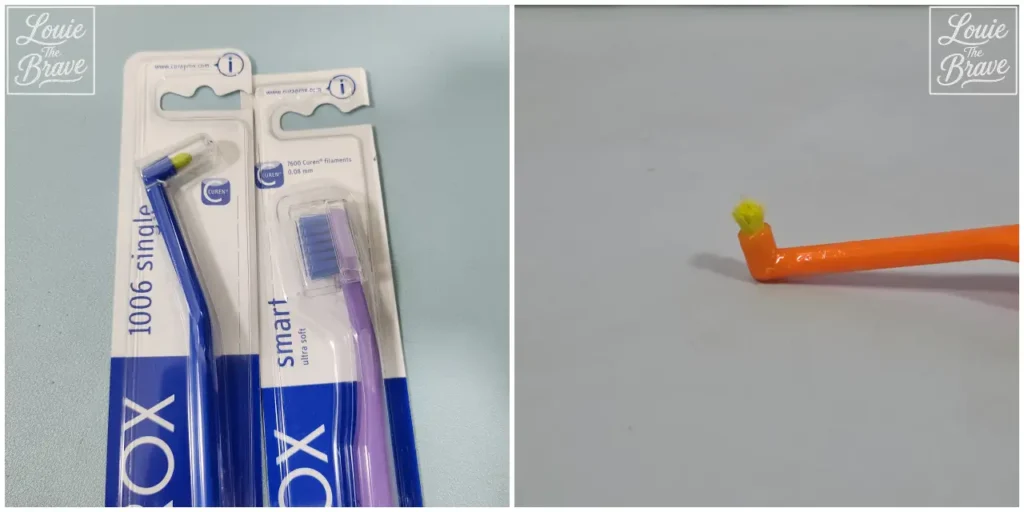
The CS 1006 is a single-tuft toothbrush made by Curaprox, a dental-care brand from Switzerland. Instead of a wide rectangular brush head, it has one small, rounded cluster of filaments.
It was originally designed for detailed cleaning around braces, implants, uneven teeth, and other difficult areas in the human mouth. That compact design also makes it useful for carefully targeting individual teeth in a dog’s mouth.
Although it is not sold specifically as a dog toothbrush, the small head and soft filaments were the main reasons I chose it for Louie’s dental-care routine.
The Dog and Brushing Routine We Used
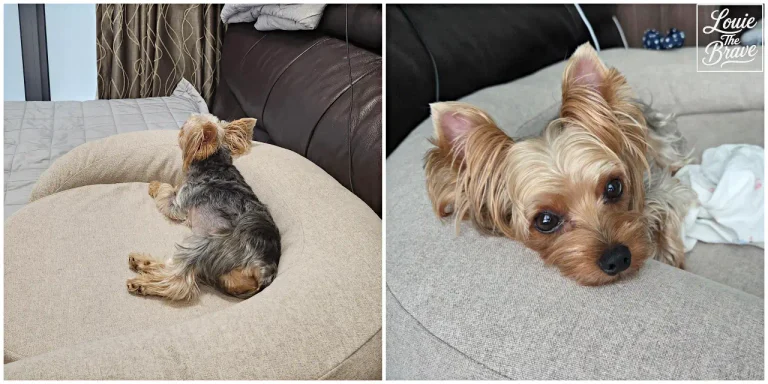
Louie is a small Yorkshire Terrier with a compact mouth. We first began using Curaprox brushes while he was losing his puppy teeth. Two upper canine teeth remained beside his adult teeth, making the crowded area difficult to clean with a typical dog toothbrush.
We used the CS 7600 as the primary brush. Its wide, densely packed head covered the tooth surfaces and gumline. The CS 1006 was later added for the final detailed cleaning.
Louie’s retained puppy teeth eventually became loose and fell out while we were following this routine. That was his individual experience, not evidence that brushing can safely remove retained puppy teeth. A puppy tooth that remains beside an adult tooth should be evaluated by a veterinarian rather than brushed aggressively or pulled at home.
CS 7600 vs. CS 1006 for Dog Teeth
These brushes perform different jobs. The CS 7600 is better for broad cleaning, while the CS 1006 is made for precision.
| Feature | Curaprox CS 7600 | Curaprox CS 1006 |
|---|---|---|
| Brush shape | Full-size, densely packed head | Small single-tuft head |
| Best use | Cleaning the full tooth surface and gumline | Targeting one tooth or a difficult corner |
| Coverage | Wide | Very narrow |
| Role in our routine | Primary toothbrush | Finishing toothbrush |
For Louie, the CS 1006 did not make the CS 7600 unnecessary. It improved access to spots that were harder to reach with the larger brush head.
Where the CS 1006 Was Most Useful
The small tuft made it easier to position the brush directly over one tooth. I found it particularly useful around back molars, crowded teeth, and small stained areas that needed closer attention.
A regular toothbrush can slide over several teeth at once. The CS 1006 gives me more control because I can see and feel exactly where the tuft is placed. This is helpful in a small dog’s mouth, where a slight change in angle can determine whether the brush reaches the tooth or presses into the cheek.
The rounded tuft also fits along the curved surface of a tooth more easily than a wide, flat brush head. I use light pressure and small movements rather than scrubbing back and forth.
How We Use Both Toothbrushes
- We begin with the CS 7600 to clean the outer tooth surfaces and along the gumline.
- We check the molars and any areas where discoloration or residue tends to appear.
- We use the CS 1006 to brush those individual spots with gentle, controlled movements.
- We stop if Louie pulls away repeatedly, shows discomfort, or the gums begin to bleed.
Dogs that are still learning to accept toothbrushing may do better with one brush at first. Adding a second precision brush too early can make the routine longer and more frustrating.
What I Liked
- Precise placement: The compact tuft can target a single tooth instead of covering several teeth at once.
- Better molar access: It is easier to angle toward the back teeth in Louie’s small mouth.
- Soft contact: The filaments feel gentler than many stiff dog toothbrushes we have handled.
- Useful finishing step: It helps me revisit areas that do not feel fully cleaned after using the CS 7600.
What to Consider Before Buying
The CS 1006 cleans a very small area, so using it for the entire mouth would take too long. It is also not a solution for hardened tartar. Once deposits have become firmly attached to the tooth, additional scrubbing at home can irritate the gums without removing the buildup.
The handle and head are designed for people, not specifically for dogs. Owners still need to control the angle carefully and avoid pushing the tuft too far toward the back of the mouth.
Who May Find It Useful?
The CS 1006 may work well for a small dog with crowded teeth, visible problem areas, or molars that are difficult to reach with a standard brush. It may also suit an owner who already brushes consistently and wants a separate tool for detailed cleaning.
It may not be a good first toothbrush for a dog that cannot yet tolerate having its lips lifted or teeth touched. In that situation, building a calm and brief brushing routine is more important than adding a precision tool.
Final Verdict
The Curaprox CS 1006 has earned a permanent place in Louie’s dental-care routine, but only as a second brush. The CS 7600 handles the overall cleaning, while the CS 1006 gives me better control around individual molars, crowded teeth, and stained areas.
For dog owners who already brush regularly but keep missing the same small spots, this single-tuft toothbrush can provide a practical finishing step. The most important consideration is not whether it is labeled for people or dogs, but whether its size, softness, and shape allow safe and controlled brushing in that particular dog’s mouth.