Breezen Good Night Chew Review: XS vs. S for Small Dogs
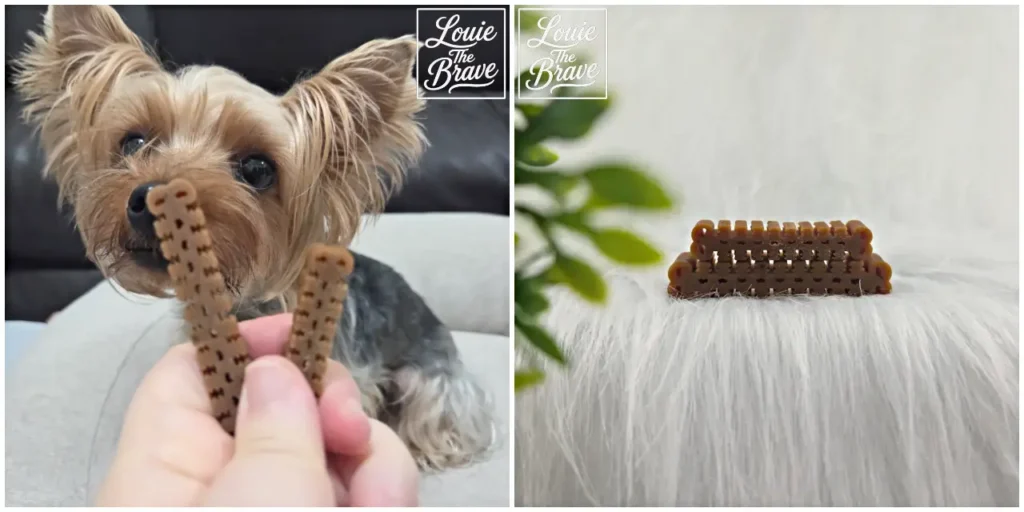
Breezen Good Night Chew became one of the dental treats I kept using after my first trial because Louie consistently wanted to eat it. This time, I changed one thing: instead of the smaller XS size, I tried the S size that actually matches his weight range.
Louie is a 3.18 kg (about 7 lb) Yorkshire Terrier, and the S package is labeled for dogs weighing 3–7 kg (about 6.6–15.4 lb). However, his experience showed why the number on the package should not be the only thing you consider when choosing a dental chew.
XS vs. S: The Recommended Size Was Not the Whole Story
I originally chose XS because Louie does not like eating large treats whole. Even small chews usually have to be cut into pieces before he will actually chew and swallow them.
Since I was already cutting the XS Breezen Good Night Chew, I decided to try S this time.
The difference is easy to see when the two sizes are placed side by side. S is longer and thicker, and its ridges and three-dimensional shape are more noticeable. When I put both sizes in front of Louie, he showed immediate interest in the S chew and picked it up first.
But he did not settle down and chew the whole S piece. He carried it around instead.
Once I cut it into the size he normally prefers, he ate it without hesitation. For Louie, moving from XS to S did not create a problem as long as I adjusted the serving method to his actual chewing behavior.
That is the main lesson from my size comparison: start with the manufacturer’s weight range, then watch how your own dog chews and swallows the product.
What Is Different About the Breezen Good Night Chew Shape?
The chew is not a smooth dental stick. The package describes a structure with up to 72 raised contact points and 33 spaces designed to allow teeth to enter from different angles.
I could see those grooves clearly on the actual chew, especially on the larger S size. It also felt flexible when bent by hand rather than hard and brittle, and the internal spaces were visible after I cut it. Texture matters with other chewable items too; hard ice can damage a dog’s teeth when it is crushed forcefully, which is why chewing behavior matters as much as the size of the item.
That physical structure is relevant because chewing itself can contribute to mechanical cleaning. A University of New England study involving 12 dogs found significantly lower plaque and calculus accumulation when dogs received dental chews compared with the control diet. The researchers also described chewing as a way to mechanically disturb plaque while stimulating saliva.
This does not mean every dental chew produces the same clinical result. It does explain why I want Louie to actually chew the treat rather than simply swallow a large piece.
Why I Use It After Brushing at Night
Breezen Good Night Chew as a bedtime dental treat and recommends giving it one to two hours before sleep. The formula also includes L-theanine, probiotics, and oral-care ingredients.
I do not treat the L-theanine as a sleeping ingredient or expect the chew to make Louie fall asleep. What I can say from our own routine is that he enjoys receiving the chew after his evening tooth brushing, and afterward he tends to settle comfortably for the night.
Another practical advantage was the texture after eating. I did not see sticky pieces left clinging to Louie’s teeth after he finished the cut portions. That matters to me because I do not want a bedtime treat to leave an obvious coating on teeth I have just brushed.
The chews are also individually wrapped inside a resealable outer bag, which makes them convenient to store and portion.
One ingredient claim deserves extra caution. Good Night Chew uses hydrolyzed chicken, but that does not automatically make it suitable for every dog with a chicken allergy. Hydrolyzed proteins are broken into smaller fragments, yet some sensitized dogs can still react depending on the degree of hydrolysis. Dogs undergoing a veterinary elimination diet also should not add treats without checking with their veterinarian.
A Dental Chew Is an Extra Step, Not a Replacement for Brushing
I use Good Night Chew after brushing, not instead of brushing.
That distinction is especially relevant for small dogs. Cornell University College of Veterinary Medicine notes that periodontal disease is particularly common in smaller breeds and emphasizes daily home dental care together with professional veterinary evaluation and cleaning.
For US dog owners, another useful buying check is the Veterinary Oral Health Council (VOHC) Seal of Acceptance. VOHC maintains a list of products whose plaque or tartar claims have been supported by submitted clinical evidence. At the time I checked, Breezen Good Night Chew was not listed on the current VOHC accepted-products page.
That does not tell me whether Louie will enjoy the product—he clearly does. It simply means I would not treat this particular chew as a substitute for a VOHC-accepted product when independently verified plaque or tartar control is the main reason for purchasing.
Who Might Like Breezen Good Night Chew?
For us, the strongest points were simple: Louie likes the taste, the S size can still work when I cut it for his chewing style, the pieces did not visibly stick to his teeth, and it fits easily into our bedtime routine.
It may be worth considering for a dog that already tolerates dental chews and needs a treat the owner can incorporate into an evening oral-care routine. I would be more cautious with dogs that gulp large pieces, have difficulty chewing, are on a strict elimination diet, or need a dental product with independently verified plaque or tartar claims.
For Louie, I will continue choosing within the recommended weight range but adjusting the actual piece size according to how he chews. The package tells me where to start; my dog’s chewing behavior tells me how to serve it safely.
Sources:
- University of New England — Influence of Chewing on Dental Health in Dogs
- Cornell University College of Veterinary Medicine — Periodontal Disease
- Veterinary Oral Health Council — Accepted Products
- Merck Veterinary Manual — Cutaneous Food Allergy in Animals