Is Your Dog Overweight? Check the Ribs, Waist, and BCS
Being able to see a number on the scale does not tell you whether your dog overweight. Two dogs can weigh the same and have very different amounts of fat and muscle.
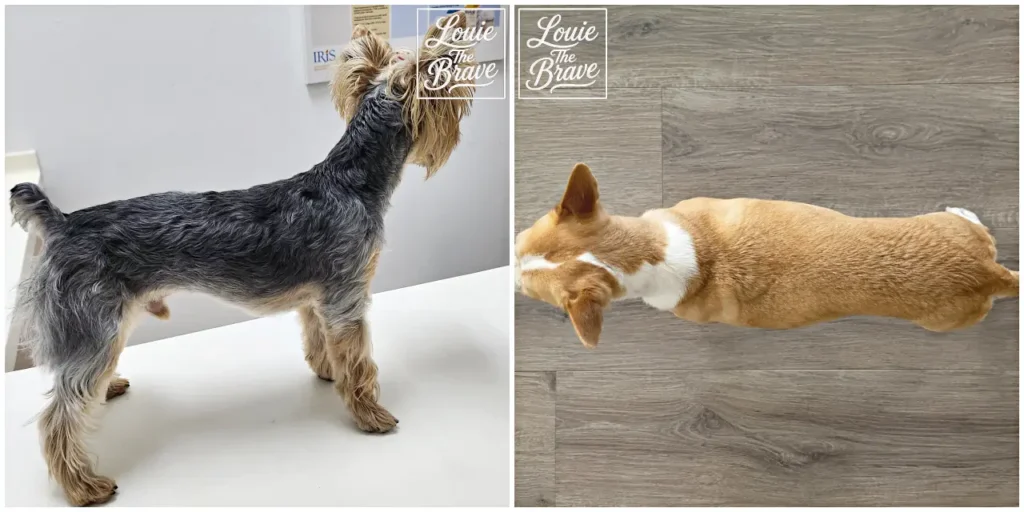
A better first check is to use your hands and look at your dog from above and from the side. You should be able to feel the ribs without pressing through a thick layer of fat, see a waist from above, and see the abdomen tuck upward behind the rib cage. Veterinarians combine these observations into a Body Condition Score, or BCS.
Why Dog Overweight Is a Health Problem
Extra body fat affects more than appearance. Dog Overweight is associated with exercise and heat intolerance, joint and musculoskeletal problems, reduced quality of life, and other health problems. Excess body weight also puts additional mechanical stress on the body.
There is also evidence linking overweight body condition with shorter lifespan. A 2019 retrospective study examined 50,787 middle-aged spayed or neutered dogs from 12 breeds treated through a large North American veterinary hospital network. In every breed studied, dogs classified as overweight had a shorter estimated median lifespan than dogs in normal body condition. Depending on breed and sex, the difference ranged from about five months to two years and six months.
That study shows an association, not proof that excess weight directly caused every lifespan difference. The authors also noted that the results should be applied cautiously to younger dogs, intact dogs, and breeds that were not included in the study.
How to Check Your Dog’s Body Condition Score
The American Animal Hospital Association uses a 9-point BCS system, with scores of 4 to 5 considered ideal. BCS measures body fat, so the assessment depends on both looking at the dog and feeling the body.
Here is a simplified way to understand the upper half of the scale:
| BCS | Ribs | Waist and Belly | Fat Deposits |
|---|---|---|---|
| 4–5 | Easy to feel with little fat covering | Waist visible from above; abdominal tuck present | No excessive fat |
| 6 | Felt under a mild fat layer | Waist becoming less defined | Mild increase in fat |
| 7 | More difficult to feel | Waist less obvious; abdominal tuck reduced | Fat noticeable around lower back and tail base |
| 8 | Requires significant pressure | Waist nearly absent | Marked fat deposits |
| 9 | Cannot easily be felt beneath heavy fat | Waist absent; abdomen may appear distended | Marked deposits over the spine, neck, and tail base |
AAHA notes that each BCS point above 5 on the 9-point scale corresponds to roughly another 10% above ideal body weight, although an individual veterinary assessment is still needed for a weight-loss plan.
Feel the Ribs Instead of Judging the Face or Legs
A small face or thin legs do not tell you how much body fat a dog is carrying. Long coats can also hide the waist and ribs, so use your hands rather than relying only on photographs.
Run your fingers over the rib cage. At an ideal BCS, the ribs should be easy to feel beneath only a small amount of fat. Then look down at your dog from above for a defined waist, and check the side view for an abdomen that rises behind the ribs.
My Yorkie Louie eats a home-prepared diet, and his weight can shift slightly depending on the ingredients. I do not judge his condition by whether his belly feels completely firm or whether the scale changes a little. I pay more attention to whether I can still feel his ribs and see his waist and abdominal tuck.
Dog Overweight and Muscle Are Not the Same Thing
BCS tells you about body fat, but it does not tell you whether your dog is maintaining enough muscle.
AAHA therefore recommends evaluating a separate Muscle Condition Score, or MCS. Muscle is assessed by looking at and feeling areas over the spine, shoulder blades, skull, and pelvis. Dogs can be classified as having normal muscle mass or mild, moderate, or severe muscle loss.
This distinction matters because a dog can carry excess body fat while also losing muscle. Body weight alone can miss that combination.
A Pot Belly Does Not Always Mean Dog Overweight
A large or sagging abdomen should not automatically be labeled as fat, especially when the change is new.
Dogs with Cushing disease may develop abdominal enlargement along with increased thirst and urination, increased appetite, panting, heat intolerance, muscle weakness, hair loss, or thin skin. If a new pot-bellied appearance occurs with increased thirst and urination, panting, muscle weakness, or skin and coat changes, Cushing’s disease requires clinical signs and hormone testing to be interpreted together rather than diagnosed from appearance alone.
Hypothyroidism can also be associated with weight gain, lethargy, exercise intolerance, and changes in the skin or coat. These signs are not specific enough to diagnose thyroid disease at home, and Merck notes that hypothyroidism can be overdiagnosed without appropriate clinical evaluation and thyroid testing.
Schedule a veterinary exam if your dog gains weight unexpectedly, continues gaining despite measured food intake, develops a new pot-bellied appearance, loses muscle, drinks or urinates much more than usual, pants without an obvious reason, or develops significant skin or coat changes.
Is Your Dog Overweight? Measure Before You Cut Food
Do not choose a large calorie reduction simply by guessing from the current food portion. AAHA recommends designing weight-loss intake around the dog’s ideal weight and then adjusting it for current intake, lifestyle, and response to the plan. Body weight and BCS should be monitored as the plan progresses.
Start by recording everything your dog eats in a full day. That includes meals, treats, table food, supplements, food used to give medications, chews, and other calorie-containing extras. AAHA specifically includes these foods when taking a nutritional history.
For dry food, weighing portions in grams with a kitchen scale can make intake easier to repeat consistently than estimating by eye. Make sure everyone in the household knows the daily food allowance so one dog is not quietly receiving several extra servings.
Exercise should also match the dog’s current fitness and health. AAHA recommends building activity into weight management while considering physical fitness and maintaining muscle mass; dogs with mobility or medical problems may need an individualized exercise plan.
The goal is not to make every dog look as thin as possible. The useful question is whether your dog is carrying an appropriate amount of fat while maintaining muscle and moving comfortably. Start with the ribs, waist, and abdominal tuck, compare what you find with a 9-point BCS chart, and ask your veterinarian to confirm the score if you are unsure.
Source:
American Animal Hospital Association — 2021 AAHA Nutrition and Weight Management Guidelines for Dogs and Cats
Merck Veterinary Manual — Nutrition in Disease Management in Small Animals
Merck Veterinary Manual — Cushing Disease (Pituitary-Dependent Hyperadrenocorticism) in Animals
Merck Veterinary Manual — Hypothyroidism in Animals
Journal of Veterinary Internal Medicine — Association between life span and body condition in neutered client-owned dogs