Do Cigarette Beetles Bite? What Red Marks May Actually Mean
If you find tiny brown beetles in your home and notice itchy red marks on your skin around the same time, it is easy to connect the two. But the beetle itself is probably not what bit you.
Cigarette beetles do not bite or sting people or pets. They are stored-product pests that live in dry foods and other dried materials. If unexplained painful or itchy bumps appear while cigarette beetles are present, another insect may be responsible.
What Does a Cigarette Beetle Look Like?
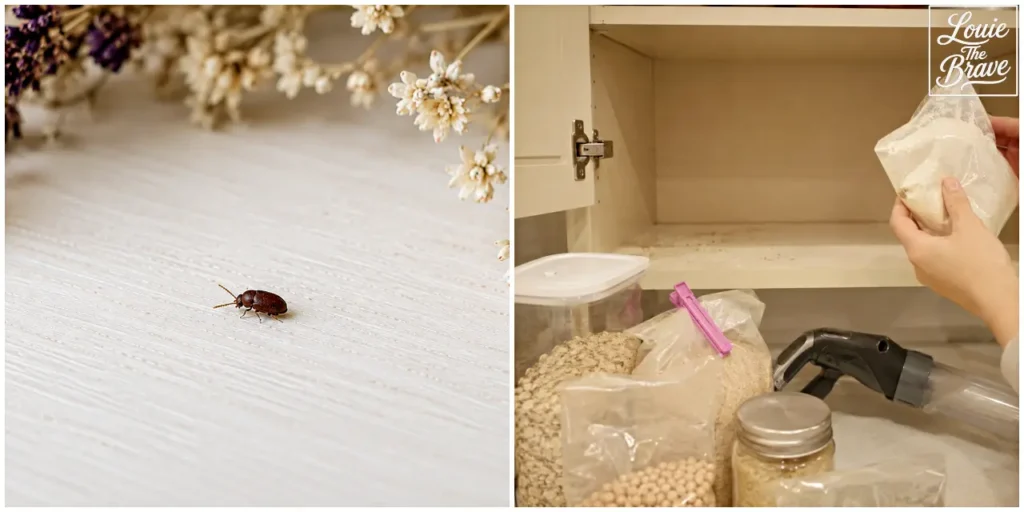
The cigarette beetle (Lasioderma serricorne) is a tiny reddish-brown beetle. Adults are roughly 1/16 to 1/8 inch long, with an oval, rounded body. When viewed from above, the head can look partly hidden beneath the front of the body.
Despite the name, these beetles are not limited to tobacco. They can infest flour, cereal, rice, nuts, spices, dried fruit, herbs, dry dog food, and many other stored products. They can also live in dried flower arrangements, potpourri, medicinal herbs, and decorative plant material.
In my home, a dried flower arrangement turned out to be the source. I had been seeing the little brown beetles without knowing where they were coming from until I finally traced them back to the flowers.
If Cigarette Beetles Do Not Bite, What Could Cause Red Marks?
One possible explanation is a tiny parasitoid wasp called Cephalonomia gallicola.
This wasp can parasitize the larvae and pupae of cigarette beetles. Unlike the beetle, C. gallicola can sting humans. A published Korean case series described painful red papules in six people after stings from this species.
That does not mean every unexplained red or itchy spot in a home with cigarette beetles is caused by this wasp. Mosquitoes, bed bugs, fleas, mites, skin irritation, and other causes can produce similar-looking marks.
I also developed marks that did not look quite like my usual mosquito bites when I had cigarette beetles at home. However, the marks did not keep appearing, and I never identified a parasitoid wasp. For that reason, I could not say what actually caused them. Another indoor beetle can cause skin injury in a very different way; Paederus rove beetles do not bite or sting either, but crushing one against the skin can release an irritant that causes delayed redness and blisters.
| What you find | Cigarette beetle | Cephalonomia gallicola |
|---|---|---|
| Type | Stored-product beetle | Parasitoid wasp |
| Associated with cigarette beetles | The pantry pest itself | Can parasitize its larvae and pupae |
| Bites or stings people | No | Can sting |
| Main concern indoors | Infested dry materials | Painful or itchy skin lesions after a sting |
Where Should You Look for the Source?
Seeing one adult beetle does not tell you exactly where the infestation started. If beetles keep appearing, inspect nearby dry materials one at a time.
Start with:
- dried flowers, wreaths, and potpourri
- spices, tea, herbs, and dried medicinal plants
- flour, cereal, pasta, rice, and other grains
- nuts and dried fruit
- dry dog or cat food
- dried pet treats
- birdseed
- rarely used dry foods stored at the back of cabinets
Pet food deserves particular attention in homes with animals. Texas A&M AgriLife Extension lists pet food as a common infestation source, while UF/IFAS includes dry dog food among products cigarette beetles can attack.
Look for tiny holes in packages, beetles inside containers, larvae or cocoons, powdery debris, or repeated adult activity around one cabinet or shelf. Pantry pests can spread beyond the original package, so nearby products should be inspected as well.
How to Get Rid of Cigarette Beetles
The most effective first step is finding and removing the infested material. Catching the adult beetles you see will not solve the problem if larvae are still developing inside food, pet food, or dried plant material.
Seal heavily infested products before taking them outside and discarding them. Then remove the other items from the cabinet and inspect them carefully.
Vacuum shelf corners, cracks, and crevices, then clean the storage area. Susceptible foods that are not infested are better stored in airtight glass, metal, or sturdy plastic containers rather than loosely closed bags.
If you use a cigarette beetle pheromone trap, think of it mainly as a monitoring tool. Cigarette beetle sex-pheromone traps attract males and can help show whether beetles remain or where activity is concentrated. They do not remove the eggs and larvae developing inside the source material, so traps should not replace inspection and removal.
Keep Seeing Beetles? Go Back to the Dry Materials
Cigarette beetles are unpleasant to find indoors, but they are not insects that feed on people. When they keep appearing, the useful question is not “Where are these beetles biting me?” but “What dry material are they breeding in?”
Check dried flowers as carefully as pantry food, especially if the source is not obvious. In a home with pets, include kibble, dried treats, and spilled food around storage containers in that search.
And if painful or itchy skin lesions keep appearing, do not assume that cigarette beetles caused them. Another insect—including, in documented cases, a parasitoid wasp associated with cigarette beetles—or a non-insect cause may need to be considered.
Source:
- Texas A&M AgriLife Extension Service — Cigarette and Drugstore Beetles
- University of Florida IFAS Extension — Cigarette Beetle, Lasioderma serricorne
- University of California Statewide Integrated Pest Management Program — Pantry Pests
- Korean Journal of Parasitology — Human Sting of Cephalonomia gallicola (Hymenoptera: Bethylidae) in Korea