Why Does My Dog Lick the Floor? When It May Be Nausea
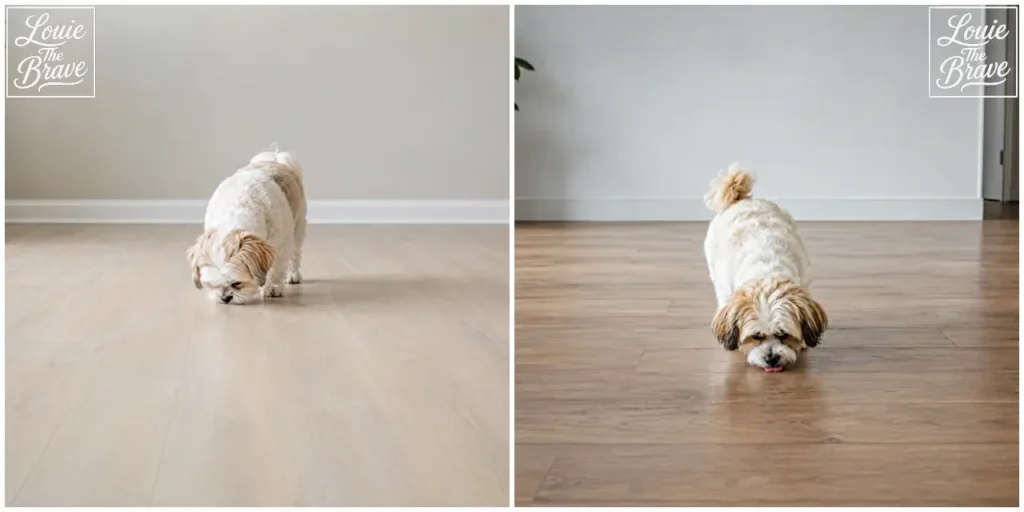
If your dog licks the floor where a treat just fell, there is usually an obvious explanation: food odor and residue. A few licks in one spot, followed by a return to normal activity, can simply be exploratory behavior.
It becomes more worth watching when a dog repeatedly licks clean floors with no food present, moves from one surface to another, or keeps returning to the floor after being redirected. Repetitive surface licking can sometimes occur with gastrointestinal discomfort, although it can also have behavioral causes. Veterinary behavior guidance recommends considering physical health problems before assuming repetitive behavior is purely compulsive.
Normal Floor Licking vs. Repetitive Surface Licking
The pattern matters more than a single episode.
| What you notice | More consistent with normal exploration | Worth closer attention |
|---|---|---|
| Location | One spot where food was dropped | Multiple clean floors or other surfaces |
| Duration | A few licks, then stops | Stops briefly and starts again |
| Redirection | Moves on to play, rest, or another activity | Returns to licking after redirection |
| Timing | Around meals or treats with an obvious food scent | Starts unexpectedly or becomes more frequent |
| Other changes | Dog otherwise acts normally | Lip licking, drooling, repeated swallowing, retching, vomiting, diarrhea, or appetite changes |
A dog does not need to have every sign in the right-hand column for the behavior to deserve attention. A sudden change from that individual dog’s usual behavior can also be useful information for your veterinarian.
Can Nausea or Stomach Problems Make a Dog Lick the Floor?
They can.
A prospective clinical study evaluated 19 dogs presented for excessive dog licking of surfaces, including floors, walls, carpets, and furniture. Gastrointestinal abnormalities were identified in 14 of those 19 dogs. After treatment based on the individual diagnosis, licking significantly improved in 10 of 17 dogs that completed follow-up and completely resolved in 9.
That study does not mean that most dogs who occasionally lick a kitchen floor have gastrointestinal disease. It involved a small group of dogs already showing excessive surface-licking behavior and receiving veterinary evaluation.
Still, the findings are useful because they show why persistent floor licking should not automatically be labeled a bad habit or an obsessive behavior.
Watch for Other Signs of GI Discomfort
Floor licking becomes more concerning when it appears with other changes.
Pay attention to repeated lip licking, excessive drooling, frequent swallowing, retching, vomiting, diarrhea, reduced appetite, or attempts to eat grass or nonfood material. Vomiting itself is commonly preceded by signs such as nausea, drooling, and retching.
Also check the environment. Make sure there are no food spills, grease, cleaning-product residue, medications, or other substances on the floor that your dog could be tasting or ingesting.
If the licking suddenly starts and continues, your dog cannot settle, or vomiting, diarrhea, abdominal discomfort, poor appetite, or other illness signs appear, contact your veterinarian rather than repeatedly interrupting the behavior and waiting to see whether it becomes a habit.
Record the Behavior Before Your Vet Visit
A short video can show something that may never happen inside the exam room. For behaviors that are difficult to reproduce in the clinic, it also helps to know what details to capture in a video before a veterinary appointment, including the start and end of an episode, movement changes, appetite, and recovery afterward.
Record where your dog licks, how long an episode lasts, whether the dog moves between surfaces, and what happens when you offer another activity. Also note whether it happens before or after meals and whether you see swallowing, drooling, retching, appetite changes, vomiting, or diarrhea.
Veterinary behavior evaluation relies heavily on a detailed history, and video can be useful when a behavior is difficult to reproduce during an appointment.
I once saw Louie become restless and walk around licking a floor that had no food on it. At first, I thought he was searching for something, but the behavior kept going, so I started recording it. He vomited later and stopped licking the floor afterward.
That one experience cannot prove why another dog is licking. It did show me why recording the whole episode and what happens afterward can be more useful than looking at floor licking as an isolated behavior.
An occasional lick where food was dropped is usually very different from a dog repeatedly traveling around the house licking clean surfaces. If the behavior is new, difficult to interrupt, increasing, or accompanied by digestive or appetite changes, save a video and discuss the pattern with your veterinarian.