Dog Rice Cake Recipe: Tapioca Tteok and Beef Dumplings
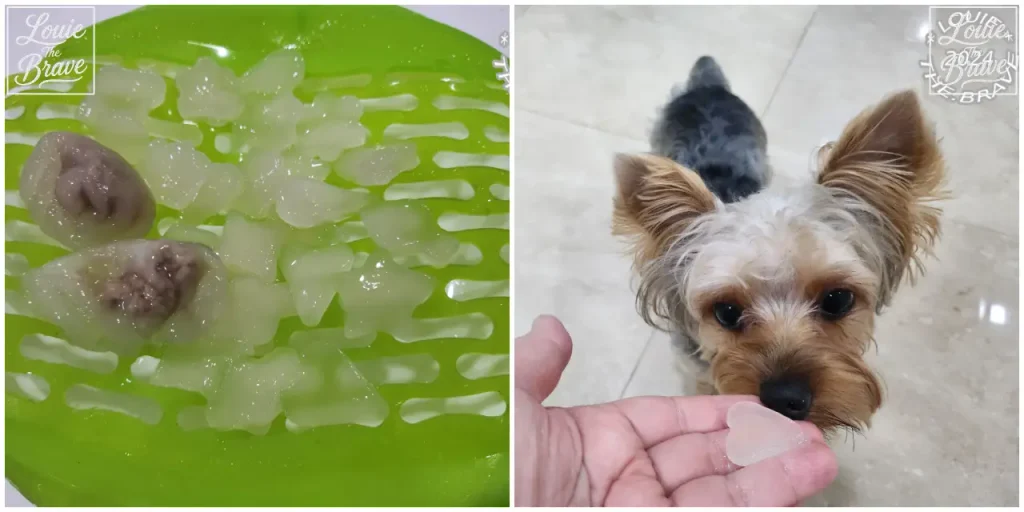
A dog rice cake recipe can be a fun way to make a Korean New Year–inspired treat, but the version here is not a traditional rice tteok recipe. I made these small tteok-style pieces with tapioca starch, then used the same dough to shape a few miniature dumplings with plain beef inside.
The result is chewy and glossy, closer to a soft starch dumpling than a crunchy American rice cake. That texture is the main thing to consider. Louie, my Yorkshire Terrier, is very sensitive to chewy foods, and this batch turned out firmer and stretchier than he prefers. I still liked the look of the tiny tteok, but for him I planned to cut the pieces very small and use them as a topping rather than a stand-alone treat.
This recipe works best as an occasional homemade treat or decorative topper, not as a meal.
What Kind of “Rice Cake” Is This?
In the United States, “rice cake” often means a dry, puffed snack. Korean tteok is different: it is soft, dense, and chewy. This recipe is different again because it uses tapioca starch instead of rice flour.
That makes the name useful for explaining the shape and inspiration, but the ingredient list matters more than the label. Tapioca provides the stretchy texture. It does not turn this into a nutritionally complete food.
USDA data for dry tapioca pearls—not the exact brand of starch I used—lists about 358 calories and 88.69 g of carbohydrate per 100 g, with only 0.19 g of protein and 0.02 g of fat. In other words, tapioca is primarily a starch ingredient in this recipe. ARS
Ingredients for This Dog Rice Cake Recipe
For the basic tteok-style pieces:
- 100 g (3.5 oz) tapioca starch
- Warm water, added gradually as needed
- A small amount of olive oil, optional
For the mini dumplings:
- A small amount of plain ground beef
- Or plain chicken breast as an alternative
Do not add salt, soy sauce, garlic, onion, scallions, seasoning blends, or sweeteners. ASPCA notes that onion and garlic can harm dogs, while xylitol can cause potentially serious toxicity.
I did not measure a fixed amount of water in my original batch, so I would not invent a cup measurement here. Add warm water a little at a time until the tapioca starch comes together into a smooth dough that can be rolled and shaped.
How to Make the Tapioca Tteok
1. Make the dough
Place the tapioca starch in a bowl.
Add warm water gradually and mix as you go. Warm water helps the starch combine more easily. I also added a little olive oil to my batch.
Once the mixture holds together, knead it gently until you can form a smooth ball. If it is crumbly, add a little more warm water. If it becomes too wet to handle, work in a small amount of additional tapioca starch.
2. Roll and cut the tteok
Flatten the dough with a rolling pin.
You can cut simple small pieces, roll the dough into a thin cylinder and slice it, or use tiny cookie cutters. I used shaped cutters because I wanted the finished pieces to look festive in Louie’s New Year soup.
Keep the pieces small enough for your dog to chew safely. The World Small Animal Veterinary Association recommends choosing treats in an appropriate size and shape to reduce choking risk.
3. Use some dough for mini dumplings
Roll a small piece of dough into a thin circle.
Add a very small amount of plain beef and fold the dough over the filling. Pinch the edges closed. Keep the wrapper thin; thick tapioca dough becomes very chewy once cooked.
My original batch used minced beef. For easier food-safety control at home, you can use fully cooked plain beef as the filling. If you use raw ground beef, cook the dumpling until the center of the meat reaches 160°F (71.1°C). If you use chicken, poultry should reach 165°F (73.9°C).
4. Boil
Bring a pot of water to a boil and add the tteok pieces and dumplings.
In my batch, I cooked them until the pieces floated to the surface, then turned off the heat.
Do not use floating as the only food-safety check for dumplings filled with raw meat. The meat still needs to reach the safe minimum internal temperature.
5. Cool in cold water
Transfer the cooked tteok and dumplings directly into cold water.
This cools them quickly and helps the shapes stay neat. Drain them well before serving or refrigerating.
The Texture Was Too Chewy for Louie
This is the part of the recipe I would change next time.
Louie likes foods that bite apart cleanly. If he chews something and it stretches instead of breaking, he often stops eating it even when he likes the smell. Pure tapioca starch created exactly that kind of elastic, chewy texture.
So although the pieces looked pretty, this dog rice cake recipe was not a perfect texture match for him.
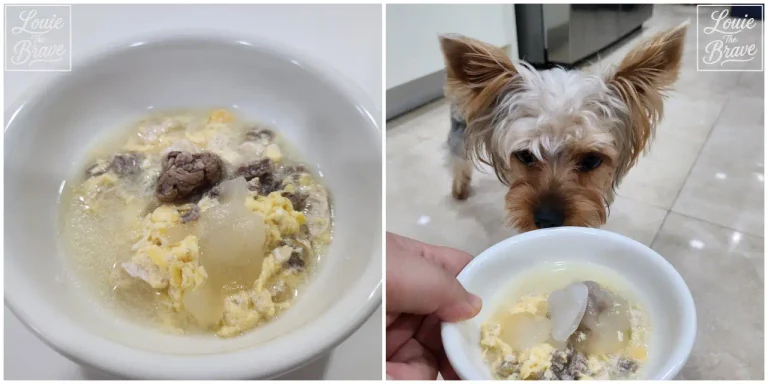
For our New Year meal, that was not a major problem because the tteok and dumplings were only small toppings. The main part of his bowl was planned around chicken broth with egg yolk and a little beef garnish. I intended to cut the tapioca pieces into very small pieces before adding them.
If your dog also dislikes chewy foods, make just a few test pieces before using the whole batch.
Tapioca, Oat Flour, or Chickpea Flour?
I usually consider three ingredients for this style of homemade treat: tapioca starch, oat flour, and chickpea flour.
Tapioca creates the strongest stretch and chew, which also helps small decorative shapes hold together.
For a future batch, I would test oat flour when I want a less elastic texture.
Chickpea flour contains substantially more protein and fiber than tapioca, but it makes a firmer dough for this type of shaping. If I use it for tteok again, I would combine it with tapioca rather than rely on chickpea flour alone.
These are texture and ingredient choices, not a reason to treat one flour as automatically better for every dog. What matters is whether your dog tolerates the ingredient and how the finished treat fits into the rest of the diet.
How Much Should a Dog Eat?
Treat portions matter more than the decorative shape.
WSAVA recommends keeping treats under 10% of a dog’s daily calorie intake, with the main diet providing the dog’s complete and balanced nutrition. WSAVA also notes that individual calorie needs vary, so the number of pieces another dog receives should not be copied automatically.
That matters with tapioca because the ingredient is carbohydrate-dense even though each finished shape may look tiny.
For a toy breed or a dog that swallows food quickly, cut the cooked pieces smaller instead of offering a whole decorative shape. Supervise the first few bites so you can see whether your dog chews, gulps, or struggles with the chewy texture.
If homemade food makes up more than occasional treats and toppers, my guide to homemade dog food portions and meal size explains why ingredients, total daily calories, and individual meal portions need to be considered separately.
Keep the Dumpling Filling Plain
The dumpling filling should be intentionally simple.
Plain beef or chicken is enough. Avoid human dumpling seasonings, especially onion, garlic, chives, soy sauce, and heavily salted sauces. ASPCA identifies onion, garlic, and chives as foods that can cause gastrointestinal irritation and red blood cell damage in dogs. ASPCA
Raw or undercooked meat can also carry harmful bacteria. USDA lists a safe minimum internal temperature of 160°F for ground meats and 165°F for poultry.
If you want a homemade treat with a completely different, softer texture, you can also try my homemade dog jelly treats with lactose-free milk and agar.
Storage
Drain the cooked tteok and dumplings well and refrigerate them in a covered container.
Because the dumplings contain cooked meat and moisture, handle them like other cooked leftovers. USDA recommends refrigerating cooked leftovers promptly and generally using them within 3 to 4 days.
The tapioca texture may become firmer in the refrigerator. Check it again before serving, especially for a small dog. If a piece becomes too rubbery or your dog tries to swallow it whole, cut it smaller or skip it.
Is This Dog Rice Cake Recipe Worth Making?
For a holiday bowl, yes—especially if you want a small visual nod to tteokguk without sharing the seasoned human version.
I would not use these tapioca tteok pieces as a daily treat, and I would not make a large batch before knowing whether a dog likes the texture. Louie taught me that appearance and smell are not enough; chewiness can decide whether he wants the food at all.
The best use for this dog rice cake recipe is a few small, plain pieces as an occasional topper or treat. Keep the filling unseasoned, cook meat fully, size each piece for the way your dog eats, and count it as part of the day’s treat calories.
Source:
- World Small Animal Veterinary Association — Feeding Treats to Your Dog 세계소동물수의사협회
- ASPCA — People Foods to Avoid Feeding Your Pets
- USDA Food Safety and Inspection Service — Safe Minimum Internal Temperature Chart
- USDA Agricultural Research Service — Tapioca, Pearl, Dry: National Nutrient Database Reference