Homemade Dog Jelly Treats With Milk and Carob
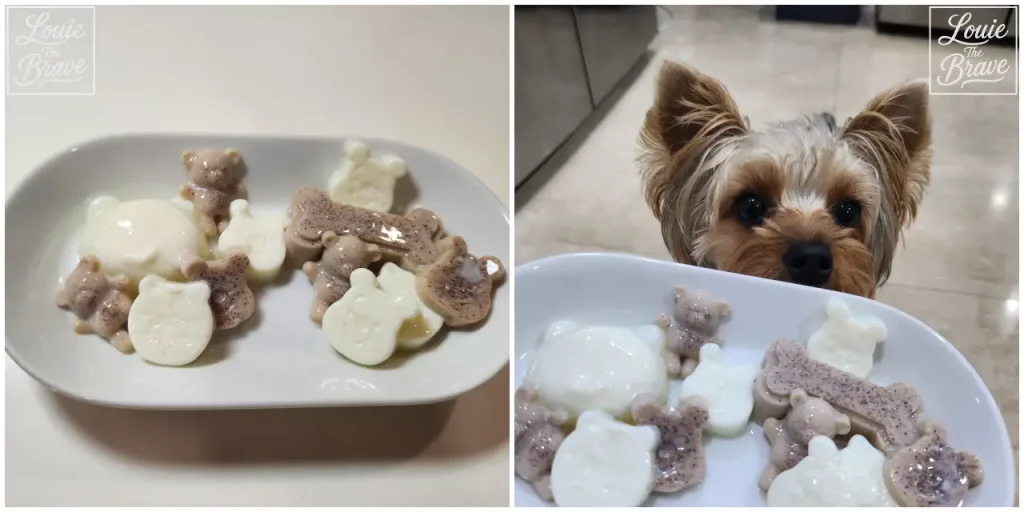
These homemade dog jelly treats need only a few ingredients: lactose-free low-fat milk, agar powder, water, and optional carob powder.
I first made them for Louie, my Yorkshire Terrier, after his vaccination. He had also been quiet and less interested in food after his vaccination the previous year, and that day he seemed to have little appetite again. Since he already liked lactose-free milk, I made a small batch of soft milk jelly as a treat he was familiar with in a different texture.
This is not a recovery food or a treatment for post-vaccination symptoms. It is simply an occasional homemade treat for a dog that already tolerates the ingredients.
Milk can cause digestive upset in some dogs, so even lactose-free milk should not automatically be treated as suitable for every dog. Dogs that have reacted poorly to dairy before should skip this recipe.
Homemade Dog Jelly Treats: Ingredients
This recipe makes a small refrigerator batch.
| Ingredient | Amount |
|---|---|
| Lactose-free low-fat milk | 200 mL (about ¾ cup + 1 tbsp) |
| Water | 20 mL (about 1 tbsp + 1 tsp) |
| Agar powder | 2 g |
| Carob powder | 0.5 g, optional |
Measure everything before heating the milk. Agar begins to set as the mixture cools, so having the molds and ingredients ready makes the process easier.
Use plain lactose-free milk without added flavors or sweeteners. Check the ingredient label before using any milk product intended for people, particularly for xylitol or other unnecessary additions.
Milk itself is not nutritionally necessary for an adult dog. Some dogs have difficulty digesting dairy, and possible signs of intolerance include diarrhea, gas, vomiting, bloating, abdominal discomfort, and decreased appetite.
How to Make Milk Jelly Treats for Dogs
1. Mix the agar and water
Add 2 g of agar powder to 20 mL of water and stir until well combined.
You can do this directly over low heat because the amount is small. Keep stirring so the agar disperses evenly rather than collecting in clumps.
2. Add the lactose-free milk
Pour 200 mL of lactose-free low-fat milk into a small saucepan.
Add the agar mixture and stir while heating over medium-low heat.
I use the milk directly from the refrigerator. Once small bubbles begin to appear around the edge of the pan, I turn off the heat.
There is no need to add sugar, honey, syrup, or other sweeteners to these homemade dog jelly treats.
3. Pour the plain milk mixture into molds
Carefully pour some of the warm mixture into silicone molds.
Small molds are especially useful for a toy breed because each finished piece holds less food. I used several shapes and sizes so I could choose a piece based on how much I wanted to give Louie.
Do not worry if the edges look messy when you pour the mixture. Once the jelly has set, thin excess pieces around the shapes can be removed easily.
4. Add carob to the remaining mixture
For the brown jelly, mix 0.5 g of carob powder into part of the remaining warm milk mixture and stir well.
Then pour it into the silicone molds.
Sifting the powder first can make the finished jelly look smoother. I was making Louie’s batch quickly and did not sift mine, so small specks of carob were visible in the finished treats.
Carob (Ceratonia siliqua) is listed by the ASPCA as non-toxic to dogs. That does not make it a necessary ingredient, however. The recipe works without it, so simply leave it out if you want plain milk jelly.
Chocolate is not a substitute for carob and should never be used in this recipe.
5. Refrigerate until set
Place the molds in the refrigerator and allow the mixture to set completely.
Once firm, gently remove each piece from the mold.
The finished homemade dog jelly treats are soft and wobbly rather than hard or chewy. If your dog tends to gulp treats without chewing, cut larger shapes into smaller pieces before serving.
Why I Used Agar
Agar is what turns the liquid milk mixture into jelly.
It is a polysaccharide derived from certain red algae and functions as a gelling and thickening agent. An EFSA assessment confirmed its effectiveness as a gelling agent in pet feed, but the same assessment also concluded that the available data were insufficient to reach a conclusion about its safety for pets under the proposed feed-additive conditions.
That limitation is worth keeping in mind. I use 2 g only as the gelling ingredient for this entire 200 mL batch and do not use agar as a supplement or claim a health benefit from it.
These homemade dog jelly treats are an occasional snack, not something I use to add fiber or other nutrients to Louie’s regular diet.
Can Dogs Have Lactose-Free Milk?
Lactose-free milk removes or breaks down lactose, but that does not mean every dog should have it.
Dogs can have different levels of dairy tolerance. Lactose intolerance can cause diarrhea, bloating, gas, vomiting, or abdominal discomfort after milk consumption. Dairy can also be a problem for reasons other than lactose, including reactions to milk proteins.
If your dog has never had the milk you plan to use, do not start with several jelly pieces just because each one looks small.
Offer a small amount first and watch how your dog responds. If milk or dairy has previously caused digestive problems, choose a different treat instead.
For dogs on a prescription diet, elimination diet, or veterinarian-directed weight-management plan, ask your veterinarian before adding homemade extras.
Carob Is Optional
I made two versions in the same batch: plain milk jelly and milk jelly with a little carob.
The ASPCA lists carob as non-toxic to dogs.
I used only 0.5 g in this recipe. The purpose was to make a second flavor and color, not to use carob as a nutritional supplement.
This distinction matters because carob is sometimes promoted for its vitamins, minerals, fiber, or other nutritional properties. A tiny amount added to a dog treat should not be presented as a meaningful source of those nutrients.
If you do not already have plain carob powder, there is no reason to buy it just to make these homemade dog jelly treats. The milk-only version sets the same way.
Portion the Jelly Before Serving
One reason I like silicone molds is that I can see the approximate size of each serving before giving it to Louie.
When I made this particular batch, Louie weighed 3.04 kg, or about 6.7 pounds. The molds I used held approximately:
- Large bear face: 20 mL
- Winnie-the-Pooh shape: 10 mL
- Small teddy bear: 3 mL
Those measurements describe my molds, not recommended serving sizes for dogs.
A 3 mL piece and a 20 mL piece may both look like “one treat,” but they contain very different amounts of milk. That difference matters much more with a small dog.
For the same reason, I do not recommend copying the number of pieces another dog eats. Body size, total diet, other treats, digestive tolerance, and health conditions all affect how much extra food is appropriate.
For another example of how I count extras within a dog’s overall food intake, see my guide to homemade dog food portions and daily feeding amounts.
How I Store Homemade Dog Jelly Treats
I make only enough for about two to three days and keep the finished jelly refrigerated.
These treats contain milk and a lot of moisture, so I prefer making a small fresh batch instead of filling several large trays at once.
Keep the jelly covered in the refrigerator and discard it if you notice an unusual smell, color, texture, or other sign of spoilage.
Before serving, choose a piece that suits the way your dog eats. A dog that slowly bites a soft jelly can handle it differently from a dog that tries to swallow an entire shape immediately.
Louie ate his first milk jelly enthusiastically, making the little “chap-chap” sounds he makes when he likes something. Still, his reaction tells me only that Louie enjoyed this recipe. It does not tell us how another dog will tolerate dairy.
If your dog prefers frozen treats, the texture and chewing considerations are different. My guide to ice and frozen treats for dogs explains why I pay attention to whether a dog licks, bites, or swallows a frozen piece.
Are Homemade Dog Jelly Treats Worth Making?
For me, yes—because this recipe is quick, I know exactly what went into it, and the silicone molds make small portions easy to prepare.
But homemade does not automatically mean nutritionally better or safer. The ingredients still have to suit the individual dog.
For these homemade dog jelly treats, I keep the recipe simple: lactose-free low-fat milk, a small amount of agar, and optional carob. I make only a short refrigerator batch, choose the mold size according to the portion I want, and cut larger pieces when necessary.
If your dog already tolerates plain lactose-free milk, you can make the plain version first and leave out the carob. If dairy causes vomiting, diarrhea, gas, or abdominal discomfort, skip the milk jelly and choose a non-dairy treat instead. Persistent or severe digestive symptoms should be discussed with your veterinarian.
Source: