Retained baby teeth in dogs: When extraction is needed
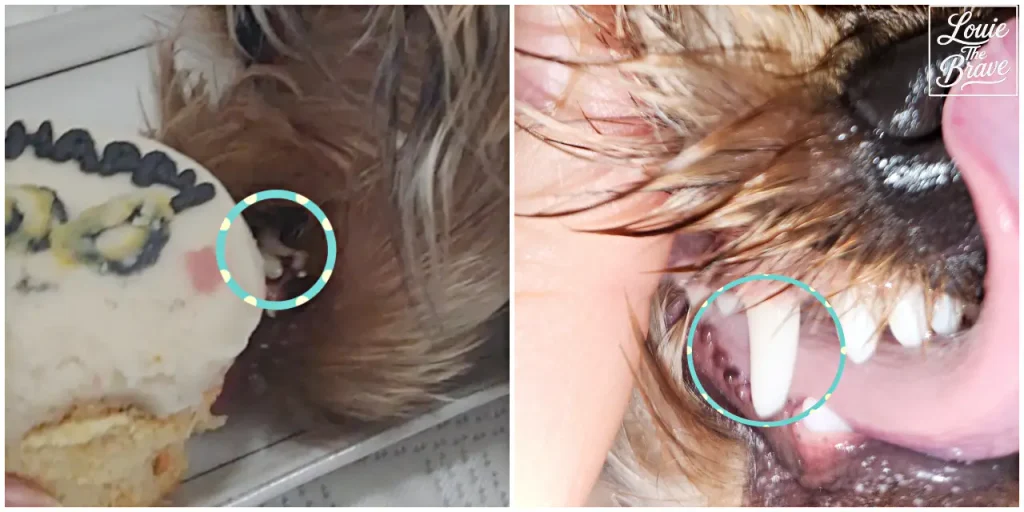
Retained baby teeth can become a dental problem as soon as a puppy’s permanent teeth begin growing beside them. If your puppy has two canine teeth in the same area, schedule a veterinary dental examination promptly. The baby tooth may need to be extracted before it changes the position of the adult tooth or causes gum problems.
A puppy does not have to finish teething before a persistent baby tooth needs attention. Some teeth eventually fall out naturally, but waiting for that to happen is not the recommended approach once the replacement adult tooth has started erupting.
This is especially relevant to small breeds such as Yorkshire Terriers, which are more likely to develop persistent deciduous teeth.
Why Does My Puppy Have Two Canine Teeth Side by Side?
Puppies develop two sets of teeth. The first set consists of deciduous teeth, commonly called baby teeth. As the permanent teeth grow, the roots of the baby teeth normally begin to dissolve, allowing the smaller teeth to loosen and fall out.
Sometimes that process does not happen as expected.
When an adult tooth begins erupting while its corresponding baby tooth is still firmly attached, both teeth become visible. This condition is known as a persistent deciduous tooth, often called a retained baby tooth.
The canine teeth are particularly susceptible.
In the upper jaw, the permanent canine normally erupts slightly toward the front of the mouth relative to the baby canine. In the lower jaw, the permanent canine emerges closer to the tongue.
This can create the familiar appearance of two pointed teeth growing next to each other.
The teeth may look almost identical at first, but an adult canine generally has a broader crown, while the baby canine is narrower and more sharply pointed.
Seeing two canine teeth side by side does not mean your puppy has developed an extra permanent tooth. A retained baby canine is one possible explanation, although a veterinarian must confirm the identity and position of each tooth.
When Should Puppy Baby Teeth Fall Out?
Most puppies have 28 baby teeth and eventually develop 42 permanent teeth.
The American veterinary reference Merck Veterinary Manual describes the following general dental development schedule.
| Age | Expected dental development |
|---|---|
| 3–5 weeks | Baby teeth begin erupting |
| 3–4 months | Baby teeth begin falling out as permanent teeth emerge |
| 4–5 months | Permanent teeth become increasingly visible |
| 5–6 months | Permanent canine teeth typically erupt |
| 6–7 months | Most dogs have their full set of permanent teeth |
These ages are approximate. Individual puppies can develop teeth earlier or later.
The important distinction is whether the permanent replacement tooth has already begun to emerge.
A five-month-old puppy with a baby canine and no visible adult replacement may simply be progressing through normal dental development.
However, a puppy with both an adult canine and its baby counterpart in the same location needs veterinary evaluation.
Waiting until every adult tooth has erupted can allow the permanent canine to develop in an abnormal position.
For puppies between three and six months old, checking the teeth regularly makes it easier to recognize these changes early.
Retained Baby Teeth: When Is Extraction Needed?
The American Animal Hospital Association (AAHA) recommends addressing persistent deciduous teeth when permanent teeth begin erupting.
Early extraction can prevent displacement of the adult teeth and reduce complications associated with dental crowding.
The timing matters because a developing permanent tooth is still establishing its position in the jaw.
If the baby tooth occupies part of that space, the adult tooth may emerge at an abnormal angle. Removing the obstruction early can allow the permanent tooth to settle into a more appropriate position.
This does not guarantee that every misaligned tooth will straighten after extraction. If the permanent tooth has already developed a significant abnormal position, further veterinary dental treatment may be necessary.
Should You Wait If the Teeth Are Not Touching?
Even if there appears to be enough room between the baby tooth and the adult tooth for brushing, a veterinary examination is still appropriate.
A visible gap does not establish that the bite is normal or that the baby tooth’s root is harmless.
The veterinarian needs to examine how the upper and lower teeth meet, whether either tooth contacts surrounding soft tissue, and whether crowding is developing below the gumline.
There is an important exception.
If a baby tooth has no permanent replacement, a veterinarian may recommend keeping it when the tooth is stable, healthy, and not causing crowding. Dental radiographs are generally needed to confirm that no unerupted permanent tooth is present.
That situation is different from a baby canine remaining beside an erupting permanent canine.
Should Extraction Wait Until Spaying or Neutering?
Not automatically.
Retained deciduous teeth are sometimes removed during a scheduled spay or neuter procedure because the dog is already undergoing anesthesia.
However, VCA Animal Hospitals advises that, in most cases, extraction should not be delayed solely to coincide with sterilization surgery.
If your puppy has already been spayed or neutered, the veterinarian can evaluate whether a separate dental procedure is necessary.
The decision should be based on the teeth and the puppy’s health, not simply the timing of another surgery.
What Happens If a Retained Canine Tooth Is Not Removed?
Persistent baby teeth can cause several dental complications.
Permanent Teeth May Grow in the Wrong Position
When an adult tooth cannot follow its normal eruption path, it may develop an abnormal angle or position.
This can produce malocclusion, meaning the teeth do not fit together properly when the mouth closes.
Lower canine displacement deserves particular attention because an incorrectly positioned tooth may press against the roof of the mouth.
That contact can cause pain, tissue injury, and difficulty eating.
Crowded Teeth Trap Plaque and Food
Closely spaced teeth create narrow areas where food particles and bacterial plaque can accumulate.
These spaces may be difficult to clean, especially in puppies with small mouths.
Plaque accumulation can lead to gum inflammation. If periodontal disease develops, the supporting tissues and bone around the teeth may eventually be affected.
Daily brushing helps control plaque, but it cannot correct abnormal tooth positioning or remove a persistent baby tooth.
The Baby Tooth May Damage the Normal Bite
When a retained canine interferes with the position of other teeth, the upper and lower jaws may not close comfortably.
Some dogs develop abnormal tooth-to-tooth contact, while others experience contact between a tooth and the surrounding gums or palate.
A puppy may continue eating despite these problems, so normal appetite alone does not establish that the mouth is comfortable.
What Happens During Veterinary Treatment?
A veterinarian begins by examining the puppy’s mouth, identifying the deciduous and permanent teeth, and assessing the bite.
The examination may reveal whether a persistent canine is affecting the position of its permanent replacement or causing irritation.
If extraction is indicated, treatment generally involves general anesthesia.
Why Dental X-Rays Matter
A baby canine has a relatively long, slender root beneath the visible crown.
Its root can extend close to the developing permanent tooth. Because of that relationship, extraction requires careful technique.
Dental radiographs help the veterinarian evaluate:
- The size and condition of the baby tooth’s roots
- The position of the permanent canine
- Root resorption or possible tooth fusion to surrounding bone (ankylosis)
- Hidden root fragments or surrounding bone changes
The 2026 World Small Animal Veterinary Association (WSAVA) Global Dental Guidelines emphasize the importance of dental radiography when extracting deciduous teeth.
The procedure must protect the developing permanent tooth and remove the appropriate root structures.
Post-extraction dental radiographs help confirm that the tooth has been completely removed.
Can the Puppy Go Home After Extraction?
Many uncomplicated extractions are managed as outpatient procedures, although the plan depends on the dog’s condition and the complexity of treatment.
The veterinarian may prescribe pain medication and provide instructions about food, chewing activities, and oral care during healing.
Owners should follow the prescribed recovery instructions rather than attempting to brush directly over a healing extraction site.
If the permanent tooth is already significantly misaligned, a veterinary dental specialist may need to evaluate further treatment options.
Can Retained Puppy Canines Fall Out Naturally at Nine Months?
They can. However, a natural outcome in one puppy does not mean waiting is safe for every dog.
My Yorkshire Terrier, Louie, experienced delayed loss of both upper baby canine teeth.
His other baby teeth had fallen out during teething, but his two upper canines remained beside their permanent replacements.
Both adult canines had already emerged, creating the appearance of overlapping teeth.
Louie had been neutered at approximately seven and a half months old. By eight and a half months, I was particularly concerned about cleaning the narrow spaces between his baby and adult canines.
Around that time, I changed my brushing technique and began paying closer attention to the crowded areas.
On May 6, 2024, when Louie was nine months old, his first retained upper baby canine fell out naturally.
The second followed approximately three weeks later.
I noticed that the shed tooth appeared to have a substantial remaining root portion. That helped me understand why a baby canine could remain firmly attached for so long.
However, the appearance of a shed tooth cannot confirm whether any root material remains in the jaw. Only an appropriate dental examination and imaging can determine that.
I also cannot conclude that changing Louie’s brushing technique caused his teeth to fall out. Their loss happened during the same period, but that timing does not establish cause and effect.
Louie’s experience demonstrates that delayed natural shedding is possible.
It does not change the veterinary recommendation to evaluate persistent deciduous teeth promptly once the permanent replacements are erupting.
For owners managing a small dog’s dental hygiene, I have also shared how I used a small, soft toothbrush around Louie’s canine teeth. Brushing can support plaque control, but it is not a treatment for retained teeth.
Can a Baby Tooth Fall Out While Its Root Stays in the Gum?
Yes. A tooth can disappear from view while a root fragment remains beneath the gums or inside the jawbone.
This is called a retained root remnant.
It is important to distinguish normal root resorption during puppy teething from a root fragment that remains after a tooth is lost or extracted.
Normal Root Resorption
As a permanent tooth develops, the root of its baby predecessor normally undergoes resorption.
Specialized cells gradually break down the root structure, allowing the baby tooth to loosen.
Because root resorption occurs before the tooth falls out, a naturally shed baby tooth may have a much shorter root than an intact tooth.
Finding a tooth with a short root does not automatically mean a fragment has broken off.
Retained Root Fragments
A different problem occurs when root tissue remains embedded in the jaw.
This can happen after a tooth fractures or during an incomplete extraction. Root remnants may also be associated with persistent deciduous teeth.
Once a fragment remains embedded, owners generally cannot determine its condition by looking at the gums.
Potential complications include inflammation around the root tip, infection, changes in surrounding bone, root resorption, and ankylosis.
Some dogs show no obvious symptoms even when dental radiographs reveal abnormalities.
If a baby tooth falls out after trauma, appears broken, or leaves a painful or swollen area, arrange a veterinary dental examination.
Dental X-rays can determine whether any root fragment remains and whether treatment is necessary.
Do not assume that an embedded root will eventually dissolve on its own.
What Did the 2026 Study Find About Retained Baby Tooth Roots in Yorkies?
A study published online in February 2026 and included in the September 2026 issue of the Journal of Veterinary Dentistry examined retained deciduous tooth root remnants in dogs.
Researchers reviewed 5,432 medical records from a veterinary referral clinic collected between 2013 and 2023.
They identified 237 retained deciduous root remnants in 143 dogs.
The most commonly affected teeth were the upper baby canines.
Among the 143 affected dogs, researchers reported the following findings:
| Study finding | Result |
|---|---|
| Dogs with retained deciduous root remnants | 143 |
| Total retained root remnants identified | 237 |
| Dogs with associated radiographic abnormalities | 117 (81.8%) |
| Dogs with periapical radiolucency | 63 (44.1%) |
| Dogs with root resorption and ankylosis | 54 (37.8%) |
| Yorkshire Terriers among affected dogs | 41.2% |
Periapical radiolucency refers to a darker area around a tooth’s root tip on a dental X-ray. It may indicate inflammation or other pathological changes.
Root resorption involves the loss of root structure, while ankylosis describes an abnormal fusion between a tooth root and the surrounding bone.
The researchers also identified dental alignment abnormalities involving permanent teeth.
Does This Mean 81.8% of Yorkies Have Dental Root Problems?
No.
The 81.8% figure represents the proportion of dogs with identified retained deciduous root remnants who also had associated radiographic abnormalities.
It does not represent the risk among all dogs or all Yorkshire Terriers.
Similarly, the finding that 41.2% of affected dogs were Yorkshire Terriers does not mean that 41.2% of the breed develops retained roots.
This was a retrospective study of patients at a referral clinic, not a population-wide survey.
Dogs referred for veterinary dental evaluation may have a different risk profile from dogs in the general population.
The study also does not establish that every radiographic abnormality caused visible pain or an active infection.
Nevertheless, the findings highlight a meaningful concern: retained baby tooth roots can be associated with problems that are not obvious during a routine visual examination.
For owners of Yorkshire Terriers and other small breeds, this supports the value of thorough veterinary dental assessment when retained teeth or missing root structures are suspected.
What Should You Do If Your Puppy Has Double Canine Teeth?
If your puppy has two canine teeth growing next to each other, arrange a veterinary examination rather than waiting for the end of teething.
You can gently lift the lip to look at the teeth without forcing the mouth open.
Pay attention to whether a smaller, pointed baby canine is visible beside a broader permanent canine.
Also watch for red or swollen gums, bleeding, unusual mouth odor, difficulty chewing, dropping food, or a tooth contacting the palate.
Pain, swelling, bleeding, or trouble eating warrants prompt veterinary attention.
Until the examination, avoid trying to loosen the baby tooth by hand.
Do not use bones, antlers, or exceptionally hard treats in an attempt to force the tooth out. These can injure teeth, particularly when the mouth is already crowded or uncomfortable.
For a more detailed comparison of chewing materials, see my guide to choosing dog treats while reducing dental injury risks.
Gentle cleaning of accessible, comfortable tooth surfaces may help control plaque, but do not force a toothbrush between tightly overlapping teeth or brush painful gums.
If the baby tooth falls out before the appointment, let your veterinarian know. A follow-up oral examination can determine whether the permanent tooth is positioned normally and whether dental imaging is warranted.
Louie’s two upper baby canines eventually fell out naturally, but his experience is not a reason to delay care for another puppy.
Once an adult canine is erupting beside a baby canine, early veterinary assessment offers the best opportunity to prevent avoidable crowding, abnormal tooth positioning, and related dental complications.
Source
- Merck Veterinary Manual — Dental Development of Dogs
- Merck Veterinary Manual — Developmental Abnormalities of the Mouth and Dentition in Small Animals
- American Animal Hospital Association (AAHA) — 2019 Dental Care Guidelines: Preventing Periodontal Disease
- VCA Animal Hospitals — Persistent Deciduous Teeth (Baby Teeth) in Dogs
- World Small Animal Veterinary Association (WSAVA) — 2026 Global Dental Guidelines
- Ziemann D, Schreyer J, Gawor J. Journal of Veterinary Dentistry (2026) — Retained Deciduous Tooth Root Remnants in Dogs: A Ten-Year Retrospective Study