Cat Chin Acne: Causes, Symptoms, and Safe Home Care
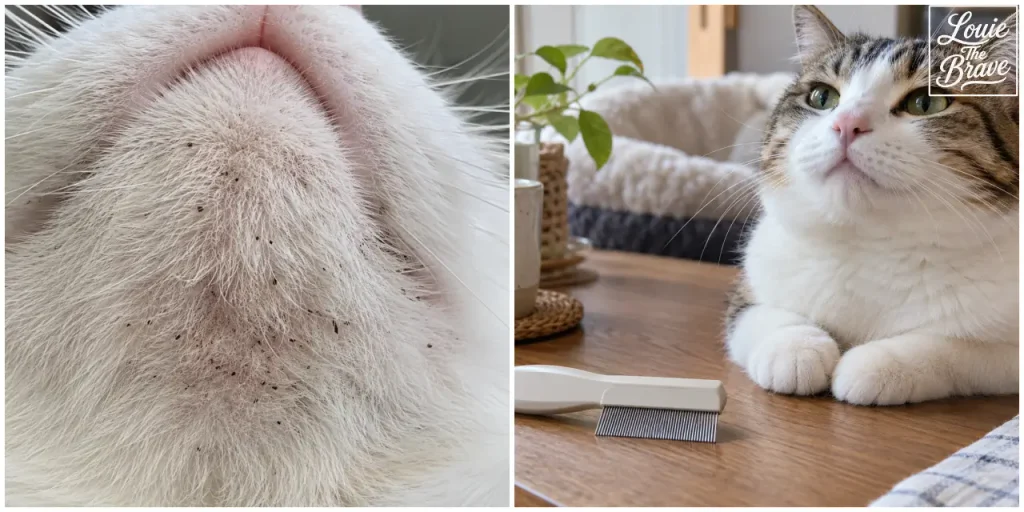
Cat chin acne usually appears as tiny black specks or bumps on a cat’s chin, just below the lower lip. These spots are often blackheads caused by clogged hair follicles, not ordinary dirt.
In mild cases, the chin may look dirty while the skin underneath remains comfortable. If the area becomes red, swollen, crusty, or painful, however, the condition may involve inflammation or a secondary infection.
The safest approach is to examine the skin, keep food and water bowls clean, and avoid trying to force the blackheads out. Some cats need only changes to their hygiene routine, while others require veterinary treatment.
Understanding the difference can help you decide what to do next.
What Does Cat Chin Acne Look Like?
The earliest sign of cat chin acne is often a cluster of black dots in the fur beneath the mouth.
Owners sometimes describe the spots as black pepper, coffee grounds, or dirt stuck to the chin. The particles may be easiest to see when the fur is gently parted.
These dark spots are called comedones, the medical term for blackheads. They develop when material builds up inside hair follicles.
As the condition progresses, the appearance can change.
| What you notice | What it may indicate |
|---|---|
| Tiny black specks on the chin | Blackheads or clogged follicles |
| Small raised bumps | Follicular irritation or inflammation |
| Redness around the blackheads | Inflamed skin |
| Swelling, scabs, or crusts | More significant inflammation or possible infection |
| Pus, bleeding, or tenderness | A problem that needs veterinary assessment |
| Hair loss around the chin | Skin irritation or another condition requiring evaluation |
Black specks alone do not prove that a cat has acne. Dirt, dried food, scabs, parasites, and other skin problems can sometimes create a similar appearance.
If you cannot tell what is attached to the fur and what is coming from the skin, have a veterinarian examine the area rather than trying to remove it yourself.
Is Cat Chin Acne Painful?
Mild blackheads may cause little or no noticeable discomfort.
A cat with a few dark spots may continue eating, grooming, and behaving normally.
Pain becomes more concerning when the follicles are inflamed or infected. You might notice that your cat:
- Pulls away when you touch the chin
- Rubs or scratches the area repeatedly
- Has visible swelling or redness
- Develops thick crusts or open sores
- Seems uncomfortable while eating or grooming
A painful chin should not be treated as a simple cosmetic problem.
What Causes Cat Chin Acne?
Cat chin acne develops when normal skin processes inside the hair follicles become disrupted.
Skin cells contain a structural protein called keratin. When excess keratin accumulates in a follicle instead of shedding normally, it can create a plug.
Natural skin oils, known as sebum, may also contribute to the buildup.
The result is a blackhead. If inflammation develops or bacteria become involved, the area may progress from small dark spots to red bumps, pustules, and crusted lesions.
The exact reason this happens in an individual cat is not always clear.
Possible contributing factors include:
- Abnormal keratin buildup inside hair follicles
- Excess skin oil production
- Changes in the skin’s protective barrier
- Inadequate grooming of the chin
- Irritation from items that contact the face
- Secondary bacterial infection
These are potential factors, not a checklist of proven causes.
For example, finding blackheads on a cat with oily skin does not establish that excess oil was the only problem. Likewise, a cat that develops acne while using a plastic bowl may have other contributing factors.
Cat chin acne is not necessarily a sign that an owner has neglected grooming or hygiene.
Can Cats of Any Age Develop Chin Acne?
Yes. Cats of different ages and breeds can develop acne around the chin and lips.
Unlike human teenage acne, feline acne is not generally considered a condition driven by puberty or reproductive hormones.
Some cats experience a single episode. Others have recurring outbreaks that require an ongoing management routine.
Can Plastic Food Bowls Cause Cat Chin Acne?
Plastic bowls are frequently discussed as a possible contributor to feline chin acne.
One concern is that scratches and wear on a plastic surface may make the bowl harder to clean thoroughly. Bacteria and food residue can remain in damaged areas even when a bowl looks reasonably clean.
However, plastic has not been proven to cause every case of cat chin acne.
A cat can develop blackheads while eating from stainless steel, glass, or ceramic dishes. Changing bowls may help some cats, but it is not a guaranteed cure.
Which Bowl Material Is Better?
For a cat with recurring chin problems, a smooth, nonporous bowl is a practical choice.
| Bowl material | What to consider |
|---|---|
| Stainless steel | Nonporous, durable, and generally easy to wash |
| Glass | Smooth and nonporous, but breakable |
| Glazed ceramic | Can be suitable if the glaze remains intact and the bowl is food-safe |
| Plastic | Scratches and surface wear may make thorough cleaning more difficult |
Choose a bowl that is easy to clean and inspect it regularly for damage.
Wash food and water bowls daily, and remove leftover food residue after meals.
For cats that eat wet food, check whether food collects along the lower lip or chin. Gently removing visible residue may help keep the area cleaner.
A bowl change is one part of a hygiene routine, not a substitute for examining painful or inflamed skin.
How to Clean Cat Chin Acne Safely at Home
If your cat has only a few black specks, no visible inflammation, and no signs of discomfort, gentle cleaning may be reasonable while you arrange veterinary advice if the spots are new or the diagnosis is uncertain.
The goal is to remove loose surface residue without damaging the skin.
Do not try to make every blackhead disappear during a single cleaning session.
Step 1: Examine the Chin Before Touching It
Look beneath the lower lip in good lighting.
Check for redness, swelling, open skin, bleeding, or thick crusts.
If any of these are present, avoid rubbing or scraping the area. Contact your veterinarian for guidance.
If the skin looks comfortable and intact, you can proceed gently.
Step 2: Use a Soft, Damp Cloth
Moisten a clean, soft cloth or gauze pad with lukewarm water.
Lightly wipe away food residue or loose debris from the fur.
Do not use enough pressure to pull at the skin or dislodge attached scabs.
A warm, damp cloth may help soften surface residue, but it should not be used as a tool for squeezing material out of the follicles.
If your cat pulls away, stop.
Step 3: Dry the Area Gently
After cleaning, lightly pat the chin dry with a clean cloth.
Avoid leaving the area persistently wet, especially if the skin is already irritated.
Do not use a hair dryer or rub the chin with a rough towel.
Step 4: Follow Veterinary Instructions for Medicated Products
If your veterinarian diagnoses cat chin acne, they may recommend a cat-appropriate cleanser or medicated wipe.
Depending on the skin’s condition, veterinary treatment can involve antibacterial products or other medications.
Follow the prescribed application method and frequency. More frequent cleaning or stronger products are not automatically better.
A treatment that is suitable for one cat may be inappropriate for another, particularly when the skin is broken or inflamed.
Step 5: Monitor the Skin Rather Than Just the Black Specks
After cleaning, look for changes in the skin itself.
Important observations include:
- Whether redness is developing or spreading
- Whether the chin is becoming swollen
- Whether your cat reacts painfully to touch
- Whether new sores or pustules appear
- Whether the affected area is expanding
These changes matter more than whether every visible blackhead has been removed.
For cats with recurring cat chin acne, a veterinarian can recommend a maintenance routine based on the condition of the skin and how often outbreaks occur.
Can You Remove Cat Chin Acne With a Flea Comb?
Videos sometimes show fine-tooth combs pulling dark particles from a cat’s chin.
The result can look satisfying, especially when the black specks resemble loose dirt.
However, a fine-tooth comb is not automatically a safe treatment for cat chin acne.
Some material may be loose in the fur, but other particles may be embedded in plugged follicles or attached to inflamed skin.
Dragging a comb across these areas can cause friction, pull at crusts, or worsen irritation.
A comb also cannot tell you whether the underlying skin is infected.
What About Using an Eye Comb?
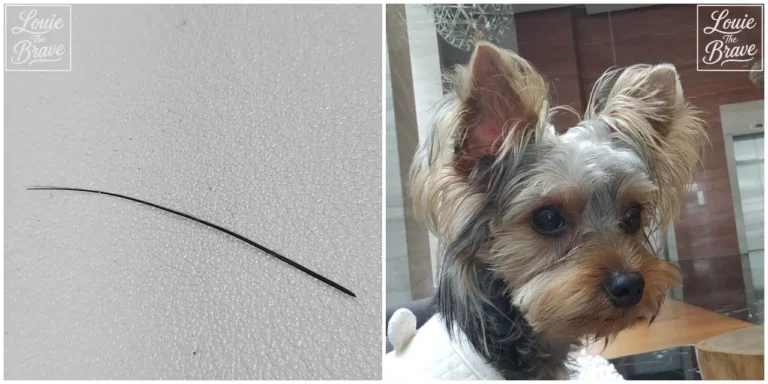
I regularly use a small eye comb while grooming Louie, my Yorkshire Terrier, about every other day.
After seeing videos of black particles being combed from cats’ chins, I became curious and gently tried the comb around Louie’s chin.
Nothing came off.
That small experience does not tell us anything about whether a cat has acne. Louie is a dog, and I did not establish that there was any acne-related material on his chin.
It did, however, reinforce an important distinction: a grooming tool that works well for one purpose is not necessarily appropriate for removing material from the skin.
An eye comb is designed for grooming hair around a sensitive area. It is not a treatment for blocked follicles.
For a cat with visible blackheads, gentle inspection and veterinary guidance are safer than repeatedly combing until particles come loose.
Why Squeezing and Scraping Are Risky
Avoid squeezing a blackhead between your fingers or trying to extract it with a comb, brush, or other tool.
These actions can:
- Injure delicate chin skin
- Increase inflammation
- Disrupt an already irritated follicle
- Cause bleeding
- Make an existing infection worse
- Turn a minor skin problem into a painful one
If debris does not come away with a light wipe, leave it in place.
What Should You Never Put on Cat Chin Acne?
It can be tempting to use a product already sitting in the bathroom cabinet.
But a cleanser or acne treatment designed for human skin may be too irritating or unsafe for cats.
Cats also groom themselves by licking their fur and skin, creating a risk of swallowing products applied to the chin.
Avoid using the following without specific veterinary instructions:
- Human acne creams or spot treatments
- Alcohol-based cleansers
- Hydrogen peroxide
- Essential oils
- Harsh facial scrubs or exfoliating pads
- Undiluted antiseptic products
- Medicated wipes intended only for people
- Antibiotic or steroid creams left over from another pet or person
Some ingredients used in veterinary dermatology also appear in human skin care products. That does not mean the human formulation, concentration, or application instructions are appropriate for a cat.
For example, your veterinarian may prescribe a product containing chlorhexidine or another active ingredient. The correct formulation and directions are important.
Never assume that a product is cat-safe simply because its active ingredient is familiar.
If you have already applied something to your cat’s chin and notice drooling, vomiting, unusual behavior, or increased skin irritation, contact your veterinarian promptly and tell them exactly what product was used.
When Does Cat Chin Acne Need Veterinary Treatment?
A few blackheads on otherwise healthy skin may not be an emergency.
However, an owner cannot reliably determine the condition of a hair follicle just by looking at the surface.
Arrange a veterinary examination if the problem is new and you are uncertain what it is, or if cat chin acne keeps returning.
Seek veterinary care promptly when you notice:
- Red or swollen skin
- Pustules or discharge
- Bleeding or open sores
- Thick, painful crusts
- A bad odor from the affected area
- Hair loss or lesions spreading beyond the chin
- Repeated scratching or rubbing
- Pain when the area is touched
- Reduced appetite or difficulty eating
- A cat that seems unusually tired or unwell
Swelling around the chin or lips is not always acne. Dental disease, infections, allergic conditions, and other skin disorders can produce similar signs.
If swelling interferes with breathing, seek emergency veterinary care.
Could the Black Specks Be Something Other Than Acne?
Yes.
A veterinarian may need to distinguish feline acne from other causes of chin lesions.
Depending on the appearance and symptoms, possibilities include:
- Bacterial skin infection
- Fungal infection such as ringworm
- Parasitic skin disease
- Allergic or inflammatory skin disorders
- Wounds or scabs
- Dental-related swelling
- Less common growths or immune-related conditions
This is one reason photographs and online descriptions cannot replace a physical examination when the skin looks abnormal.
If the lesion is painful, rapidly changing, or does not resemble simple blackheads, do not assume it is harmless acne.
How Do Veterinarians Diagnose and Treat Feline Chin Acne?
A veterinarian will typically begin by examining the chin and asking about your cat’s symptoms, grooming habits, previous skin problems, and feeding setup.
If the appearance is typical, a physical examination and medical history may provide enough information for an initial diagnosis.
If the lesions are unusual, severe, or recurring, additional tests may be needed.
These may include microscopic examination of skin samples, tests for bacteria or fungi, or other procedures to rule out conditions that resemble acne.
Treatment Depends on the Severity
The treatment plan is based on the condition of the skin, not simply the number of visible blackheads.
| Skin condition | Possible veterinary approach |
|---|---|
| Mild blackheads without discomfort | Hygiene changes and monitoring |
| Recurrent clogged follicles | A cat-safe cleansing or maintenance plan |
| Red, inflamed skin | Appropriate topical treatment after examination |
| Pustules or suspected infection | Evaluation for infection and targeted medication |
| Severe, painful, or persistent lesions | Additional diagnostics and more intensive treatment |
Your veterinarian may recommend a medicated cleanser, antibacterial preparation, or other prescription treatment.
Oral medication may be appropriate for certain severe cases, but not every cat with blackheads needs antibiotics.
If a treatment is prescribed, complete it according to veterinary instructions. Do not stop or change the medication simply because the dark specks begin to fade.
How Long Does Cat Chin Acne Take to Clear?
There is no single timeline that applies to every cat.
A cat with a mild episode may improve after changes to cleaning and bowl hygiene. Another cat may continue developing new blackheads or require a longer-term treatment plan.
Improvement also depends on whether the follicles are merely clogged or whether the skin has developed significant inflammation or infection.
Rather than expecting the chin to clear within a fixed number of days, ask your veterinarian when improvement should become noticeable with the recommended treatment and when to return if it does not.
How Can You Help Prevent Cat Chin Acne From Getting Worse?
Not every case can be prevented because the underlying cause is not always known.
However, a few household habits can reduce avoidable irritation and make changes easier to notice.
Keep Bowls Clean and Check Their Condition
Wash your cat’s dishes every day.
Replace bowls that have deep scratches, cracks, or damaged surfaces.
If you currently use plastic bowls, consider switching to stainless steel or another smooth, nonporous material.
Check the Chin After Meals
Look for food residue around the lower lip and chin, especially after wet food.
If needed, gently remove loose residue with a soft, damp cloth.
Avoid unnecessary rubbing when the skin is already clean.
Keep Grooming Comfortable
Not every cat tolerates facial handling.
Introduce short, gentle chin checks rather than holding your cat still for a long cleaning session.
If your cat becomes stressed, defensive, or painful, stop and discuss alternatives with your veterinarian.
Watch for Changes Over Time
For cats with recurrent acne, a clear photograph taken in consistent lighting may help you compare the chin during future checks.
Notice whether the skin is becoming redder, thicker, more swollen, or more sensitive.
An increase in inflammation is more important than the presence of a few unchanged black specks.
Remember That Skin Oil Is Part of Normal Cat Care
Natural skin oils are not inherently unhealthy. The amount of visible buildup and the grooming needs can vary between cats.
Hairless breeds offer a useful example because their skin oils are not absorbed by a full coat in the same way as those of furred cats. If you are interested in that distinction, our guide to Sphynx cat skin care and grooming explains why less fur does not necessarily mean less skin maintenance.
However, a cat’s breed or coat type alone does not tell you whether blackheads are present or what treatment is needed.
Frequently Asked Questions About Cat Chin Acne
Is Cat Chin Acne Contagious?
Feline chin acne itself is not generally considered a contagious disease.
It involves changes within the hair follicles rather than an infection that routinely spreads from cat to cat.
However, not every chin lesion is acne. Some conditions that resemble acne, including ringworm, can be contagious.
If multiple pets develop skin lesions or the diagnosis is uncertain, have them evaluated.
Can Indoor Cats Get Chin Acne?
Cat chin acne is not limited to outdoor cats and does not require exposure to soil or outdoor dirt.
An indoor cat can develop clogged follicles even when its environment and feeding equipment are kept clean.
Should You Remove Every Blackhead?
Trying to extract every visible spot can irritate the skin and cause unnecessary discomfort.
The goal of treatment is to improve skin health and control inflammation, not to make the chin look perfectly clean through force.
Blackheads that remain attached after a gentle wipe should not be picked or scraped away.
Does Cat Chin Acne Always Need Medication?
Not always.
Some cats with mild blackheads may improve with appropriate hygiene changes.
Cats with painful, infected, or persistent lesions are more likely to need veterinary treatment.
Do not use leftover or over-the-counter medication as a substitute for determining what is causing the lesions.
Can Cat Chin Acne Come Back?
Some cats experience repeated outbreaks even after the skin improves.
If this happens, your veterinarian may recommend a long-term routine involving bowl hygiene, gentle cleaning, or a specific medicated product.
Repeated outbreaks also make it important to confirm that the diagnosis is correct.
Is a Dirty-Looking Chin Always a Sign of Poor Grooming?
No.
A dirty appearance can result from blackheads inside hair follicles, even when a cat grooms normally.
Poor grooming may contribute in some cases, but the presence of acne does not prove that a cat or its owner has inadequate hygiene.
The Bottom Line
Cat chin acne often begins with tiny black specks under the lower lip. These may be clogged hair follicles rather than ordinary dirt.
For a cat with comfortable, intact skin, start by checking the chin carefully, maintaining clean food and water bowls, and avoiding harsh cleaning methods.
Do not squeeze blackheads, scrape the chin with a fine-tooth comb, or apply human acne treatments.
If the area becomes red, swollen, painful, crusted, or starts producing discharge, arrange veterinary care. Similar-looking conditions may need different treatment.
The most useful question is not how quickly you can remove the black specks. It is whether the skin underneath them is healthy and comfortable.
Source
- Texas A&M University, College of Veterinary Medicine & Biomedical Sciences — Managing Feline Acne
- PetMD — Cat Acne
- VCA Animal Hospitals — Chin Acne in Cats
- Merck Veterinary Manual — Pyoderma in Dogs and Cats