Baram the Lion Dies at 22 After Three Years at Cheongju Zoo
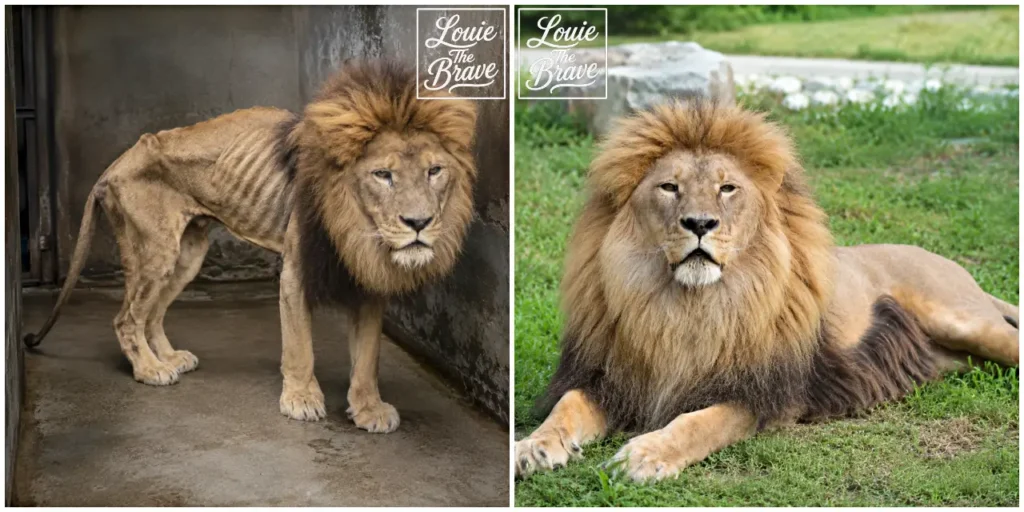
Baram, a male lion whose severely thin appearance once made him a symbol of poor zoo conditions in South Korea, died at Cheongju Zoo on August 12, 2026. He was 22 years old.
Cheongju City said Baram was found dead at around 8 a.m. The exact cause of death is still being analyzed. Because of his advanced age, natural causes related to aging are being considered, but no final cause has been confirmed.
For many people in Korea, however, Baram’s story is about more than his death. His final three years showed how dramatically an animal’s daily life can change when its environment, care, and opportunities to behave naturally improve.
Why Baram Became Known as the “Rib Lion”
Baram was born in 2004 at Seoul Children’s Grand Park. In 2016, he was moved to Bugyeong Zoo, a private zoo in Gimhae, South Korea.
There, he spent years in an enclosure measuring about 14 meters by 6 meters, or roughly 46 by 20 feet. Much of the space was enclosed by concrete, and after the female lion that had lived with him died, Baram spent a long period alone.
Eventually, photos showing his ribs clearly visible through his thin body drew widespread public attention. Koreans began calling him “galbi saja,” or “rib lion,” because of his skeletal appearance.
The nickname was never a flattering one. It became closely associated with concerns about the conditions in which he was being kept.
Cheongju Zoo later offered to take him, and Baram was transferred to his new home on July 5, 2023. Contemporary reports documented both his former enclosure and the rapid physical changes seen after his move.
A New Home and a New Name
At Cheongju Zoo, the lion was given the name Baram.
In Korean, baram can mean “wind” and can also express a wish or hope. The name reflected the hope that he would spend the rest of his life in a better environment.
His new surroundings were very different from the enclosed space where he had previously lived. Cheongju Zoo’s wildlife facility included outdoor areas with soil, trees, rocks, sunlight, and places where animals could move away from public view.
The change in Baram’s physical condition became visible quickly.
About two weeks after his arrival, the zoo reported that he ate roughly 4 kilograms, or 8.8 pounds, of beef and chicken in one sitting. Photos released at the time showed that his ribs were no longer as prominent as they had been before the transfer.
His recovery was not simply about gaining weight. Baram was also being introduced to a more complex environment in which he could move between indoor and outdoor spaces and interact with natural features around him.
Baram Was No Longer Living Entirely Alone
Another major change involved other lions.
Cheongju Zoo gradually introduced Baram to Dodo, a female lion already living at the zoo. Instead of immediately placing the two animals together, staff used a gradual introduction process that included exposure to each other’s scent, visual contact, and controlled access to nearby spaces.
By October 2023, Baram and Dodo were spending time together.
For an elderly lion that had lived alone for years, this added another dimension to his new life. Cheongju City later documented their introduction and time together through its official zoo videos.
Baram’s daughter, later named Gureum, also arrived at Cheongju Zoo in August 2024 after being moved from Gimhae.
The zoo did not immediately keep all three lions together. Gureum first adjusted in a separate space, while staff continued controlled introductions. Baram, Dodo, and Gureum used different areas at different times and were allowed to see and become familiar with one another before closer introductions were attempted.
This slow process made Baram’s final years very different from the long period when he had lived largely by himself.
His Health Declined in 2026
Baram was already an elderly lion when he arrived in Cheongju, and his health required increasing attention as he aged.
In June 2026, Cheongju City reported that he had stopped eating for several days and was spending long periods lying down.
Veterinary staff anesthetized him for a more detailed examination that included CT imaging and ultrasound. The city later reported that Baram recovered enough to begin walking slowly and eating again while veterinary and animal-care staff continued to watch him closely.
About two months later, on August 12, his death was confirmed.
At the time of this article, the official cause of death has not been determined. Reports have pointed to his advanced age as a possible explanation, but that should not be treated as a confirmed finding until the analysis is complete.
Remembering Baram Beyond the “Rib Lion” Nickname
The images that first made Baram famous were difficult to forget. His thin body drew public attention to his situation and ultimately helped bring about the move that changed the final part of his life.
But those images do not have to define his entire story.
From July 2023 to August 2026, Baram had access to outdoor space, natural ground, trees, veterinary care, regular food, and opportunities to interact with other lions. He lived with Dodo and eventually had the chance to become familiar with his daughter, Gureum.
Those three years cannot erase what came before them. They do show, however, why the quality of an animal’s environment and daily care matters even late in life.
Baram may have first become known to the public as Korea’s “rib lion.” His final chapter gave people another way to remember him: simply as Baram, an old lion who finally had space, companionship, and attentive care during the last years of his life.
Source:
Cheongju City — Official updates and videos on Baram’s veterinary care and life at Cheongju Zoo.
Yonhap News Agency — Reports on Baram’s 2023 transfer and recovery and his death on August 12, 2026.