Cicada Shells for Sale: Uses, Exuviae, and Chan Tui
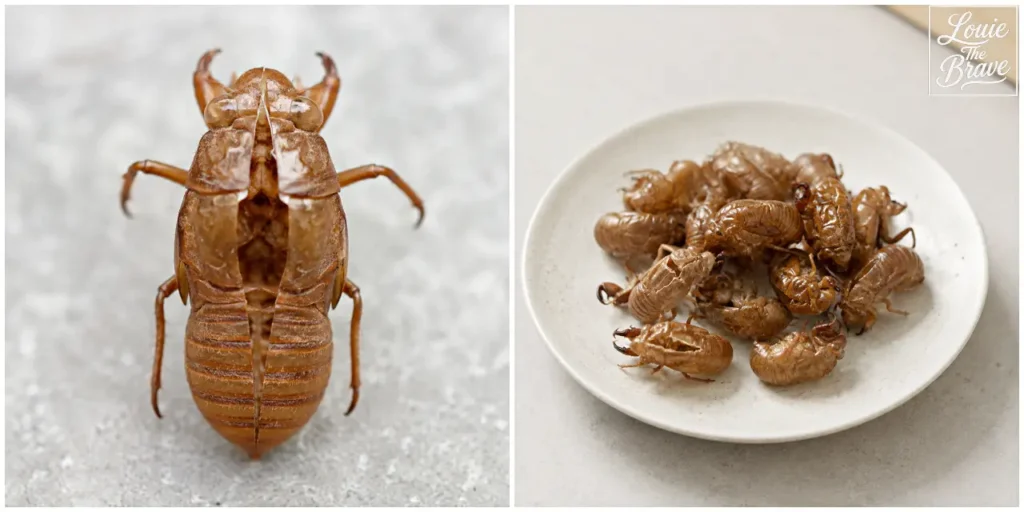
If you have ever seen a brown cicada shell clinging to a tree trunk, it may seem strange that anyone would pay for one. Yet cicada shells do have practical uses. They can be collected for natural history study, classroom observation, ecological research, and—in a much more controlled form—traditional Chinese medicine.
The key point is simple: a cicada shell is not a dead cicada. It is the empty exoskeleton left behind when a mature nymph molts into a winged adult.
What Is a Cicada Shell?
The scientific term is exuvia; the plural is exuviae. A mature cicada nymph climbs out of the soil, attaches itself to a tree, post, or other upright surface, and molts. The adult cicada pulls free while the old outer skeleton stays attached.
That is why an empty shell is light, dry, and hollow. You can usually see a split along the back where the adult emerged, along with the legs, claws, and segmented body shape.
This makes cicada exuviae useful specimens because you can study many features of the nymph without catching or killing a live cicada.
Why Would Anyone Buy Cicada Exuviae?
There is no single use for cicada shells. Different buyers may want them for different reasons.
Nature study and education. Exuviae let students and hobbyists examine the body shape, digging forelegs, claws, abdominal segments, and molting opening at close range.
Specimen collections. A shell can be labeled with the date and location where it was found and kept as part of a personal or educational insect collection.
Ecological research. Scientists can count exuviae to estimate cicada emergence and compare where and when cicadas are appearing. A standardized monitoring method called Cicada-MET uses exuviae counts along transects and plots to study abundance, distribution, and ecological change.
So although the shell itself is empty, the information it preserves can have value.
What Is Chan Tui?
Chan Tui is the name used in traditional Chinese medicine for cicada slough. Research reviews describe cicada slough as a traditional medicinal material, including historical use for complaints involving the throat, voice, and itchy skin. These are traditional uses and should not be read as proof that cicada slough treats those conditions.
That does not mean every shell found outdoors is medicinal material.
A shell collected from a tree in a backyard or park has unknown species identity, handling history, cleanliness, and storage conditions. Medicinal materials are selected and prepared within a specific supply and quality-control system. A random shell picked up outdoors should not be treated as an interchangeable substitute.
| Found cicada shell | Chan Tui medicinal material |
|---|---|
| Collected outdoors after emergence | Prepared for use within a traditional medicine supply system |
| Useful for observation or specimens | Used as a traditional medicinal ingredient |
| Species and handling may be unknown | Identity and quality are expected to be controlled |
| Not appropriate for home self-medication | Should be used with qualified professional guidance |
Can You Pick Up Cicada Shells for a Collection?
For observation, yes. If a cicada is still emerging, do not pull the shell away or handle the insect. Molting is a vulnerable stage, so it is best to leave the cicada undisturbed. Careful identification matters when handling unfamiliar insects as well; Paederus rove beetles should not be crushed against the skin because their body fluid can cause an irritant dermatitis even though the beetles do not bite or sting.
Once the shell is empty, handle it gently because the legs and body walls break easily. If you want to keep it, record the date and location, remove loose dirt without crushing the specimen, let it dry completely, and store it in a small rigid container.
For a casual nature collection, that is far more appropriate than trying to turn a wild shell into something to swallow.
Should You Make Tea or Powder From Found Cicada Shells?
No. Finding a traditional use for cicada slough online does not make a wild exuvia safe to brew, grind, or ingest.
In the United States, dietary and herbal products can carry safety concerns involving contamination, direct toxicity, and interactions with medications. Those general concerns are another reason not to improvise a medicinal preparation from material collected outdoors.
If you are interested in Chan Tui as part of traditional Chinese medicine, discuss it with a qualified health professional who can consider the actual product, your medications, and your health conditions.
The Empty Shell Is More Useful Than It Looks
A cicada exuvia is a record of one insect completing its final molt. For a child, collector, or naturalist, it can be a fascinating specimen. For researchers, many shells counted over time can reveal where cicadas are emerging and how populations change.
And while cicada slough also has a place in traditional Chinese medicine as Chan Tui, that specialized use should not be confused with simply picking a shell off a tree and treating it as medicine.
Source:
- University of Maryland Extension — Cicadas in Maryland
- Pons et al. — Cicada-MET: an Efficient Ecological Monitoring Protocol of Cicada Populations
- Xie et al. — Edible and Medicinal Progress of Cryptotympana atrata (Fabricius) in China
- National Center for Complementary and Integrative Health — Herb-Drug Interactions