Pet Jellyfish Care: Tank Setup, Feeding, Water Quality
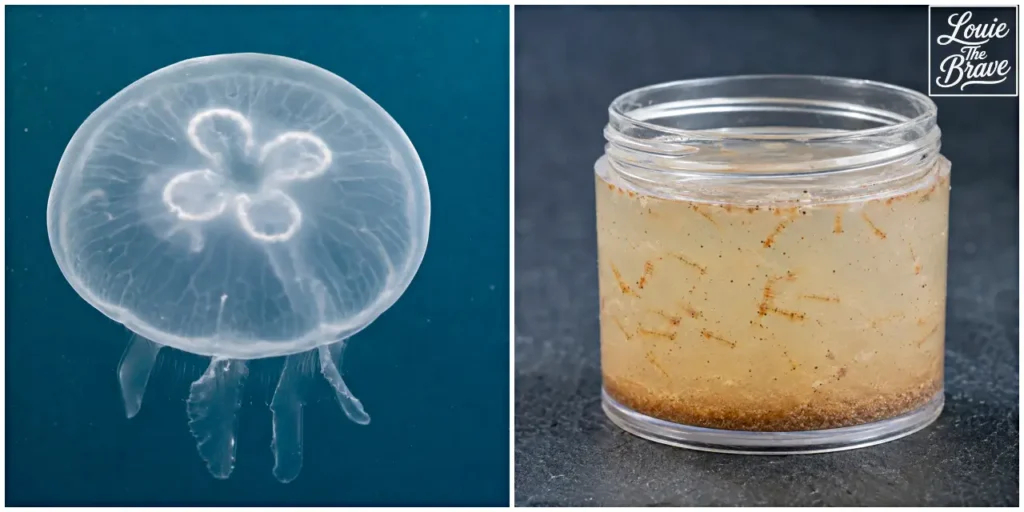
Pet jellyfish can be kept at home, but they are not a low-maintenance alternative to aquarium fish. Their soft bodies are easily damaged, and they depend on carefully controlled water movement, stable saltwater, appropriate food, and a mature filtration system.
For a first jellyfish aquarium, captive-raised moon jellyfish in the genus Aurelia are often the most practical place to start. The Association of Zoos and Aquariums describes Aurelia species as resilient by jellyfish standards, generally easy to culture, and commercially available. However, the moon jellyfish group includes multiple species and populations with different environmental tolerances, so the seller’s exact species information and current water conditions still matter.
Why Pet Jellyfish Need a Special Tank
A standard rectangular fish tank is usually a poor starting point for free-swimming jellyfish. Jellyfish have delicate, gelatinous bodies and need water movement that keeps them suspended without repeatedly pushing them against walls, corners, or drains.
Dedicated jellyfish systems commonly use a kreisel or pseudokreisel-style design. Water moves in a slow rotational pattern, while a broad screened outlet reduces the risk of a jellyfish being pulled into the drain. The inside of the enclosure is generally smooth and free of decorations that could trap or tear the animals.
| Feature | Standard Fish Tank | Jellyfish Tank |
|---|---|---|
| Water movement | May create strong directional jets | Gentle rotational circulation |
| Drain or intake | Can create concentrated suction | Protected by a large screen |
| Interior | Often includes corners and decorations | Smooth, open swimming area |
| Air bubbles | Air stones are common | Bubbles should be minimized |
| Beginner setup | Often requires modification | Designed around jellyfish movement |
Air bubbles are especially important to control. AZA guidance advises against air diffusers and other agitation that produces bubbles in jellyfish systems because bubbles can become trapped around the bell and damage delicate tissues.
Cycle the Aquarium Before Adding Jellyfish
Mixing marine salt into water does not mean a new jellyfish tank is ready for animals.
The aquarium should first develop a working biological filtration system capable of processing waste. AZA specifically recommends that jellyfish systems be fully cycled before jellyfish are introduced rather than using the animals while the aquarium is cycling.
For a stable jelly system, the AZA care manual lists these suggested water-quality values:
| Parameter | Suggested Level |
| Ammonia | Below 0.02 ppm |
| Nitrite | Below 0.02 ppm |
| Nitrate | Below 10 ppm |
| Salinity for most medusae | 32–35 ppt |
| pH | 8.0–8.4 |
These are reference values for stable systems rather than universal limits for every jellyfish species. For moon jellyfish specifically, the current AZA species guide lists 32–34 ppt for medusae and also notes considerable variation within the Aurelia group.
For a home aquarium, ask the supplier what salinity and temperature the jellyfish are currently being maintained at and plan acclimation around those conditions rather than choosing a number from a general care chart.
Top-Off Water and Water Changes Are Not the Same
Saltwater tanks lose water through evaporation. The water molecules leave the aquarium, while the dissolved salt remains behind, so salinity can rise as the water level drops.
That creates an important distinction:
| Maintenance Task | What to Add |
| Replacing evaporated water | Fresh RO/DI water or another appropriate purified freshwater source |
| Performing a water change | Newly prepared saltwater matched to the tank |
Do not compensate for ordinary evaporation by continually adding more saltwater. For water changes, prepare the new saltwater in a separate container and match its salinity and temperature before it enters the jellyfish aquarium.
What Do Pet Jellyfish Eat?
Moon jellyfish need actual food; aquarium lighting alone does not feed them.
The AZA moon jellyfish care guide lists foods such as enriched newly hatched brine shrimp, adult Artemia, copepods, Pacific krill, and small plankton for adult medusae.
For a newly purchased jellyfish, continuing the diet used by the breeder or seller is usually the simplest starting point. Ask what food is being offered, how it is enriched or prepared, and how the keeper determines that the jellyfish have captured enough food.
Avoid assuming that one type of freshly hatched brine shrimp will automatically provide a complete long-term diet. Food quality, particle size, water flow, jellyfish size, and feeding technique all affect whether food actually reaches the oral arms.
Daily Care Matters More Than the Tank’s Appearance
A jellyfish aquarium may look calm, but the equipment supporting it is working continuously.
Check that the circulation pump is operating normally and watch how the jellyfish move through the tank. They should remain suspended rather than repeatedly collecting on the bottom or being pressed against the drain screen. AZA notes that excessive flow can cause moon jellyfish to rub against enclosure surfaces and may interfere with normal pulsing and feeding.
Screens, pumps, filters, water quality, feeding, and the animals themselves therefore require regular attention. If you leave home for several days, someone should be able to check both the jellyfish and the life-support equipment.
It is also worth planning for a pump failure or power outage before buying the animals. A beautiful jellyfish tank cannot compensate for stopped circulation or unstable water conditions.
Are Pet Jellyfish Right for You?
Pet jellyfish can create a striking, peaceful aquarium, but their appearance can make their care seem easier than it is.
Before buying one, ask the seller for the exact species or Aurelia type, expected adult size, current salinity and temperature, diet, and recommended tank design. Make sure you can maintain the aquarium during hot weather, travel, equipment failures, and ordinary daily feeding and cleaning.
Moon jellyfish can also represent a longer commitment than some buyers expect. AZA reports that captive moon jellies are often maintained for at least a year, with two years or longer also reported under managed care.
The best time to bring home pet jellyfish is not when the display tank looks irresistible. It is when the tank is already cycled, the water is stable, the flow has been tested, and you know exactly how you will care for the animals every day.
Source:
Association of Zoos and Aquariums — Jellyfish (Cnidaria & Ctenophora) Care Manual, 3rd Edition (2025)
U.S. Geological Survey — Evaporation and the Water Cycle
Tropic Marin — Analytics: Hydrometer / Areometer