Angmoki Dolphin Update: Why Human Contact Became Dangerous
What happened to Angmoki Dolphin?
Angmoki Dolphin is a young Indo-Pacific bottlenose dolphin (Tursiops aduncus) that became unusually well known in South Korea after spending months alone around Gangneung Harbor on the country’s east coast. Instead of keeping away from people, the dolphin repeatedly approached boats and appeared interested in human activity.
That behavior eventually became part of the problem.
South Korea’s National Institute of Fisheries Science officially identified Angmoki as a young Indo-Pacific bottlenose dolphin in February 2026. The sighting was especially notable because the species had previously been known in Korea mainly from the waters around Jeju Island.
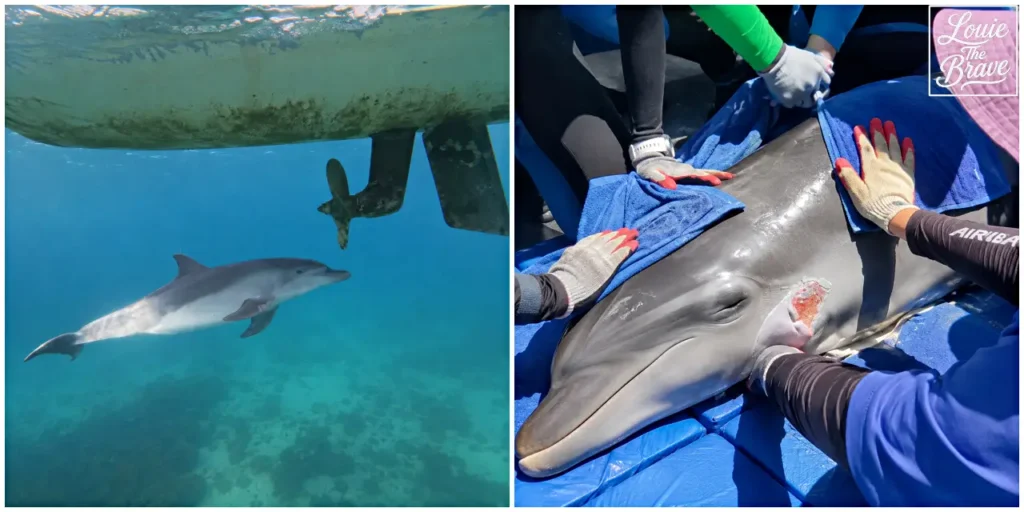
By summer, Angmoki had developed a serious injury and was continuing to approach vessels. The dolphin was rescued from Gangneung Harbor on July 15, 2026, and transported to the Jangsaengpo Whale Experience Center in Ulsan for treatment.
Why was Angmoki Dolphin following people and boats?
Researchers use the term “solitary-sociable dolphin” for some dolphins that live apart from other dolphins and begin seeking repeated interaction with humans, boats, or both.
It does not explain why an individual dolphin became separated from its own species. In Angmoki’s case, publicly available information does not establish why the young dolphin was living alone or whether it originally came from the resident population around Jeju.
That uncertainty matters. A lone dolphin may eventually join other dolphins again, but repeated human interaction can also change its behavior. Research reviewed by the International Whaling Commission has documented solitary dolphins becoming increasingly accustomed to people, sometimes resulting in disturbance, injury, and other welfare problems.
Angmoki showed several behaviors that worried Korean researchers. The dolphin followed particular boats, approached people, and repeatedly went close enough to vessels to risk contact with propellers. Officials had already warned the public not to approach, call to, or feed the dolphin because continued interaction could reduce its natural avoidance of humans.
How badly was Angmoki Dolphin injured?
By June 2026, a large wound had become visible around Angmoki’s back and side.
The Korean Ministry of Oceans and Fisheries later reported a torn skin wound about 20 centimeters, or roughly 8 inches, across near the dolphin’s back. Officials did not publicly establish a definitive cause for the original wound.
The concern was not limited to the existing injury. Angmoki continued rubbing against or approaching areas around boat propellers and showed little fear of people. Experts concluded that leaving the dolphin in the harbor created a serious risk of further injury or death, leading to the emergency rescue.
What is Angmoki’s condition now?
After the rescue, Angmoki was placed in a dedicated treatment pool in Ulsan for diagnostic testing and intensive care.
The Ministry of Oceans and Fisheries reported on July 20 that the dolphin was stable. More recent reporting from August 6 still described Angmoki as being treated at the Jangsaengpo facility.
The long-term goal is a return to the wild if Angmoki recovers sufficiently. However, no specific release site has been publicly announced in the sources available as of August 18, 2026. Korean officials have said that the release decision will be made with advice from domestic and international experts after treatment and recovery.
That makes a return to Jeju possible, but not something that can currently be assumed. Scientists still have to consider Angmoki’s health, behavior, ability to live independently, and biological background before deciding where a release would be appropriate.
Why keeping distance from wild dolphins matters
Angmoki’s story shows why a dolphin approaching people should not automatically be treated as an invitation to interact. The same rule applies when a wild animal appears unusually calm around people; a close encounter with an Alaska brown bear also shows why apparently relaxed behavior should not be interpreted as an invitation to approach.
Feeding, touching, swimming with, or repeatedly following a wild dolphin can encourage it to remain close to people and boats. For a dolphin that is already living alone, that familiarity can increase exposure to propellers, fishing gear, and other hazards.
The same principle applies to dolphin encounters in the United States. NOAA Fisheries advises people viewing dolphins from watercraft to remain at least 50 yards away, with greater minimum distances required in some locations, and says never to feed wild dolphins.
Angmoki attracted attention because the dolphin seemed unusually comfortable around humans. The safer outcome, however, is not a dolphin that becomes increasingly comfortable with us. It is a recovered wild animal that can once again live safely without depending on human contact.
Source:
- Korean Ministry of Oceans and Fisheries — Successful Rescue of Injured Dolphin ‘Anmogi’
- National Institute of Fisheries Science — The First Sight of Indo-Pacific Bottlenose Dolphin in the East Coast
- International Whaling Commission — A Global Reassessment of Solitary-Sociable Dolphins
- NOAA Fisheries — Marine Life Viewing Guidelines
- KBS WORLD — Maritime Authorities Successfully Rescue Dolphin in Gangneung