Sphynx Cat Care: Why Hairless Skin Still Needs Grooming
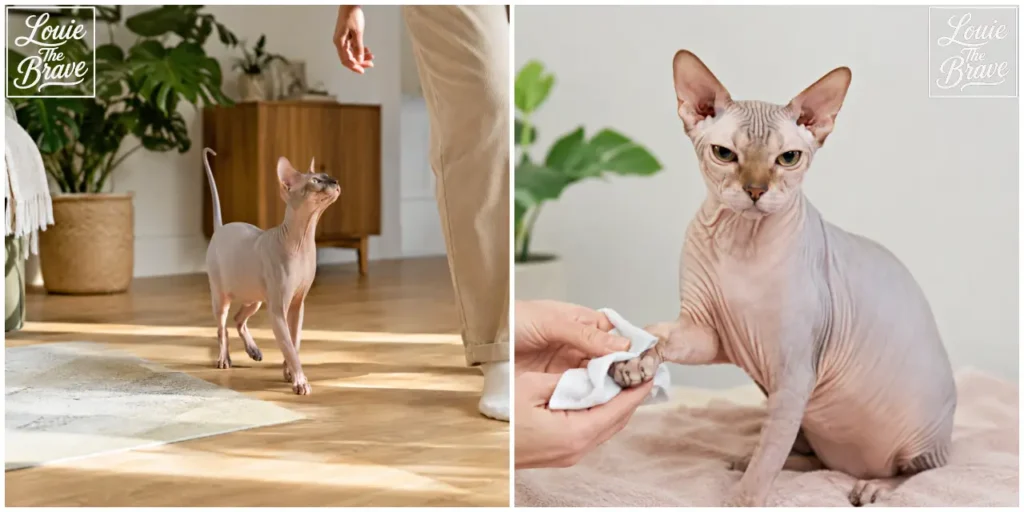
A Sphynx may look like a low-maintenance choice if you want a cat without fur covering the furniture. In practice, less visible hair does not mean less grooming. The care simply shifts from brushing and shedding control to skin oil, ears, paws, temperature, and sun exposure.
The breed also deserves extra attention before adoption because Sphynx cats are not reliably hypoallergenic, and hypertrophic cardiomyopathy (HCM) is an important health concern. If you are considering one, it helps to understand what daily life with a nearly hairless cat actually involves.
Are Sphynx Cats Completely Hairless?
Not always. The International Cat Association (TICA) describes the Sphynx as appearing hairless while often having a very fine layer of down that gives the skin a suede-like texture. Short, fine hair may also appear on areas such as the nose, ears, paws, and tail. Adult Sphynx cats generally weigh about 6 to 12 pounds.
Sphynx cats are also known for being active, curious, social, and affectionate. Many enjoy staying close to people and may seek warm laps, blankets, or sleeping spaces.
That reputation does not guarantee that every Sphynx will be comfortable with every person, dog, or other cat. Individual temperament, early socialization, household activity, and introductions still matter.
Why Does Hairless Skin Need More Attention?
A typical cat’s coat absorbs some of the natural oils produced by the skin. A Sphynx has much less hair available to absorb those oils, so they can remain on the skin or transfer to bedding and furniture.
This does not mean every Sphynx needs a bath once a week. TICA specifically notes that weekly bathing is a common misconception and that overbathing can disrupt the skin and contribute to increased sebum production. The right schedule should be based on the individual cat’s oil buildup and veterinary guidance rather than a fixed calendar.
Use a gentle cat-safe cleanser when bathing is needed. If the skin becomes unusually red, irritated, greasy, scaly, or develops an odor, a veterinarian should evaluate the cat rather than simply increasing bath frequency.
Ears, Toes, Temperature, and Sun Also Need Care
Skin is only one part of Sphynx grooming.
Because the ears have little protective hair, wax can be easy to see and may accumulate. Oils and debris can also collect around the nail beds and between the toes. Regular checks make it easier to notice buildup before it becomes uncomfortable.
Sphynx cats also lack the insulating coat that helps other cats manage cooler temperatures. They need access to comfortable indoor warmth, especially in air-conditioned homes or during cold weather.
Their exposed skin can also be damaged by strong sunlight. TICA recommends protecting Sphynx cats from both cold temperatures and sunburn.
Clothing may help some cats stay warm, but it should fit comfortably. Check the neck, chest, belly, and underarm areas for rubbing or irritation.
Are Sphynx Cats Hypoallergenic?
A lack of fur does not make a Sphynx allergen-free.
One of the major cat allergens, Fel d 1, is associated with saliva and skin glands, not just loose hair. TICA therefore does not treat the Sphynx as reliably hypoallergenic and notes that individual reactions vary.
If someone in your household has cat allergies, do not assume a Sphynx will be safe based on breed alone. Spending time with the specific cat you may adopt provides more useful information than relying on the hairless appearance.
A brief single visit may not reveal how someone will react after living with the cat, so repeated exposure before committing to adoption is worth discussing with the breeder or rescue.
HCM Screening Matters More Than a DNA Result Alone
Hypertrophic cardiomyopathy causes the muscular walls of the heart to become abnormally thick. Cornell University identifies echocardiography, or heart ultrasound, as the gold standard for diagnosing feline HCM. Some affected cats appear healthy, especially before the disease causes noticeable symptoms.
Genetic testing can provide additional information, but a negative DNA test should not be treated as proof that a Sphynx cannot develop HCM.
A 2024 study of 55 apparently healthy Sphynx cats in New Zealand diagnosed HCM in 40% of that study group at a median age of 5.8 years. Researchers did not find a significant association between the investigated ALMS1 variant and HCM diagnosis. Because this was a limited regional population, the 40% figure should not be applied to all Sphynx cats.
A separate 2026 study of 47 Sphynx cats in Thailand likewise found no significant association between the ALMS1 p.G2462R variant and echocardiographic findings related to HCM in that population.
For a prospective owner, the practical takeaway is simple: DNA screening and echocardiograms provide different information, and DNA testing does not replace heart imaging.
Before choosing a kitten, these questions can help you evaluate a breeder’s health-screening practices:
| What to check | What to ask |
|---|---|
| Parent echocardiograms | When were the sire and dam last screened by heart ultrasound? |
| Repeat screening | Have the breeding cats had more than one cardiac evaluation? |
| Family history | Have close relatives been diagnosed with HCM? |
| DNA testing | Which HCM-related variants were tested, and how are the results interpreted? |
| Ongoing care | What cardiac screening is recommended after the kitten goes home? |
A single old echocardiogram or a negative DNA result should not be treated as a lifetime guarantee.
Is a Sphynx a Low-Maintenance Cat?
A Sphynx may reduce the amount of loose fur you clean from clothing and furniture, but that tradeoff comes with different responsibilities. A similar tradeoff appears in other low-shedding pets: less loose hair does not necessarily mean less maintenance, as explained in Poodle shedding and grooming needs.
You need to be comfortable checking skin oil, ears, toes, room temperature, sun exposure, and long-term cardiac health. Their social nature may also make them a poor match for a household that expects a very independent cat with little daily interaction.
For prospective owners, the better question is not simply, “Does a Sphynx shed less?” It is whether the household can consistently provide the skin, environmental, grooming, and health care this breed requires.
Source:
- The International Cat Association — Sphynx
- Cornell Feline Health Center — Hypertrophic Cardiomyopathy
- Animals — Prevalence of Hypertrophic Cardiomyopathy and ALMS1 Variant in Sphynx Cats in New Zealand
- Animals — Prevalence and Clinical Relevance of Alström Syndrome Protein 1 Gene Variant and Feline Hypertrophic Cardiomyopathy in Sphynx Cats in Thailand