Homemade Dog Food: Chicken, Sirloin, and Sweet Potato
This chicken and sirloin batch makes a soft, moist homemade dog food, but it should not be treated as a complete and balanced recipe for every dog. The ingredient weights and supplement amounts must match the individual dog’s calorie needs, life stage, health history, and full nutrient requirements.
Why This Recipe Is an Example, Not a Universal Formula
AAFCO defines “complete” as containing all required nutrients and “balanced” as providing them in the correct ratios. Protein, fat, carbohydrate, and calorie calculations do not prove that a homemade dog food meets that standard. Minerals and vitamins such as calcium, phosphorus, zinc, copper, vitamin D, and vitamin E also need to be checked together.
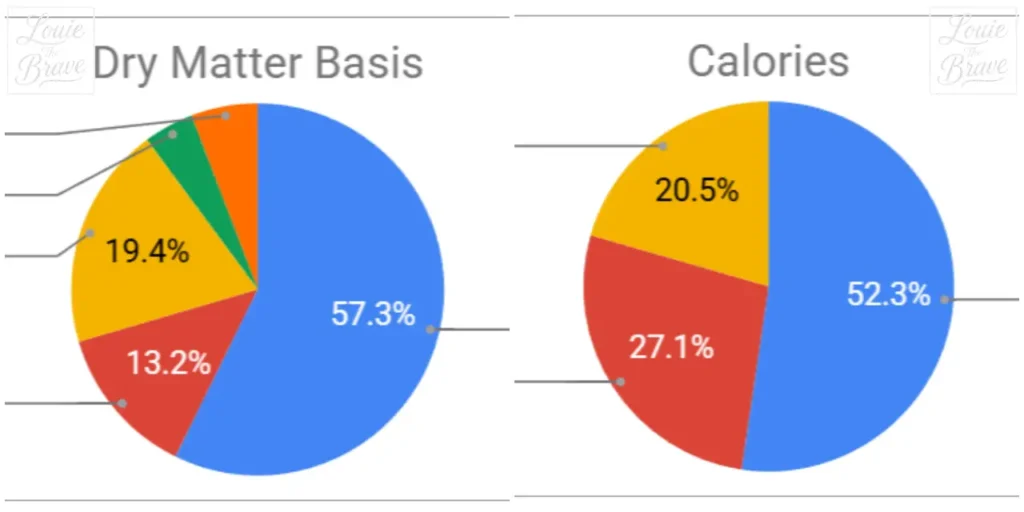
This batch was prepared for Louie, a 7.1-pound adult dog, as a seven-day portion. His planned daily amount was about 164 calories. The calculator used for this batch showed an energy distribution of 52.3% protein, 27.1% fat, and 20.5% carbohydrate. Those numbers describe this specific meal plan. They are not a feeding target for another dog. If you are new to home cooking, start with how to calculate homemade dog food portions and daily meal size rather than copying another dog’s ingredient weights.
Homemade Dog Food — Chicken and Sirloin Ingredients
The weights below show the food ingredients used in Louie’s batch. They are included to explain the preparation method, not as a copy-and-feed formula.
| Category | Ingredient | Amount Used |
|---|---|---|
| Protein | Skinless chicken breast | 518 g (18.3 oz) |
| Protein | Lean bottom sirloin | 70 g (2.5 oz) |
| Protein | Whole egg | 105 g (3.7 oz) |
| Carbohydrate | Sweet potato | 210 g (7.4 oz) |
| Vegetable | Cabbage | 70 g (2.5 oz) |
| Vegetable | Broccoli | 70 g (2.5 oz) |
| Vegetable | Carrot | 35 g (1.2 oz) |
| Powder | Sprouted chia and flax blend | 3.5 g |
| Powder | Broccoli sprout powder | 1/3 teaspoon |
| Powder | Fermented mushroom powder | 1/3 teaspoon |
The original plan also included individually calculated calcium, lecithin, iron, zinc, copper, manganese, vitamins B12, D3, and E, plus omega-3 and other dog-specific supplements. Exact capsule, drop, or scoop amounts are not transferable because product concentrations differ. A board-certified veterinary nutritionist can formulate or review a homemade diet for an individual dog.
How to Prepare the Soft Cooked Meal
- Weigh every ingredient. Use a digital kitchen scale. Small measuring differences become larger when a batch is divided across several days.
- Cook the proteins thoroughly. Steam or cook the chicken, sirloin, and egg without seasoning or added oil. USDA guidance lists 165°F for poultry, 160°F for ground beef, and 145°F with a rest period for whole beef cuts.
- Soften the vegetables. Boil or steam the sweet potato, cabbage, broccoli, and carrot until tender. Mash the sweet potato and finely chop or process the other vegetables for a consistent texture.
- Cool before mixing supplements. Combine the vegetable mixture and powders after cooking. Add each vitamin, mineral, and oil only as directed by the dog’s formulation and the product instructions.
- Portion the batch accurately. Divide the cooked food according to the planned daily calories and number of meals. Do not estimate portions by eye when the recipe includes concentrated supplements.
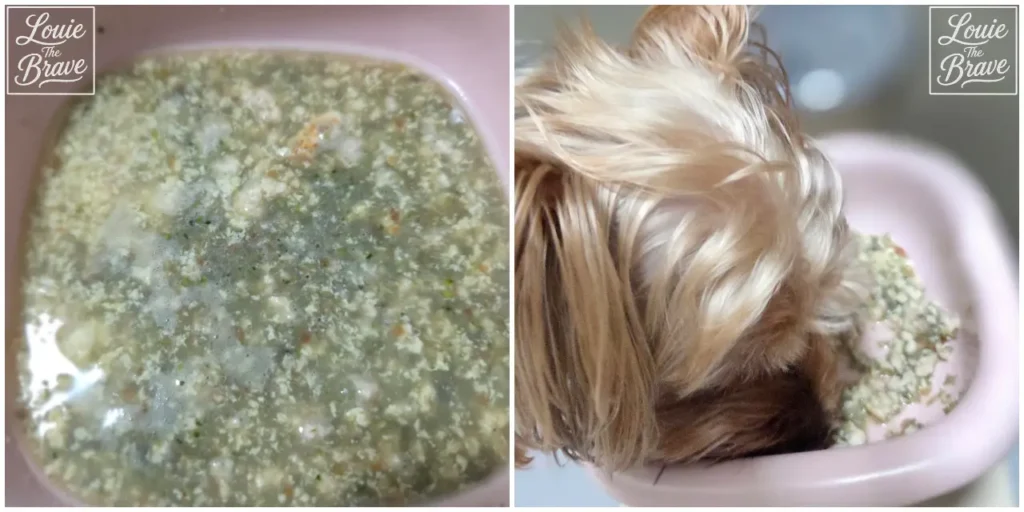
- Add moisture at serving. Warm water can create a porridge-like texture without changing the ingredient formula. Avoid seasoned broth containing onion or garlic, which are toxic to dogs.
Fiber Can Change During Preparation
The calculator estimated fiber near 4.3% for this batch, but the actual amount can be lower when sweet potato skin and other fibrous portions are removed. The same ingredient name in a nutrition database may not perfectly match the food after peeling, trimming, cooking, draining, or discarding liquid.
This matters when a dog’s stool changes. Adding more fat, fiber, or a supplement without checking the whole diet can create a second problem. First review the exact preparation method, daily portion, treats, stool pattern, body weight, and any recent ingredient change.
Safe Cooling, Freezing, and Thawing
Cool the cooked food promptly and portion it into shallow containers or silicone trays. Keep only the amount that will be used within three to four days in the refrigerator and freeze the rest. USDA guidance recommends using cooked leftovers within three to four days.
Thaw frozen portions in the refrigerator rather than on the counter. Wash bowls, utensils, trays, and hands after handling the ingredients. Discard food left at room temperature for more than two hours, or more than one hour in temperatures above 90°F.
Who Should Not Copy This Batch
Do not copy this formula for a puppy, pregnant or nursing dog, dog with pancreatitis, kidney disease, urinary stones, liver disease, food allergy, or a dog taking medication. These dogs may need different calories, protein sources, fat levels, minerals, or supplements.
Louie tolerated the moist texture well and preferred extra warm water mixed into his meal. That preference helped with serving, but it does not show that the same ingredients or nutrient ratios will suit another small dog. His 14-day chicken and salmon homemade dog food batch is another example of why calculated calories still need to be checked against actual weight and body condition.
Final Judgment
This chicken breast, sirloin, egg, sweet potato, and vegetable homemade dog food is a practical example of how a soft homemade dog food batch can be cooked, portioned, and frozen. The important step is not copying the ingredient list. It is confirming the complete nutrient profile, using the exact supplement products in the formulation, and monitoring body weight, stool, appetite, skin, and energy after any diet change.
Source:
- AAFCO — Selecting the Right Pet Food
- UC Davis School of Veterinary Medicine — Nutrition Service
- USDA Food Safety and Inspection Service — Keep Food Safe! Food Safety Basics
- ASPCA — People Foods to Avoid Feeding Your Pets