How much water should a dog drink? Daily weight chart
A healthy dog generally drinks about 40–60 milliliters (mL) of water per kilogram of body weight each day, according to Cornell University’s Richard P. Riney Canine Health Center. For a 20-pound dog, that works out to approximately 12–18 US fluid ounces, or 1½–2¼ cups daily. This is a general reference, not a fixed requirement for every dog.
So, how much water should a dog drink if they eat wet food, exercise outdoors, or seem less thirsty on certain days? Water intake varies with diet, activity, temperature, and health. Measuring what your dog actually drinks, while accounting for moisture in meals, gives you a clearer picture than simply checking whether the bowl is empty.
How Much Water Should a Dog Drink Based on Weight?
Body weight provides a useful starting point for estimating a dog’s daily water intake. Cornell University reports that healthy dogs, including puppies, generally drink approximately 40–60 mL per kilogram of body weight per day.
For US dog owners, the following chart converts that reference into pounds and US fluid ounces.
| Dog’s Weight | Approximate Daily Water | US Fluid Ounces |
|---|---|---|
| 5 lb | 90–135 mL | 3–5 fl oz |
| 10 lb | 180–270 mL | 6–9 fl oz |
| 20 lb | 360–545 mL | 12–18 fl oz |
| 40 lb | 725–1,090 mL | 25–37 fl oz |
| 60 lb | 1,090–1,635 mL | 37–55 fl oz |
These are rounded estimates based on Cornell’s 40–60 mL/kg daily reference. One US cup equals approximately 237 mL.
A 10-pound dog, for example, has a general reference range of about 180–270 mL per day. That is roughly ¾–1⅛ cups of water. A 40-pound dog has a much higher estimated range because its body is considerably larger.
How to calculate your dog’s daily amount
You can calculate the approximate range using either kilograms or pounds.
Using kilograms:
Daily water estimate = Body weight in kg × 40–60 mL
Using pounds:
Daily water estimate = (Body weight in lb ÷ 2.2) × 40–60 mL
For a 15-pound dog:
- 15 ÷ 2.2 = approximately 6.8 kg
- 6.8 × 40 = approximately 272 mL
- 6.8 × 60 = approximately 408 mL
The estimated daily range is approximately 270–410 mL, equivalent to about 9–14 US fluid ounces.
These calculations help establish a reference for monitoring drinking habits. They should not be used to limit how much water a dog may drink, especially during hot weather or after exercise.
Does Wet Food Reduce How Much Water a Dog Drinks?
A dog’s food can supply a meaningful amount of moisture. As a result, two dogs with similar body weights may drink noticeably different amounts from their water bowls even when both are healthy.
The US Food and Drug Administration (FDA) reports that canned pet food typically contains 75–78% moisture, while dry pet food generally contains 10–12% moisture. The exact amount varies by product and should be checked on its label.
Dry kibble versus wet dog food
Dogs eating primarily dry kibble receive relatively little water through their meals. They therefore depend more heavily on drinking water to meet their daily hydration needs.
Wet food supplies considerably more moisture. A dog eating canned food may drink less from its bowl because part of its water intake already comes from meals.
Consider a simple example:
A dog eats 100 grams of wet food containing 80% moisture. That portion provides approximately 80 grams of water, roughly equivalent to 80 mL.
The example illustrates how food contributes to hydration. It does not mean that 80 mL should automatically be subtracted from a prescribed daily drinking target, because the amount a dog needs varies individually.
Also, the moisture percentage listed in a food’s guaranteed analysis generally represents a maximum. It is useful for estimating moisture intake, but it does not necessarily reveal the exact water content of every serving.
Homemade dog food and added broth
Home-cooked meals can contain water from meat, vegetables, grains, cooking liquids, and added broth. The moisture content depends on the recipe, cooking method, and final serving.
If you add water or broth during preparation, include that liquid when estimating the meal’s moisture. However, if you have already calculated the total moisture in the finished food, do not add the broth again. That would count the same water twice.
Broth should also be suitable for dogs. Avoid products containing onion, garlic, or excessive sodium, and check ingredients carefully before using them.
For owners preparing regular home-cooked meals, understanding how homemade dog food ingredients and daily portions are calculated can also help maintain consistent feeding records.
Regardless of the food’s moisture content, dogs should always have access to fresh drinking water.
How to Measure Your Dog’s Water Intake Over 24 Hours
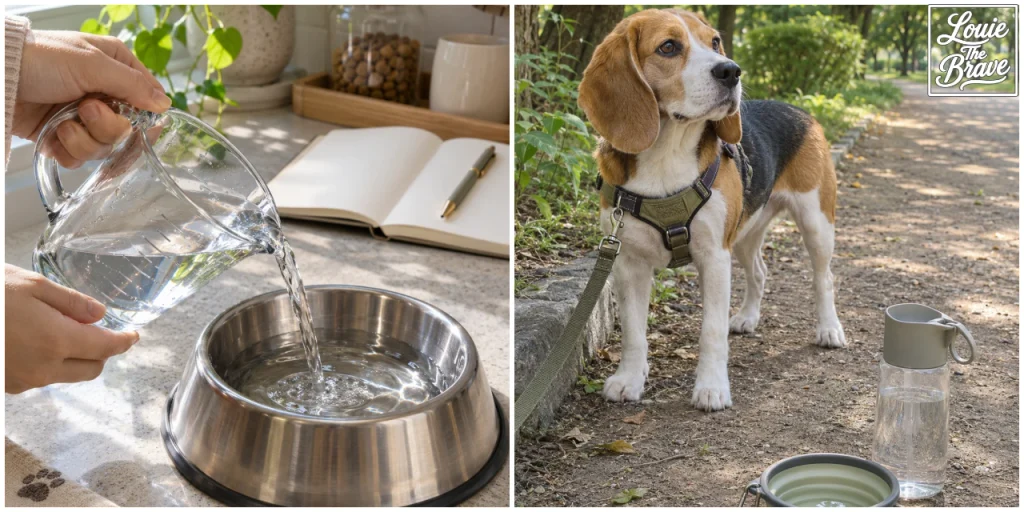
You do not need specialized equipment to measure dog water intake at home. A measuring cup, a stable water bowl, and a simple daily record are usually enough to get started.
The most useful measurement is how much water actually disappears through drinking during a full 24-hour period, rather than how much water you initially provided.
Step 1: Measure the water before filling the bowl
Choose a consistent starting time, such as 8 a.m. Measure the water with a cup marked in milliliters or fluid ounces, then pour it into your dog’s clean bowl.
Record the starting amount. For small dogs, measuring in milliliters may be easier because even relatively small changes can represent a meaningful part of daily intake.
Step 2: Record every refill
If you add more water during the day, measure and record that amount. Do the same for any additional water bowls used around the house.
If your dog drinks from a portable bowl or travel bottle during a walk, include the amount consumed outdoors. Do not count all the water carried on the walk unless your dog actually drank it.
Step 3: Measure what remains
Exactly 24 hours after starting, measure the water left in the bowls. Also record any water discarded during cleaning or replacement.
Subtract spilled water whenever you can determine the amount. If a bowl is overturned and the spill cannot be measured, mark that day’s record as incomplete instead of treating the missing water as consumed.
Step 4: Calculate actual drinking
Use the following formula:
Water consumed = Starting water + Refills − Remaining water − Discarded water − Spilled water
For example:
| Measurement | Amount |
|---|---|
| Water initially provided | 200 mL |
| Water added later | 100 mL |
| Water remaining after 24 hours | 80 mL |
| Water discarded | 20 mL |
| Water spilled | 0 mL |
| Actual water consumed | 200 mL |
The dog drank 200 mL, even though 300 mL was provided during the day.
If multiple pets share a bowl, measuring one dog’s individual consumption becomes difficult. Separate monitored bowls may be necessary when a veterinarian requests an accurate drinking record.
Step 5: Repeat on two or three ordinary days
A single day’s measurement may not represent your dog’s usual drinking habits. Record intake over two or three days when meals, activity, and weather are reasonably typical.
Alongside the water measurements, note:
- Food type and approximate moisture intake
- Exercise and time spent outdoors
- Changes in urination frequency or volume
- Unusual thirst, vomiting, diarrhea, or reduced appetite
These observations can help explain differences between days and provide useful information during a veterinary visit.
Do not delay veterinary care to complete several days of measurements if your dog is already showing concerning symptoms.
Why Does a Dog Drink More Water on Some Days?
Daily water consumption is affected by more than body weight. Environmental conditions, physical activity, diet, and health can all change how much a dog drinks.
Exercise and warm temperatures
Dogs often drink more after exercise or during hot weather. Panting helps them lose heat, but it also increases water loss through evaporation from the respiratory tract.
A dog that spends time running, playing, or walking in warm weather may therefore need more water than on a quiet day indoors. Provide drinking opportunities during outdoor activities and allow appropriate breaks in shaded or cooler areas.
Some dogs readily drink from portable bowls, while others may prefer to drink after returning home. A dog refusing water during a short walk is not automatically dehydrated, but the dog’s behavior, temperature exposure, activity level, and overall condition matter.
Do not assume that refusing water outdoors is harmless if the dog is overheating, weak, or acting abnormally.
Diet changes
Switching between dry and wet food can change how much water a dog drinks from its bowl. Adding moisture-rich meals may reduce voluntary drinking, while a change to dry kibble may increase it.
For this reason, compare drinking measurements alongside the dog’s current diet. A change in bowl-water consumption after a diet adjustment does not necessarily mean the dog’s total hydration has changed by the same amount.
Health conditions and medications
Some diseases and medications can increase thirst or urination. Cornell University identifies conditions such as diabetes mellitus, kidney disease, and certain adrenal disorders among possible causes of excessive drinking and urination.
These conditions cannot be diagnosed from water consumption alone. A veterinarian may need to review the dog’s history, medications, urine, bloodwork, and other findings.
A sudden or persistent change from your dog’s normal drinking pattern deserves attention even when the measured amount falls within a general reference range.
A Real-Life Example: Tracking Water for Louie
My Yorkshire Terrier, Louie, eats homemade meals containing added broth. His meals include approximately 90 mL of broth per serving, twice daily, giving an estimated 180 mL from broth alone.
However, that amount is not identical every day. I portion the prepared food by weight, and the amounts of meat, egg, quinoa, radish, and other ingredients can vary slightly between servings. I add broth to bring each portion to the intended volume, so the actual liquid added is approximate.
Louie also receives 150 mL of water in his drinking bowl, but that does not mean he drinks the entire amount.
He does not drink water during walks and does not even sit down while outdoors. After returning home, he usually rests in the air conditioning, even when he is panting. On days when he runs and plays energetically in the living room, he sometimes drinks a little more.
These observations show why measuring actual intake is useful. I know approximately how much broth goes into Louie’s meals, but the amount he drinks directly from his bowl changes from day to day.
His experience is not a universal example of how much water a Yorkshire Terrier should consume. His body weight, diet composition, activity, and health would all need to be considered when evaluating his individual hydration needs.
When Is a Dog Drinking Too Much Water?
Cornell University identifies more than 100 mL of water per kilogram of body weight per day as a clinical threshold used to define excessive drinking, also called polydipsia.
For example, this threshold corresponds approximately to:
| Dog’s Weight | 100 mL/kg Per Day |
|---|---|
| 5 lb | 225 mL |
| 10 lb | 450 mL |
| 20 lb | 910 mL |
| 40 lb | 1,815 mL |
These are approximate clinical assessment thresholds, not recommended drinking targets or strict maximum amounts to enforce at home.
A dog may temporarily drink more after exercise or on a hot day. However, drinking and urinating substantially more than usual, especially when the change persists, warrants veterinary evaluation.
Other changes worth reporting include asking to go outside more frequently, unusually large amounts of urine, new accidents indoors, or drinking from unusual water sources.
Never restrict your dog’s water access simply because drinking seems excessive. Cornell warns that restricting water before veterinary assessment can cause dehydration or dangerous electrolyte abnormalities.
What if Your Dog Barely Drinks Water?
A low measured amount from the water bowl does not always indicate insufficient hydration. Dogs eating moisture-rich meals may receive a considerable amount of water through food.
However, a dog that suddenly drinks very little, especially while eating normally dry food, may need closer attention. Refusing water can also accompany illness, pain, nausea, or other problems.
Signs that require veterinary assessment include:
- Dry or sticky gums
- Unusual lethargy or weakness
- Refusal of water together with poor appetite
- Vomiting or diarrhea
- A noticeable decline in normal activity
Sticky gums can be associated with dehydration, but no single sign or home measurement reliably determines a dog’s hydration status. A veterinarian can assess the dog and determine whether treatment is necessary.
When is it an emergency?
Heatstroke is a veterinary emergency and should not be treated as ordinary thirst.
The American Veterinary Medical Association identifies heavy panting, excessive drooling, weakness, confusion, vomiting, diarrhea, and abnormal gum appearance as possible heatstroke warning signs.
If your dog shows signs of heatstroke, move them to a cooler environment, begin cooling with room-temperature water and airflow, and seek emergency veterinary care immediately. Do not force water into the dog’s mouth or delay treatment while trying to make them drink.
How to Make Drinking Water Easy to Access
A practical hydration routine begins with clean, accessible water. You do not need an expensive automatic fountain to provide an appropriate drinking environment.
Place a stable bowl where your dog can reach it comfortably. Choose a material and design that you can clean thoroughly, including areas where residue tends to collect.
The FDA advises washing water bowls daily. If you use a fountain or automatic dispenser, follow its cleaning instructions and pay attention to the reservoir, drinking surface, and other components that contact water.
For dogs that move between different parts of the home, an additional bowl may improve access. During travel or outdoor activities, bring a portable drinking container and offer water at suitable breaks.
If your dog eats dry food, adding a little water to meals may increase moisture intake when appropriate for their diet. Keep a separate bowl of fresh water available rather than relying exclusively on moistened food.
Some owners offer chilled water or ice during warm weather. Ice is optional and should never replace drinking water or proper cooling. Dogs that chew hard cubes or swallow them whole may face dental or choking risks, as explained in this guide to offering ice safely to dogs.
The Bottom Line: Know Your Dog’s Normal Water Intake
For most healthy dogs, 40–60 mL/kg per day is a useful starting reference. The amount consumed from a water bowl can be different when meals contain substantial moisture, and drinking needs may rise with exercise and heat.
If you want to understand your dog’s habits, measure actual water consumption over a few ordinary days. Account for refills, discarded water, outdoor drinking, and moisture-rich meals while keeping a record of activity and urination.
Most importantly, notice changes from your dog’s usual pattern. Persistent increases in drinking or urination, an unexpected refusal to drink, or signs of illness should prompt veterinary advice rather than an attempt to force the numbers into a calculated range.
Source
- Cornell University, Richard P. Riney Canine Health Center — Canine Polyuria and Polydipsia (PU/PD), April 2024
- U.S. Food and Drug Administration (FDA) — “Complete and Balanced” Pet Food
- U.S. Food and Drug Administration (FDA) — Proper Storage of Pet Food & Treats
- VCA Animal Hospitals — Why Is My Dog Drinking a Lot of Water? (Senior Dog Care)
- VCA Animal Hospitals — Helping Our Senior Dogs Age Gracefully
- American Veterinary Medical Association (AVMA) — First Aid Tips for Pet Owners