Kitten Care by Age: Feeding, Litter Box, and Vaccines
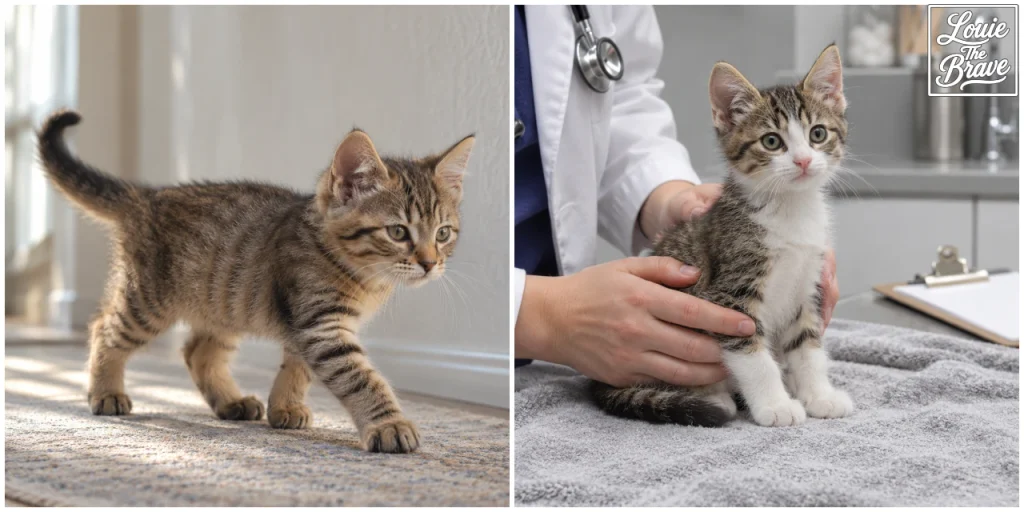
Bringing home a young kitten can mean very different things depending on its age. Some kittens still depend on their mothers for every feeding and bathroom break, while others are already eating solid food and using a litter box. The first step in kitten care is finding out what the kitten can do independently. Its feeding ability, physical development, and bathroom habits help determine what it needs.
I once fostered two cats at the same time. One was described as a very small kitten, so I prepared for a bottle-fed baby. When the kitten arrived, it was already able to eat dry food. I had to rethink my preparations, but knowing the kitten’s actual developmental stage made caring for it much simpler.
Kitten Care by Age: What Does Your Kitten Need?
A kitten’s needs change quickly during its first eight weeks. Newborns cannot regulate their body temperature effectively, feed themselves, or urinate and defecate without help. By the time weaning is complete, most healthy kittens can eat independently and use a litter box.
The following chart provides approximate developmental stages. These ages are general ranges, and individual kittens may reach milestones earlier or later.
| Approximate age | Feeding needs | Bathroom care |
|---|---|---|
| Birth to 3 weeks | Mother’s milk or commercial kitten milk replacer | Help with urination and defecation if the mother is absent |
| 3–4 weeks | Begin introducing a soft kitten-food mixture while continuing milk | Watch for independent elimination |
| 4–8 weeks | Gradually transition toward complete and balanced kitten food | Introduce a shallow litter box and monitor use |
| After weaning | Growth-formulated kitten food and fresh water | Monitor litter box habits and stool quality |
Weaning generally begins around 3–4 weeks of age and is usually completed by 6–8 weeks. Starting solid food does not mean an orphaned kitten should immediately stop receiving milk replacer. The transition should follow its actual food intake, weight gain, and ability to eat independently.
How can you estimate a kitten’s age?
When a kitten’s birth date is unknown, examine several developmental features together. Eyes usually begin opening around 8–12 days and are generally fully open by 10–14 days. Baby teeth start emerging at roughly three weeks, while walking, balance, and coordination improve throughout the following weeks.
By about four weeks, many kittens walk more confidently and begin exploring a litter box. Around six to eight weeks, they usually have several baby teeth and can eat wet or dry kitten food. These milestones provide useful clues, although none can establish an exact age on its own.
A veterinarian can examine the kitten’s teeth, body condition, weight, and overall development to estimate its age. This is particularly useful for rescued or foster kittens with no reliable history.
Feeding a Kitten: From Milk Replacer to Solid Food
For a newborn kitten, the mother’s milk provides the nutrition needed for early growth. If the mother is unavailable, use a commercial kitten milk replacer formulated specifically for kittens. Regular cow’s milk and goat’s milk do not provide the appropriate nutritional balance.
The amount and frequency of formula feeding depend on the kitten’s age, weight, and the product’s calorie concentration. Newborn orphans may need feeding every two to four hours, including overnight. Follow the milk replacer’s preparation and feeding directions and ask a veterinarian to calculate a feeding schedule for a kitten whose age or health is uncertain.
Bottle-feeding position matters. Keep the kitten in a natural, belly-down or horizontal position with its head neutral, similar to how it would nurse from its mother. Do not place the kitten on its back or squeeze milk rapidly into its mouth. Excessive milk flow can cause aspiration, allowing liquid to enter the respiratory tract.
A chilled, weak, or unresponsive kitten needs urgent veterinary attention. Do not force-feed a kitten that is unable to suckle normally. Hypothermia can interfere with feeding and digestion, and these kittens may require stabilization before feeding is safe.
Introducing wet and dry kitten food
At approximately three to four weeks, kittens can begin practicing with a soft mixture of kitten milk replacer and wet kitten food. Offer the mixture in a shallow dish and allow the kitten to learn how to lap and eat. Continue providing milk until the kitten consistently consumes enough solid food.
As eating skills improve, gradually reduce the amount of milk replacer. Wet kitten food is often easier to manage during early weaning, while appropriately sized dry kitten food can be introduced as the kitten develops the ability to chew.
Most kittens finish weaning around six to eight weeks. Continue to monitor body weight and appetite throughout the transition rather than stopping formula solely because a particular age has been reached.
Does a Kitten That Eats Dry Food Still Need Formula?
A healthy kitten that has completed weaning, eats enough kitten food, and gains weight appropriately does not normally need additional milk replacer. Dry food is not automatically less nutritious than wet food, provided it supplies complete and balanced nutrition for growth. Both types can be part of a suitable kitten diet.
In the United States, examine the nutritional adequacy statement on the food label. Look for wording indicating that the food meets Association of American Feed Control Officials (AAFCO) nutritional requirements for growth or all life stages. Food labeled for supplemental or intermittent feeding should not serve as the kitten’s entire diet.
Kitten food generally supplies higher concentrations of calories and growth-related nutrients than adult maintenance food. Adult cat food is not an appropriate main diet for a growing kitten unless it is also formulated to meet growth requirements. Most cats transition to adult maintenance food around 12 months of age, although larger breeds may mature later.
How much food should a growing kitten eat?
Daily food portions should be calculated using the kitten’s current weight, the food’s calorie content, and its feeding directions. The amount will change as the kitten grows. There is no single serving size that works for every kitten of the same age.
For many weaned kittens, dividing the daily food portion into three or four smaller meals works well. For example, a kitten receiving four meals would receive approximately one-quarter of its calculated daily allowance at each feeding. Smaller, more frequent meals may be appropriate depending on its developmental stage and veterinary feeding plan.
If you combine wet and dry food, count the calories from both rather than offering a full daily allowance of each. Record the quantities actually eaten and adjust portions as the kitten grows. Fresh drinking water should always be available once the kitten begins eating solid food.
When Do Kittens Start Peeing and Pooping on Their Own?
Newborn kittens depend on their mothers to stimulate urination and defecation. Mother cats typically accomplish this by licking the genital and anal areas. Without a mother, a caregiver must provide this assistance.
After feeding an orphaned newborn, gently stroke the genital and anal area with a warm, damp cotton ball or soft cloth. Use light movements and allow the kitten time to urinate or defecate. Your veterinarian can demonstrate the technique if you have not cared for a nursing kitten before.
Most kittens begin eliminating independently at approximately three to four weeks of age. Observe actual urination and bowel movements before discontinuing assistance. A kitten that reliably eliminates on its own no longer needs routine stimulation.
If a kitten repeatedly strains without producing urine, develops a swollen or painful abdomen, or cannot eliminate, contact a veterinarian promptly. Do not repeatedly stimulate the area in an attempt to correct a suspected blockage or other medical problem.
Introducing a litter box
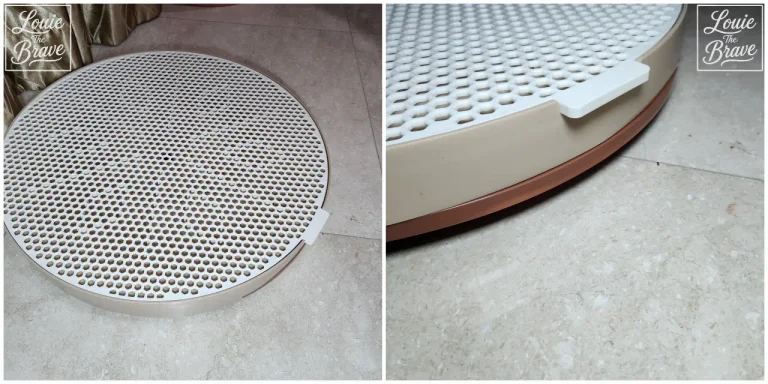
Once the kitten begins eliminating independently, provide a shallow litter box with an entrance low enough to step over comfortably. Place it in a quiet, accessible location away from food and water. Young kittens should not have to climb over high walls to reach their bathroom.
For very young kittens that may investigate litter with their mouths, a non-clumping, unscented litter is a cautious starting option. Supervise the kitten to ensure it is not eating litter. Some kittens begin using the box almost instinctively, while others benefit from being gently placed inside after meals.
As the kitten grows, its litter box should accommodate its full body length and normal turning movements. The guide to choosing the right cat litter box size explains how to evaluate dimensions, entrance height, and litter options as a cat develops.
Avoid punishing a kitten for accidents. Check whether the box is accessible and clean, and consult a veterinarian if a previously reliable kitten begins having repeated accidents or shows signs of discomfort while eliminating.
Tracking Kitten Weight, Appetite, and Stool
Weight monitoring is particularly useful for bottle-fed and recently weaned kittens. Healthy newborn kittens should gain weight steadily, although the exact rate varies with age and health status. A kitten’s feeding record becomes much more informative when paired with its weight trend.
VCA Animal Hospitals advises weighing orphaned kittens daily during their first four weeks. From the fifth week onward, stable, growing kittens can generally be weighed weekly. A small digital scale that measures in grams can make it easier to identify changes.
A simple kitten care record can include the following information:
| What to record | What to look for |
|---|---|
| Body weight | Steady growth without unexplained weight loss |
| Food or formula | Actual amount consumed and feeding frequency |
| Urination | Whether the kitten urinates independently and regularly |
| Stool | Frequency, consistency, and noticeable changes |
| Activity | Normal responsiveness, movement, and interest in food |
Keep the record consistent and bring it to veterinary appointments. For example, a kitten that appears small for its estimated age may simply be younger than expected, but poor weight gain can also indicate inadequate nutrition or an underlying illness. An examination helps distinguish these possibilities.
Warning signs that need veterinary attention
Young kittens are particularly vulnerable to dehydration, low blood sugar, and hypothermia. A kitten that stops eating, becomes unusually weak, or loses weight needs prompt veterinary assessment. A very young kitten that is cold, limp, or unable to nurse should receive emergency care.
Repeated vomiting, ongoing diarrhea, breathing difficulties, or severe lethargy also warrant urgent attention. Do not wait for diarrhea to develop before seeking help for a weak kitten. Serious illness can cause appetite loss and reduced activity without obvious gastrointestinal symptoms.
If a kitten cries frequently, check that it is warm, receiving enough nutrition, and able to eliminate. Persistent crying despite meeting these needs should prompt a veterinary examination, especially in a newborn.
Kitten Vaccination Schedule in the United States
Vaccination is an essential part of kitten care because maternal antibodies provide only temporary protection. The exact schedule depends on the kitten’s age, health, exposure risk, vaccine product, and applicable state or local requirements.
The American Animal Hospital Association (AAHA) and American Association of Feline Practitioners (AAFP) identify FVRCP, rabies, and feline leukemia virus (FeLV) vaccination as core protections for kittens and young cats.
Which vaccines do kittens need?
| Vaccine | Typical starting age | Initial schedule |
|---|---|---|
| FVRCP | 6–8 weeks | Repeat about every 3–4 weeks until at least 16 weeks of age |
| FeLV | 8 weeks | Two initial doses, usually 3–4 weeks apart |
| Rabies | Commonly 12–16 weeks | Follow the product label and state or local law |
FVRCP protects against three significant feline infections: feline viral rhinotracheitis caused by feline herpesvirus-1, feline calicivirus, and feline panleukopenia. These infections can cause respiratory disease or severe systemic illness, depending on the virus.
A kitten’s FVRCP schedule usually continues until at least 16 weeks of age. The 2024 World Small Animal Veterinary Association (WSAVA) guidelines describe intervals of approximately two to four weeks and additional vaccination through 20 weeks for certain high-risk kittens. This reflects the possibility that maternal antibodies can interfere with earlier vaccine doses.
Current WSAVA guidance also supports an additional core vaccine dose at around 26 weeks, or six months, to protect kittens whose maternal antibodies may have prevented an adequate response to earlier doses. Your veterinarian should determine the appropriate timing and subsequent booster schedule.
What about FeLV and rabies?
FeLV vaccination is considered a core vaccination for cats younger than one year under AAHA/AAFP guidance. The initial series commonly consists of two doses beginning at eight weeks of age, separated by three to four weeks. Veterinarians should assess FeLV infection status before vaccination, particularly for kittens with an unknown background.
Rabies vaccination is governed by vaccine labeling and state or local laws. Many U.S. kittens receive their first rabies vaccine between 12 and 16 weeks of age, followed by boosters according to the vaccine used and applicable legal requirements.
An indoor-only lifestyle does not automatically eliminate the need for core vaccinations. Discuss the kitten’s living environment and likely future exposure with the veterinarian when establishing the schedule.
What If Your Kitten Has No Vaccination Records?
If a kitten comes from a previous caregiver, rescue organization, or foster home, ask for the vaccination history before the first veterinary appointment. Useful records include vaccination dates, vaccine names, veterinary clinic information, and any upcoming appointments. Information about deworming, parasite testing, and previous illnesses is also valuable.
When vaccination records are unavailable, a veterinarian can establish an appropriate catch-up schedule based on the kitten’s estimated age and health status. Do not assume the kitten is fully vaccinated simply because it appears healthy. Likewise, do not assume every kitten needs the same number of doses regardless of its starting age.
A first examination should also cover body condition, dental development, hydration, and potential intestinal parasites. For kittens entering a household with other cats, ask about appropriate testing and how to introduce the animals safely. These steps help protect both the new kitten and the cats already living in the home.
A Practical First Week With a New Kitten
When I fostered the young kitten, the most useful information was what it was already eating and whether it could manage its bathroom needs. Since it had completed weaning, I did not need the bottle-feeding supplies I had initially prepared. The kitten stayed with me for less than a week, so I passed along the feeding and care notes I had collected.
For anyone bringing home a kitten, start by confirming its current diet, daily intake, elimination habits, and known veterinary history. Preserve familiar food and routines where possible while arranging a veterinary assessment. Sudden changes in diet can cause digestive upset, so any transition to a different food should be gradual.
Good kitten care also means recognizing when a kitten needs professional help instead of attempting to manage a problem at home. A healthy, fully weaned kitten has very different requirements from a newborn orphan. Once you know its developmental stage, you can provide appropriate nutrition, a suitable litter box, consistent growth monitoring, and veterinary preventive care.
Source
- VCA Animal Hospitals — Raising Kittens
- VCA Animal Hospitals — Feeding Orphaned Kittens
- VCA Animal Hospitals — Feeding Growing Kittens
- Merck Veterinary Manual — Management of the Neonate in Dogs and Cats
- American Animal Hospital Association — Core Vaccines for Pet Cats
- University of California, Davis School of Veterinary Medicine — Vaccination Guidelines for Dogs and Cats
- PetMD — Kitten Development Stages and Kitten Age Chart