How to Help Sea Turtles: Plastic, Habitat, and DNA
If you are wondering how to help sea turtles, the most useful answer is not a single beach cleanup or one reusable bottle. Sea turtle conservation works best when everyday choices are combined with habitat protection, safer fishing practices, wildlife law enforcement, and long-term research.
Plastic pollution is one visible part of the problem, but sea turtles also face accidental capture in fishing gear, loss of nesting and feeding habitat, climate-related changes, and illegal trade. That is why learning how to help sea turtles means looking at both personal habits and the larger conservation systems that protect turtles across oceans.
How to Help Sea Turtles: Start With Ocean Trash
One of the clearest ways to help is to keep trash from reaching rivers, beaches, and the ocean. NOAA Fisheries notes that sea turtles can eat plastic bags and hard plastic pieces or become entangled in marine debris. Fishing line, discarded gear, balloons, and other floating trash can also create hazards.
For most people, how to help sea turtles starts with simple waste habits:
- Carry a reusable water bottle and shopping bag.
- Secure trash so lightweight plastic does not blow into waterways.
- Pick up litter when you visit a beach.
- Dispose of fishing line and gear properly.
- Avoid releasing balloons outdoors.
- Reduce single-use items when a durable alternative works just as well.
These actions do not solve every threat, but they reduce the amount of debris that can reach marine habitat.
Plastic Risk Is Real, but “14 Pieces” Is Not a Universal Rule
An often-repeated 2018 study estimated that a sea turtle had a 50% probability of mortality after ingesting 14 pieces of plastic. That finding was useful because it showed that plastic ingestion can be deadly, but newer research gives a more complicated picture.
A 2025 global analysis used data from more than 10,000 necropsies of seabirds, marine mammals, and sea turtles. It found that mortality risk changes with the type and volume of plastic, as well as the animal’s body size. The newer work produced much higher piece-count thresholds for sea turtles than the earlier study and found that the volume of debris relative to body size can be more informative than a simple number of pieces.
So when explaining how to help sea turtles, it is better not to treat “14 pieces” as a universal cutoff. One item can still cause a dangerous blockage or injury depending on its size, shape, material, and position. The practical lesson remains the same: preventing plastic from entering the ocean is safer than trying to define a harmless amount.
Protect Nesting Beaches and Coastal Habitat
Trash removal matters, but sea turtles also need usable habitat. NOAA recommends keeping nesting beaches dark at night, removing chairs and umbrellas after use, filling in holes, knocking down large sandcastles, and giving nesting turtles and hatchlings plenty of space. Artificial light can disorient hatchlings and discourage nesting females.
That means how to help sea turtles can include what you do after a normal beach day. Before leaving, remove your gear, fill holes, take all trash with you, and avoid using bright lights near nesting areas. If a beach has local turtle-protection rules, follow them even when no turtle is visible.
Coastal ecosystems also matter beyond the nesting beach itself. Mangroves, seagrass beds, reefs, and other nearshore habitats support marine food webs and protect coastlines. WWF describes mangroves as highly carbon-rich habitats that provide nursery areas for many aquatic species and can reduce coastal flooding.
WWF Conservation Goes Beyond Beach Cleanup
People often search how to help sea turtles because they want an action they can take immediately. That is useful, but conservation organizations also work on problems that individuals cannot solve alone.
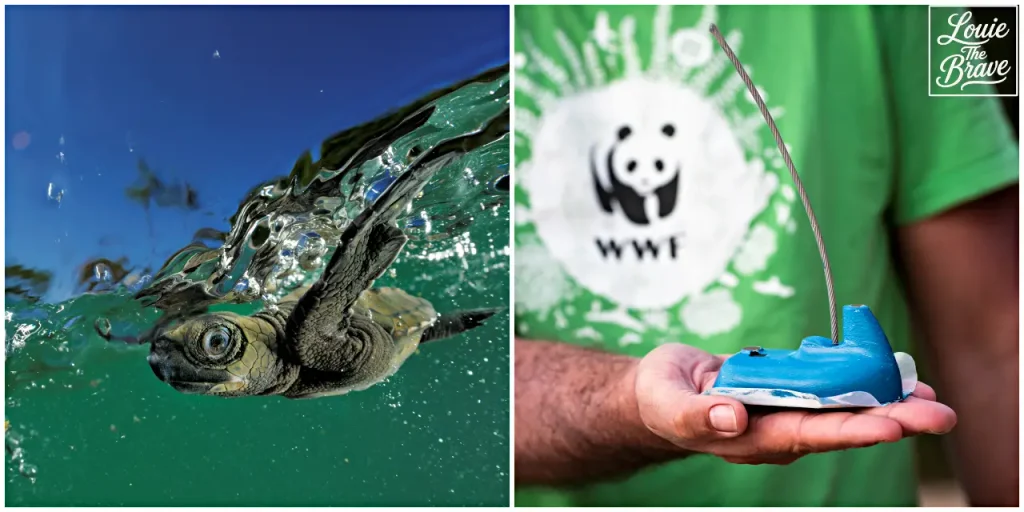
WWF’s sea turtle work includes reducing bycatch, protecting nesting areas, supporting local communities, addressing illegal wildlife trade, tracking turtles by satellite, and using genetic data to understand where turtles come from and which populations are most at risk.
ShellBank Uses DNA to Trace Sea Turtle Origins
ShellBank is a global sea turtle DNA traceability program led by WWF. Scientists can compare DNA from nesting turtles, feeding areas, bycatch, stranded turtles, and confiscated turtle products. This helps identify connections between populations and can show which populations are being targeted by illegal trade.
WWF reported in 2026 that ShellBank had brought together more than 20,000 mitochondrial DNA sequences from 59 countries. That growing database can support conservation scientists, fisheries managers, protected-area managers, and law-enforcement agencies.
This is an important part of how to help sea turtles because illegal trade is difficult to stop if authorities cannot tell where seized shell, meat, eggs, or other products originated. DNA can help connect a confiscated product to the population that may be under pressure.
Habitat Protection Works on a Different Scale
Beach cleanups remove immediate hazards. Habitat restoration and protected-area management work over a longer period.
WWF also supports marine protected areas, community-led conservation, mangrove restoration, and policies that protect coastal ecosystems. These programs can benefit many species at once by protecting coastal habitat and food webs.
For someone asking how to help sea turtles, this is why donating to or volunteering with a credible conservation organization can complement personal waste reduction. The two approaches address different parts of the problem.
Everyday Choices Can Start at Home
My own environmental habits are small, but I prefer routines that are easy to repeat. When I prepare homemade food for my dog Louie, I use reusable silicone containers instead of disposable storage when possible. I also carry a tumbler for coffee, use reusable shopping bags, separate labels from plastic bottles before recycling, and remove tape and shipping labels from cardboard when required by local recycling rules.
If you prepare food in batches too, I use reusable containers as part of the same portioning and freezing routine described in my homemade dog food batch guide.
These habits are not a substitute for habitat conservation, but they are a practical answer to how to help sea turtles from home. The goal is not to buy a collection of products labeled “eco-friendly.” It is to use fewer disposable items, keep reusable items in service for a long time, and follow your local recycling rules correctly.
Choose Seafood and Wildlife Products Carefully
NOAA also recommends being a responsible seafood consumer. Fishing gear can accidentally capture sea turtles, so learning where and how seafood was caught can support fisheries that use practices designed to reduce harm to protected wildlife.
Another part of how to help sea turtles is refusing products made from turtle shell, meat, eggs, or other turtle parts. International commercial trade in sea turtles and their parts is generally prohibited under CITES, yet illegal trafficking continues. Hawksbill turtles are particularly affected by the trade in tortoiseshell products.
When traveling, do not assume that a shell-pattern bracelet, comb, souvenir, or decorative item is harmless just because it is openly sold. If you are unsure whether an item contains real tortoiseshell, leaving it behind avoids supporting the trade.
What to Do If You See a Sea Turtle in the U.S.
Knowing how to help sea turtles also means knowing when not to interfere. Keep your distance from wild turtles, do not feed or touch them, and do not disturb nests or hatchlings. If you see a sick, injured, stranded, or entangled sea turtle, contact the appropriate local sea turtle stranding network or wildlife authority instead of trying to handle the animal yourself.
On nesting beaches, follow posted rules about lighting, beach equipment, vehicles, and nighttime access. Local protections can vary by state and beach, so the most useful action is to follow the instructions for the place you are visiting.
The Best Answer Is a Combination of Small and Large Actions
The most complete answer to how to help sea turtles is a combination of personal choices and organized conservation. Reduce the trash you create, keep beaches safe, choose wildlife products carefully, and support responsible fishing and habitat protection.
At the same time, DNA research, wildlife-law enforcement, habitat restoration, fisheries management, and long-term monitoring require trained teams and sustained funding. Personal habits can reduce pressure on the environment, while conservation programs address threats at the scale where they occur.
If you want to start today, choose one repeatable habit at home and one broader action outside your home. That could mean replacing a disposable item you use every week, joining a coastal cleanup, learning about sustainable seafood, or supporting a conservation group whose programs and financial reports you can review.
A realistic plan for how to help sea turtles does not need to be perfect or expensive. It needs to be repeatable and connected to the threats conservationists are actually trying to reduce.
That combination is how to help sea turtles in a way that is practical, repeatable, and connected to the bigger picture.
Source
- NOAA Fisheries — What Can You Do to Help Sea Turtles?
- WWF — Sea Turtle
- WWF — How Scientists Use DNA to Protect Sea Turtles
- Proceedings of the National Academy of Sciences — A Quantitative Risk Assessment Framework for Mortality Due to Macroplastic Ingestion
- Scientific Reports — A Quantitative Analysis Linking Sea Turtle Mortality and Plastic Debris Ingestion
- WWF — Seascapes: Protecting the Places That Matter Most