Italian Greyhound Temperament, Shedding, and Leg Safety
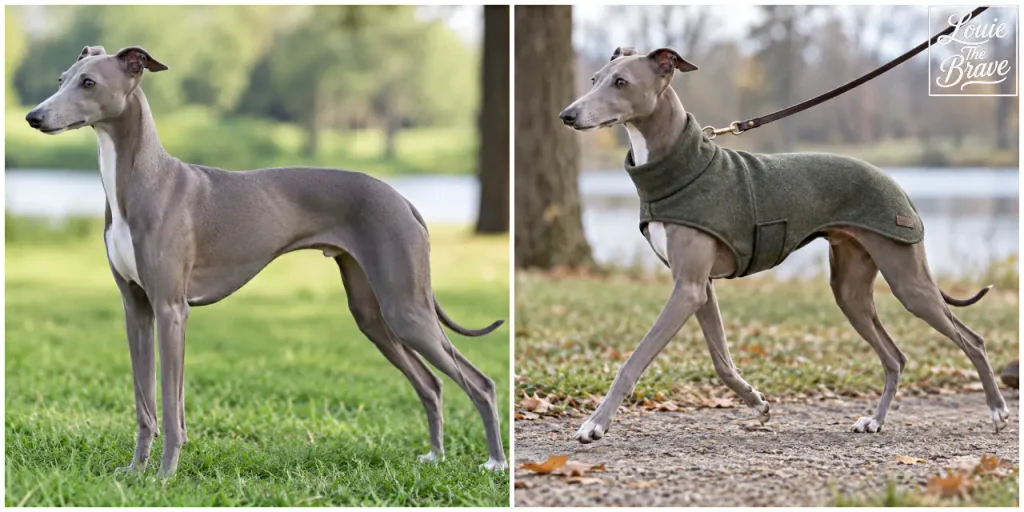
An Italian Greyhound can look almost too delicate to run at full speed, but that first impression is misleading. This is a small, athletic sighthound with a strong instinct to chase moving objects and a real need to move.
I once watched one sprint across a dog park while I was there with my Yorkie, Louie. The dog passed close enough that I could feel the rush of air. What surprised me most was seeing those extremely slim legs carrying such a fast, confident runner.
The Italian Greyhound is affectionate, playful, sensitive, and usually low-shedding. The breed does need extra care around high jumps, slippery floors, and rough play, especially when young, but the answer is not to keep the dog from running. Safe exercise, good traction, short nails, and sensible supervision help this breed build the coordination and muscle it needs.
What Does an Italian Greyhound Look Like?
The Italian Greyhound is the smallest of the sighthounds. Although the name makes it easy to assume that this dog is simply a miniature version of the Greyhound, it is a distinct breed with its own breed standard and development history.
The AKC standard calls for an ideal height of 13 to 15 inches at the shoulder. The body is narrow and elegant, with a deep chest, a tucked abdomen, long legs, fine bone, and a slender tail. That shape creates the light, athletic outline of a dog built to move quickly.
A healthy dog can look unusually lean next to a stockier breed. Do not judge body condition by thin legs alone. You should be able to feel the ribs under a light covering, see a waist from above, and see an abdominal tuck from the side. If you want a practical way to check that at home, see my guide to checking a dog’s body condition score by the ribs and waist.
What Is the Italian Greyhound Temperament Like?
The Italian Greyhound is usually affectionate and closely attached to its people. The breed is also alert, playful, sensitive, and may be more reserved with unfamiliar people than with family.
That sensitivity matters during training. Harsh corrections can easily overwhelm a dog that responds strongly to tone and handling. Reward-based training with food, play, praise, and short sessions is usually a better fit.
Early socialization should include calm exposure to different people, household sounds, streets, grooming, handling, and new places. Socialization does not mean forcing the dog to greet everyone. The goal is to help the dog remain comfortable and recover well when the environment changes.
Young children and very boisterous dogs can be a difficult match. The issue is not that every Italian Greyhound is fearful or antisocial. A small, fine-boned dog can simply be injured more easily during rough grabbing, chasing, or body-slamming play. The breed club specifically advises considering this combination of size, sensitivity, and fine bone when choosing playmates and household companions.
Does an Italian Greyhound Shed?
Yes. An Italian Greyhound does shed, but usually much less noticeably than breeds with thicker coats.
The coat is short, smooth, and fine, so grooming is simple. A soft grooming mitt or gentle brushing can remove loose hair and surface dirt. This is not a breed that usually needs trimming, clipping, or a complicated coat-care routine. VCA describes shedding as below average and recommends simple weekly coat care.
Low shedding does not mean zero shedding. Short hairs can still end up on clothing, blankets, or furniture. It is better to think of this as a low-maintenance coat than a no-shed coat.
Because the coat is so thin and the breed carries little natural insulation, cold weather is a separate issue. Many dogs need a well-fitted sweater or coat in chilly, windy, or wet conditions. Clothing should cover the torso without restricting the shoulders or front legs, and nothing should hang low enough to catch a paw.
Are Italian Greyhound Legs Really Fragile?
This is the question that makes many prospective owners nervous. Italian Greyhound legs are long and fine, and leg injuries are a recognized concern, especially in young dogs. But fine-boned does not mean a healthy dog should be treated like glass.
The Italian Greyhound Club of America specifically notes that puppies need exercise because movement helps build strength and dexterity. At the same time, young dogs can be impulsive. They may jump from a bed, sofa, chair, or other high surface without judging the landing well.
A safer home setup focuses on the landing and the situation. Use good traction where the dog commonly jumps down or turns at speed. Do not leave a young puppy unsupervised on high furniture. If you add pet steps or a ramp, make sure the dog actually uses it instead of leaping over it.
Nails matter too. Overgrown nails can interfere with stable paw contact on the floor. The breed club recommends frequent nail care and keeping the nails short enough that they clear the floor when the dog is standing normally.
What you should not do is stop every run, jump, or burst of play. Dogs need normal movement to develop balance, muscle, and coordination. The practical goal is to reduce high-risk falls and uncontrolled collisions while still allowing safe activity.
If an Italian Greyhound suddenly refuses to bear weight on a leg, cries after a fall, or develops obvious pain or swelling, a veterinary exam is appropriate. A fracture or other orthopedic injury cannot be ruled out just by watching the dog at home.
How Much Exercise Does an Italian Greyhound Need?
This breed may love a warm blanket, but it is still a sighthound. An Italian Greyhound needs daily walks, play, and opportunities to move more freely in a safe enclosed area.
The biggest outdoor safety issue is chase behavior. A squirrel, rabbit, running cat, bicycle, or another fast-moving target can trigger pursuit before the dog has time to respond to a recall cue. In unfenced areas, a leash is the safer choice.
Secure running space is valuable because sprinting allows the dog to use the body in the way it was built to move. At a dog park, size and play style matter. A calm small-dog group is very different from being chased or body-checked by a much larger, rough-playing dog.
If you are comparing sighthound behavior across breeds, my Saluki breed guide on temperament, exercise, and prey drive explains why visual chase behavior can shape everyday safety even when a dog is gentle at home.
Cold Weather, Teeth, and Nails Need More Attention Than the Coat
An Italian Greyhound does not require much coat grooming, but that does not make the breed maintenance-free.
Cold protection is one of the most practical daily needs. Watch the individual dog instead of dressing by the calendar. Shivering, hunching the body, lifting paws, or repeatedly trying to turn back home can mean the current conditions are uncomfortable. The breed’s short hair and low body fat provide little insulation during cold exposure.
Dental care also deserves attention. The Italian Greyhound Club of America recommends introducing tooth brushing after the adult teeth have come in and brushing daily for the best oral hygiene. Use toothpaste made for dogs, not human toothpaste, and introduce handling gradually.
Nail care should also be routine rather than occasional. Long nails can interfere with stable footing, which is especially unhelpful for a fast, lightweight dog moving on smooth indoor surfaces. Frequent small trims or grinding sessions are usually easier to maintain than waiting until the nails become long.
Is an Italian Greyhound a Good Fit for Your Home?
An Italian Greyhound can be a great match for someone who wants a small dog that is affectionate indoors but athletic outside.
This breed is easier to live with when the household is comfortable with a few specific responsibilities: secure leash management, safe opportunities to run, careful supervision during puppyhood, regular nail and dental care, and extra warmth in cold weather.
A home with very young children, rough larger dogs, lots of slippery flooring, or frequent unsupervised access to high furniture may require more management. None of those situations automatically rules the breed out, but they change how much prevention and supervision you will need.
The key is to understand that the same body that looks delicate is also built for speed. An Italian Greyhound should not spend life being carried everywhere because the legs look thin. The better approach is to let the dog move, learn, and build coordination while removing the most predictable risks.
A Delicate Look Does Not Mean a Sedentary Dog
The Italian Greyhound combines two traits that seem contradictory at first: an extremely fine frame and a strong desire to run.
That combination explains much of the breed’s daily care. You do not need to redesign an entire house or prevent normal play. You do need to think about traction, high jumps, rough collisions, prey drive, cold weather, nails, and dental care.
For the right home, those needs are manageable. If you want a small companion that stays close to its people but still has the instincts and athleticism of a true sighthound, the Italian Greyhound offers exactly that mix.
Source:
- American Kennel Club — Italian Greyhound Dog Breed Information
- Italian Greyhound Club of America — About the Italian Greyhound
- Italian Greyhound Club of America — Italian Greyhound Health
- Italian Greyhound Club of America — AKC Breed Standard
- VCA Animal Hospitals — Italian Greyhound Breed Profile