Homemade Sweet Potato Dog Treats With Chicken Topping
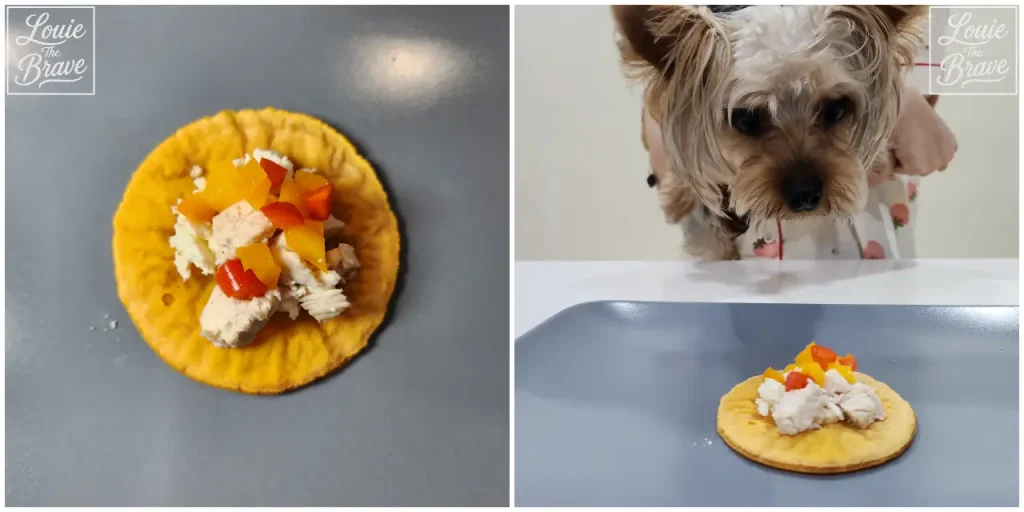
Homemade sweet potato dog treats can be made with a very short ingredient list: cooked sweet potato for the base, tapioca starch to help it hold its shape, and a simple cooked topping. This version is a small canapé-style treat topped with plain chicken breast and bell pepper.
I made these for Louie because he normally does not like sweet potato very much. I wanted to see whether changing the texture and pairing it with a topping he liked would make a difference. The result was a firmer baked base that could be served plain or topped just before feeding.
These are treats, not a complete meal. Keep the ingredients plain, use toppings your dog already tolerates, and count the finished pieces as part of the day’s treat calories.
Ingredients for Homemade Sweet Potato Dog Treats
The base needs only two ingredients. The topping is optional, so you can change it to fit your dog’s normal diet.
| Ingredient | Amount | How It Is Used |
|---|---|---|
| Sweet potato | 120 g (4.2 oz) | Peeled, cooked, and mashed |
| Tapioca starch | Up to 4 tbsp | Added gradually to form the dough |
| Plain chicken breast | As needed | Fully cooked and chopped for topping |
| Red or yellow bell pepper | As needed | Plain, softened, and finely chopped |
Do not season the sweet potato, chicken, or bell pepper. Skip butter, salt, sugar, sauces, onion, garlic, and spicy pepper products.
The exact amount of tapioca starch can vary because cooked sweet potato does not always hold the same amount of moisture. Start with less, then add more only until the dough can be shaped without sticking badly.
How to Make the Sweet Potato Canapé Base
- Cook the sweet potato. Wash and peel the sweet potato, then boil or steam it until completely soft. Drain it well and mash it while warm.
- Add the tapioca starch gradually. Mix in a little at a time instead of adding all 4 tablespoons at once. Stop when the dough is soft but can still hold a flattened round shape.
- Portion the dough. I divided my batch into 15 g portions. The final number of pieces will vary depending on how much starch you use and how much moisture remains in the sweet potato.
- Flatten each piece. Place parchment paper over the dough and press it with the bottom of a small cup, a flat tool, or a cookie stamp. A stamp is optional. If the dough is very soft, the pattern will not stay sharply defined after baking.
- Bake. Preheat the oven to 355°F (180°C). Bake for about 10–15 minutes, watching the edges and surface because ovens vary. The base should feel set enough to lift without falling apart.
- Cool before topping. Let the baked rounds cool completely so the surface firms up and the topping does not add extra steam to the base.
For a softer bite, stop adding starch as soon as the dough holds together. For a firmer base that is easier to stamp, work in a little more starch gradually. The finished texture also changes with thickness and baking time, so check the first tray instead of assuming every oven will give the same result.
Add Plain Chicken and Bell Pepper Topping
For my batch, I used cooked chicken breast and red and yellow bell pepper because those were ingredients I already had.
Cook the chicken without oil, salt, sauce, or seasoning. Poultry should reach a safe internal temperature of 165°F. Let it cool, then tear or chop it into small pieces. USDA guidance also recommends refrigerating cooked chicken promptly rather than leaving it at room temperature for extended periods. FSIS
Bell peppers are generally considered safe for dogs when served plain and in moderation. Use sweet bell pepper, not hot peppers or chili products. I softened the bell pepper and chopped it very small before adding it to the canapé. PetMD
Add the toppings only after the sweet potato bases have cooled. Keeping the topping separate until serving also makes storage easier.
Are Sweet Potatoes Safe for Dogs?
Plain, fully cooked sweet potato can be an occasional dog treat. PetMD notes that sweet potatoes should be cooked, served plain, and fed in moderation. Large amounts can cause digestive upset, while raw sweet potato is harder to digest. PetMD
That is one reason these homemade sweet potato dog treats use cooked, mashed sweet potato rather than raw slices. The mashed base is also easier to portion into small rounds, which is useful when feeding a small dog.
Sweet potato provides carbohydrates and fiber, but that does not make a homemade snack nutritionally complete. Dog treats do not need to provide every essential nutrient, but they should remain a small part of a diet built around complete and balanced food. Vca
What Does Tapioca Starch Do in This Recipe?
Tapioca starch is here for structure. Mashed sweet potato is soft and moist, so the starch makes it easier to shape the mixture into a base that can be baked and picked up.
It is not necessary to add the entire 4 tablespoons if the dough becomes firm earlier. Treat the amount as an upper working amount for this batch, not a number that must be forced into every sweet potato mixture.
I also would not use the tapioca as a reason to make the treat larger. The starch adds more carbohydrate and calories without turning the snack into a balanced food. Its purpose here is simply to make the texture workable.
How Much Can a Dog Eat?
There is no reliable “two pieces per day” rule that works for every dog because the finished calorie content changes with the amount of starch and topping, and dogs have very different calorie needs.
A more useful approach is to keep all treats and extras to no more than about 10% of the dog’s daily calories, with the rest coming from a complete and balanced diet. VCA Animal Hospitals describes the same 90/10 approach for treats. Vca
For a toy or small dog, cut the canapé into smaller pieces if needed. Count the chicken and bell pepper topping as part of the treat, not as “free” food.
Dogs with food allergies, diabetes, pancreatitis, a prescription diet, or another condition affected by food choices may need a different treat plan. For example, VCA notes that some medical conditions and veterinary diets can make certain extras unsuitable. Vca
How to Store These Treats
Because these treats contain cooked sweet potato and may be topped with cooked chicken, I treat them as perishable rather than as shelf-stable biscuits.
Cool the bases completely, place them in a covered container, and refrigerate them. If chicken has already been added, use the batch within the same 3–4 day refrigerator window USDA gives for cooked chicken leftovers. Freeze extras if you will not use them within that time. FSIS
For the best texture, I prefer storing the baked bases and toppings separately and assembling them just before serving. A moist topping can soften the base during storage.
If your dog prefers a completely different homemade texture, my homemade dog jelly treats with lactose-free milk and carob are soft and refrigerated rather than baked.
Louie’s Reaction: Texture Made the Difference
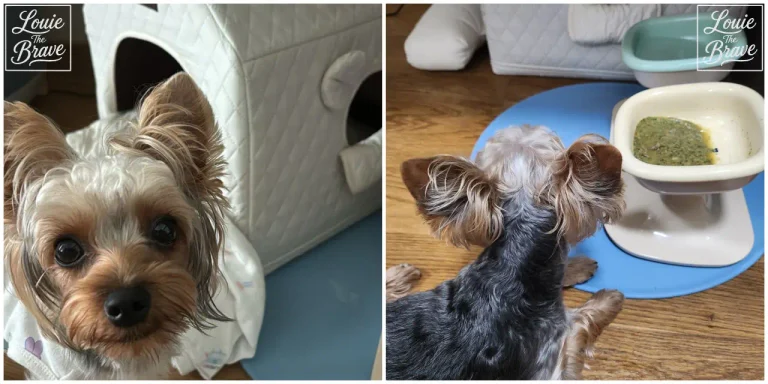
Louie usually does not like sweet potato, so I was not expecting the base itself to be exciting for him. He had been running around while I prepared the ingredients, and once the canapés were finished he was clearly ready to get one.
At first, his dislike of sweet potato still showed. Then his sister started eating one beside him, and he heard the crunchy texture. After that, he began eating his own piece.
That result did not suddenly turn him into a sweet potato fan. What it did show me was that texture mattered for Louie. If I make these again for him, I would make the base a little firmer and crisper.
He only got one from this batch because his sister thought the rest tasted good and ate them herself.
Easy Ways to Adapt the Topping
The canapé idea is useful because the base and topping do not have to be identical for every dog. Keep the sweet potato base plain, then choose a small amount of a dog-safe topping your dog already eats comfortably.
Plain cooked chicken worked well for this batch. Other dogs may do better with a different familiar protein or no topping at all. Avoid introducing several new ingredients at once, especially if you are trying to determine whether your dog tolerates the recipe.
These homemade sweet potato dog treats are most useful as an occasional, portioned snack for dogs that tolerate sweet potato but may prefer it in a firmer texture. Make the base first, adjust the starch to the actual moisture in your sweet potato, and add the topping only after cooling.
Source
PetMD — Can Dogs Eat Sweet Potatoes?
PetMD — Can Dogs Eat Bell Peppers?
VCA Animal Hospitals — Dog Treats
USDA Food Safety and Inspection Service — Chicken from Farm to Table
USDA Food Safety and Inspection Service — Keep Food Safe! Food Safety Basics