Non-Slip Dog Floor Mats: What to Check Before Installation
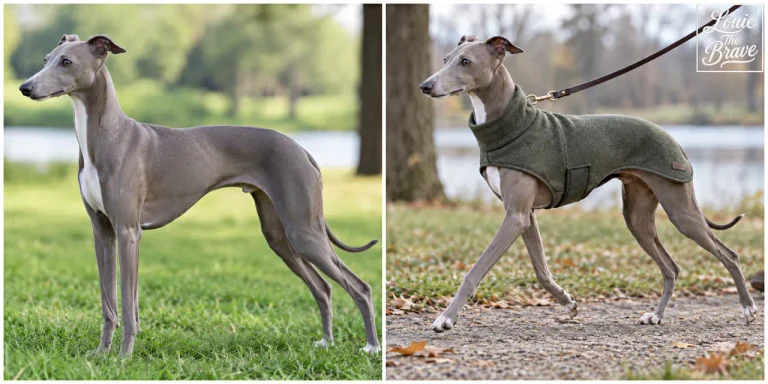
Dogs that run, chase toys, or make quick turns indoors can struggle to get traction on smooth hardwood or other slick flooring. This is especially noticeable with small dogs that accelerate and stop quickly.
Louie loves chasing balls around the house, and I started noticing his paws slipping when he changed direction on our hardwood floor. That made me consider whether covering only a small play area was enough or whether a larger non-slip surface would make more sense.
For a whole-room installation, traction is only one part of the decision. Thickness, cleaning, replacement options, room layout, and even the color of the flooring can affect whether a dog mat works well in everyday life.
Why Whole-Room Coverage Can Be More Practical
A dog rarely stays in one section of the living room.
Dogs may run from the sofa to the hallway, follow their owners into the kitchen, or move repeatedly between rooms. If a non-slip mat covers only one small area, the dog can still move from a grippy surface directly onto a slippery one.
The installation examples I reviewed used the mat not only in the main living room but also through narrow passages and around the kitchen. This created a more continuous walking surface instead of isolated mat sections.
That approach may be worth considering if your dog:
- frequently runs indoors
- makes fast turns while playing
- follows family members between rooms
- regularly crosses hardwood, laminate, or another smooth surface
Before installing anything throughout the house, map out where your dog actually walks and plays. You may find that several connected areas matter more than covering every square foot.
Thickness and Surface Texture Matter
The Joeun Mat shown in the installation examples has a 22 mm thickness and a non-slip surface.
Thickness can affect how noticeable the transition feels between the mat and uncovered flooring, so pay attention to doorways, cabinet clearance, furniture placement, and any area where people may step on or off the mat.
Surface texture is equally important. A mat intended for dogs should provide useful traction without becoming difficult to clean.
If possible, evaluate how the material feels under both dry and slightly damp conditions. Also consider whether your dog can comfortably walk, sit, stand, and turn on it rather than judging the surface only by touch.
Cleaning and Partial Replacement Can Affect Long-Term Use
Large floor installations need to work with normal household cleaning.
According to the product information provided for The Joeun Mat, the surface can be cleaned with water and used with a steam cleaner. Individual damaged or stained sections can also be replaced rather than requiring the entire floor to be removed.
That type of modular maintenance can be useful in homes with pets because accidents, food stains, scratches, and wear are rarely distributed evenly across an entire room.
Before choosing any dog flooring system, check:
- which cleaners are approved
- whether steam cleaning is allowed
- whether liquid can enter between sections
- how individual pieces are removed
- whether replacement pieces will remain available
- how the material underneath the mat is ventilated
The Joeun Mat also uses air channels on the underside. The product information describes these channels as a way to allow airflow beneath the installed flooring.
If you have hardwood underneath, ask the installer how moisture, trapped debris, and long-term contact with the original floor will be managed.
White vs. Brown Dog Flooring
Floor color does not change how a dog uses the room, but it can make a large installation feel very different visually.
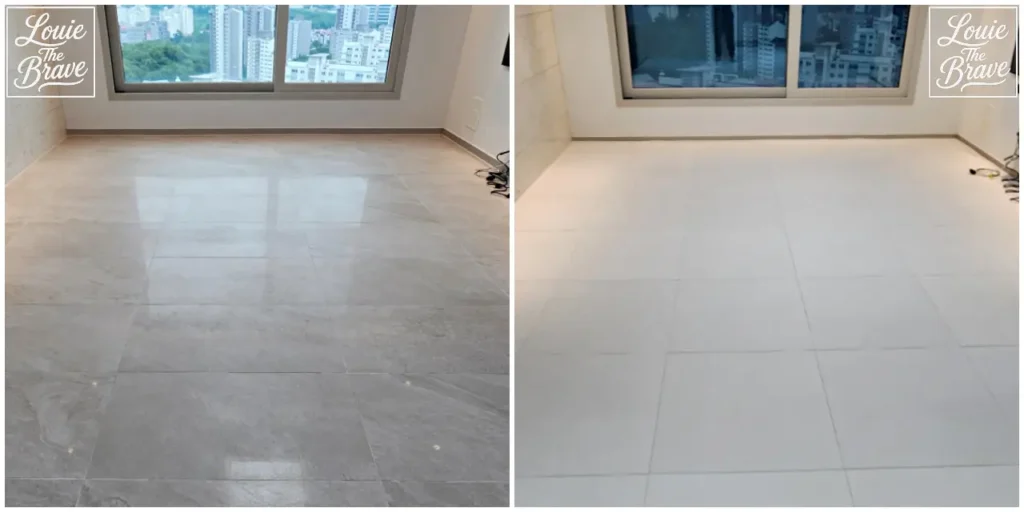
The examples included two options: Non-Slip White and Non-Slip Brown.
| Color | Works Well With | Overall Look |
|---|---|---|
| Non-Slip White | White kitchens, light gray walls, bright interiors | Clean, bright, spacious |
| Non-Slip Brown | Wood furniture, beige rooms, warm neutral interiors | Warm, calm, natural |
For a small apartment or a room with white cabinetry, a lighter floor can visually blend into the existing interior. Brown may integrate more naturally where wood tones already dominate.
Because a whole-room dog mat becomes a major part of the interior, it makes sense to choose color after looking at the entire room rather than at a small material sample alone.
What to Check Before Installing Non-Slip Flooring for a Dog
A thick mat with good traction may look appealing, but the best choice depends on how your home is used.
Start with your dog’s main routes. Then check the flooring thickness, edge transitions, cleaning instructions, ventilation underneath, and whether damaged sections can be replaced independently.
Also consider whether furniture must be moved for installation and what happens if you relocate. The Joeun Mat installation described here is performed by the company’s installation team, and the product information states that reinstallation can be requested after moving.
For Louie, the biggest reason I am considering broader coverage is simple: his indoor play does not happen in one fixed spot. He runs, turns, and follows us through connected areas of the house. Floor traction is only one part of comfortable movement at home. I also keep an eye on Louie’s weight and body condition, since excess body weight can add mechanical stress to the body; my dog body condition score guide explains how I check his ribs, waist, and abdominal tuck.
If your dog behaves the same way, continuous traction along the places your dog actually uses may be more useful than placing a small mat in only one corner of the room.
Source:
- The Joeun Mat — Pet Mat Installation Gallery
- VCA Animal Hospitals — Creating a Comfortable Home for Your Mobility Compromised Dog
- American Animal Hospital Association — Essential Tips for Pet-Proofing Your Home
- Cornell University College of Veterinary Medicine — What Are Zoomies?