Curaprox CS Smart toothbrush for dogs: Small-Dog Review
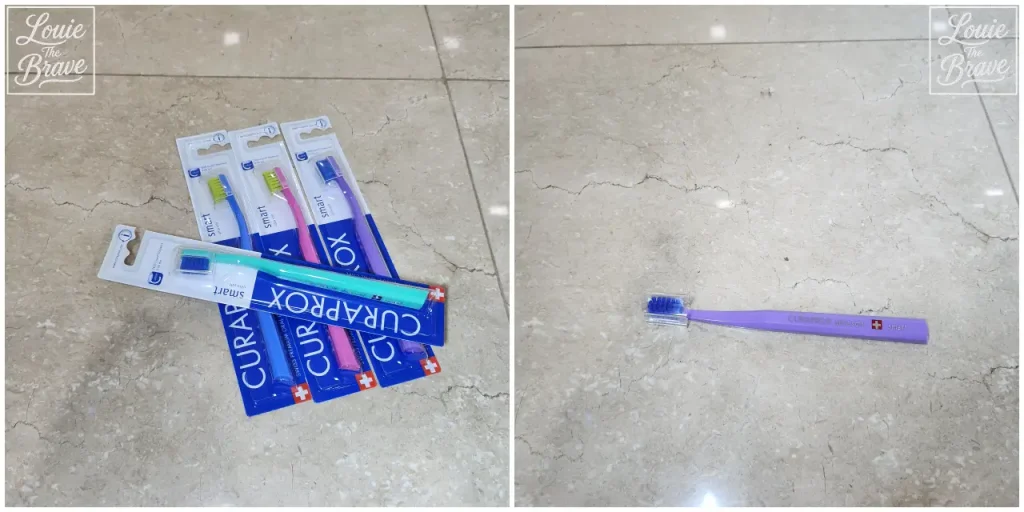
The Curaprox CS Smart toothbrush for dogs is not actually a pet toothbrush. It is a human toothbrush with an extra-small head and very fine, soft bristles. I started using it for my Yorkshire Terrier, Louie, because many dog toothbrushes felt bulky in his small mouth. Paired with Virbac C.E.T. Enzymatic Toothpaste, it became one of the easiest brushing combinations I had used with him.
My main reason for recommending this combination is control. The brush head is small enough for me to work around individual teeth, while the toothpaste is made for pets and does not need to be rinsed out. Louie is a sensitive dog who dislikes being held, but tooth brushing is one routine he actually accepts. When he sees the toothbrush with toothpaste on it, he becomes focused and waits for brushing.
Why I Used the Curaprox CS Smart toothbrush for dogs
The Curaprox CS Smart is sold as a human toothbrush, not a veterinary dental product. Curaprox describes it as having an extra-small head, 7,600 Curen® filaments measuring 0.08 mm, and an octagonal handle. The small head was the feature that mattered most to me.
Louie has a very small mouth. With a larger brush head, I have less room to adjust the angle around his canine teeth and back teeth. The CS Smart lets me make smaller movements without the head taking up most of the available space.
I also liked the bristle feel. It is exceptionally soft compared with many standard toothbrushes I have handled. Louie did not seem uncomfortable even when I brushed farther back in his mouth, and I found the handle easy to control.
That does not mean every human toothbrush is a good dog toothbrush. A soft, appropriately sized pet toothbrush is still the simpler starting point because it is designed specifically for animal oral care. AAHA also recommends using a soft-bristled pet toothbrush for routine home dental care.
What the Curaprox CS Smart Is—and Is Not
The most important buying detail is easy to miss: Curaprox does not market the CS Smart as a dog toothbrush. It was developed for children over age 5 and is also marketed to adults who prefer a small, precise brush head.
That matters because I would not treat its 7,600 filaments as a canine dental claim. I use the brush because I can physically control it well in a small mouth, not because there is evidence that this specific human toothbrush cleans dog teeth better than a pet toothbrush.
For a small dog, I would pay attention to practical details instead:
- Can the brush head move around the teeth without forcing the mouth open widely?
- Do the bristles feel comfortable against the gumline?
- Can you hold the handle steadily enough to make small brushing movements?
For Louie, all three worked well.
Why I Paired It With Virbac C.E.T. Toothpaste
A human toothbrush does not mean using human toothpaste. For dogs, I use toothpaste formulated for pets.
My choice was Virbac C.E.T. Enzymatic Toothpaste. Virbac’s current U.S. product information says the toothpaste is formulated for dogs and cats, contains no foaming agents, and is made so pets can swallow it during normal use. The U.S. line is available in Poultry, Malt, Vanilla-Mint, Beef, and Seafood flavors.
Louie tried Poultry first, then Malt, and later Vanilla-Mint. I expected Vanilla-Mint to be the least appealing to him, but he accepted it just as readily as the others.
The texture also worked well with this brush. It was creamy enough to sit on the compact brush head instead of immediately sliding off, which made it easier for me to place the toothpaste where I wanted it.
In my routine, the Curaprox CS Smart toothbrush for dogs was the precision tool, while Virbac provided the pet-specific toothpaste.
I have already covered the toothpaste itself in more detail in my review of why I use Virbac C.E.T. with brushing rather than as a replacement for brushing. That distinction is important here too: the toothpaste is part of the routine, but the toothbrush still provides the physical cleaning action.
How the Combination Worked for Louie
Louie’s reaction is the biggest reason I liked this setup.
He does not like being restrained, so a grooming tool that makes him tense is difficult to use consistently. This brush did not create that response. Even though Louie is quite sensitive, he tolerated the toothbrush going toward the back of his mouth without obvious resistance.
The small head let me reach his back teeth, while the soft bristles made it easier to work close to the gums. I also preferred being able to concentrate on one small area rather than sweeping a large brush head across several teeth at once.
His response to the toothpaste helped too. Even while he was playing, putting Virbac toothpaste on the brush was enough to get his attention.
A veterinarian who examined Louie’s mouth also told me that his teeth were being well maintained. I treat that as feedback about his overall dental-care routine, not proof that one particular toothbrush or toothpaste created the result.
What Happened With Louie’s Retained Baby Canines
One part of my original experience needs an important qualification.
Louie had two upper baby canine teeth that had not fallen out as quickly as I expected. After I started paying closer attention to gentle brushing around his gums with the Curaprox brush, both baby canines eventually came out without a problem.
I cannot say that the toothbrush caused those teeth to fall out.
Retained deciduous teeth are a veterinary dental issue. AAHA recommends addressing persistent baby teeth when permanent teeth begin erupting because keeping both teeth can contribute to crowding, abnormal positioning, and periodontal problems. Extraction may be recommended rather than waiting for the tooth to loosen at home.
So although Louie’s baby teeth happened to come out during the period when I was using this brush, I would not buy a Curaprox toothbrush as a treatment for a retained puppy tooth or delay a veterinary examination hoping brushing will remove it.
Does an Ultra-Soft Toothbrush Still Clean Well?
For home dental care, the purpose of brushing is primarily to disrupt and remove plaque.
AAHA notes that brushing needs to be performed daily to provide the most benefit and specifically distinguishes plaque from hardened calculus: brushing removes plaque, but it does not remove established calculus.
That is why I do not see softness as a disadvantage by itself.
For Louie, softer bristles made careful brushing easier because he tolerated them. A firmer brush would not be more useful to me if it made him pull away before I could clean his teeth properly.
There is also a limit to what any home toothbrush can accomplish. Hard tartar, painful or bleeding gums, loose teeth, persistent bad breath, or difficulty eating should not be treated simply by changing toothbrushes. Professional dental examination and treatment may be needed when dental disease is already present.
Curaprox CS Smart vs. a Small Pet Toothbrush
The biggest difference is not simply bristle softness. It is what the brush was designed for.
| Feature | Curaprox CS Smart | Small pet toothbrush |
|---|---|---|
| Intended user | Humans | Dogs or cats |
| Brush head | Extra small | Varies by pet size |
| Bristles | 7,600 ultra-fine Curen® filaments | Usually soft; design varies |
| Handle | Octagonal human toothbrush handle | Straight, angled, dual-ended, or other pet designs |
| What I liked | Precise control in Louie’s small mouth | Designed specifically for pet dental care |
| Main limitation | Not marketed or tested as a dog toothbrush | Some models can still feel bulky in toy-breed mouths |
If I were starting tooth brushing with a puppy or a dog that had never accepted mouth handling, I would begin with a small pet-specific brush.
If a cooperative toy-breed dog already tolerates brushing but conventional pet toothbrush heads still feel bulky, the CS Smart is an alternative I would consider because of its compact dimensions and softness.
Who May Like This Combination
The Curaprox CS Smart toothbrush for dogs made sense for me because Louie has a small mouth, accepts brushing, and allows me to clean individual teeth carefully.
I think this combination is most likely to suit an owner who:
- has a toy or small-breed dog
- finds many dog toothbrush heads too bulky
- wants very soft bristles
- already has a dog that tolerates brushing
- prefers a handle that allows small, controlled movements
- wants to pair the brush with a pet-formulated enzymatic toothpaste
I would choose a pet-specific beginner brush or finger brush instead if a dog is still learning to tolerate mouth handling.
I would also stop treating the problem as a toothbrush-shopping issue if brushing causes pain, bleeding, or marked distress. Inflamed gums can make brushing painful, and AAHA specifically cautions that brushing already inflamed gingiva can create pain and aversion.
Final Verdict
The Curaprox CS Smart toothbrush for dogs is an unconventional choice, but it worked well for Louie because of three practical features: an extra-small head, extremely soft bristles, and a handle I could control precisely.
Virbac C.E.T. was a good partner for it because Louie accepted all three flavors I used—Poultry, Malt, and Vanilla-Mint—and the creamy texture stayed on the compact brush head well enough for detailed brushing.
I would buy the Curaprox brush again for a small dog that already accepts brushing. I would not describe it as medically superior to dog toothbrushes, and I would not use it as a solution for retained teeth, established tartar, or gum disease.
For Louie, the value of this combination was not a dramatic dental transformation. It made brushing comfortable enough for him and precise enough for me that careful dental care became easy to keep doing.