BYEPLAQUE Dog Toothbrush Review After One Partial Use
If you are looking for a BYEPLAQUE Dog Toothbrush Review because the brush head looks unusually small and precise, my answer is simple: I stopped using the version I bought before I finished the first brushing session.
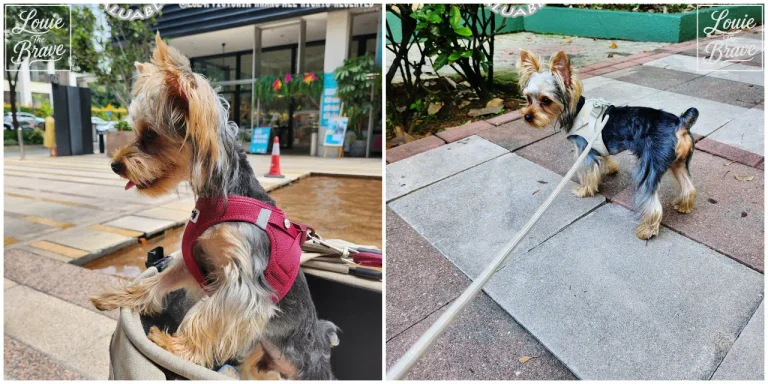
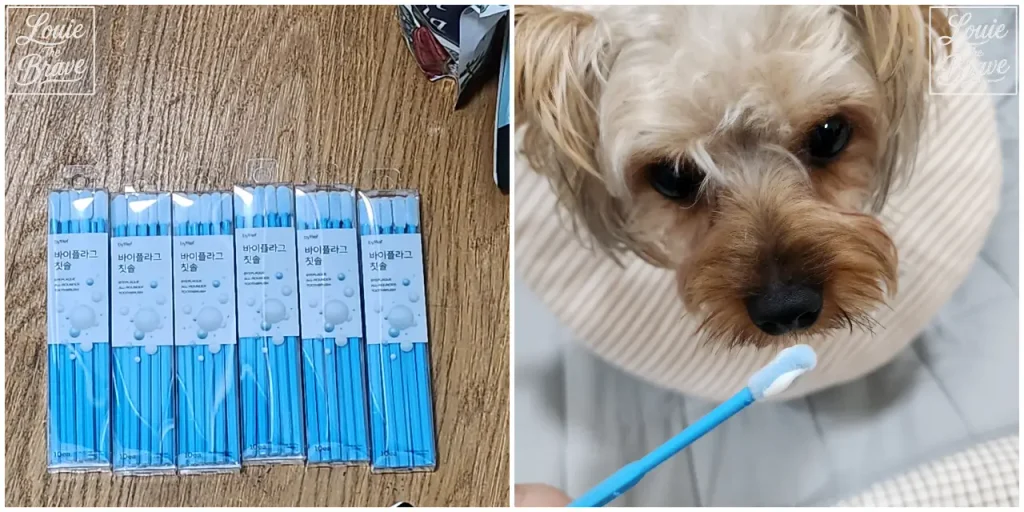
I purchased the blue, pen-style ByRef BYEPLAQUE toothbrush for Louie, my roughly 3 kg Yorkshire Terrier. He did not chew on the brush. I used the same gentle technique I normally use—light contact around the gumline and tooth surfaces rather than scrubbing back and forth. During that first session, part of the brushing surface began to come off. I noticed it, stopped, and did not continue testing the brush.
That experience changed my buying decision immediately. I had bought the brush because its very small head and short-use concept sounded hygienic for a toy-breed dog. After seeing visible wear before one full use, I did not feel comfortable putting it back in Louie’s mouth.
Why I Bought the BYEPLAQUE Toothbrush
Louie was already used to regular tooth brushing. At the time, I brushed his teeth twice a day and had been using a Curaprox toothbrush. Because I replaced that brush about once a month, it could go through roughly 60 brushing sessions in a month.
The BYEPLAQUE brush caught my attention because it was presented as a compact pet toothbrush designed by Korean veterinarian Seol Chae-hyeon. The version I bought had a pen-like handle and a very small brush area. The product information I saw at the time described a 4 mm top head for the front teeth and canine teeth, a 17 mm side head for molars, fine bristles around the head, and a design intended for short-term use.
On paper, that sounded ideal for me. A small brush can be useful in a Yorkie mouth, and I liked the idea of replacing the brush frequently instead of using one brush for dozens of sessions.
This is why my BYEPLAQUE Dog Toothbrush Review is not based on a dog that refuses brushing or bites every toothbrush. Louie already tolerated brushing, and the product failed my test for a different reason: the brush surface did not stay intact through one normal session.
The Small Head Was Not as Easy to Use as I Expected
The tiny size was the feature I expected to like most. In practice, the very short bristles made positioning harder for me.
Because the bristles sat so close to the core of the brush head, I had to bring the brush itself very close to the tooth to make consistent contact. The straight pen-like shape also gave me less freedom to adjust the angle around Louie’s small mouth than I expected.
A small brush head is only useful if I can control where the bristles land. With this brush, the head was compact, but the combination of very short bristles and straight handle did not give me the control I wanted around the canines and back teeth.
That was very different from the reason I continued using Curaprox brushes. I later wrote separately about how the extra-small Curaprox CS Smart head gave me more control in Louie’s mouth. The useful difference for me was not simply whether a brush was small. It was whether I could place the bristles precisely without pressing the brush body too close to the tooth. Read my Curaprox CS Smart toothbrush review for small dogs
BYEPLAQUE Dog Toothbrush Review: What Happened in One Session
I did not complete one full use.
While brushing Louie’s teeth, I checked the brush and noticed that part of the brushing surface had already started to peel or wear away. Louie had not been chewing on it. I stopped immediately because I did not want to keep brushing with a head that was visibly changing during use.
I also want to be precise about what this experience does and does not show. This was one brush used on one small dog. It was not a laboratory durability test, and I cannot say that every brush from the same product line would behave the same way.
But for a personal product review, one incomplete session was enough to answer the question that mattered to me: would I keep using this specific brush on Louie? No.
What I expected vs. what I experienced
| Feature I bought it for | What I expected | What happened for me |
|---|---|---|
| Very small brush head | Easier access in a toy-breed mouth | Small size was useful, but the very short bristles made angling awkward |
| Fine bristles around the head | Gentle contact from different directions | The brushing surface visibly wore during the first session |
| Short-use concept | Frequent replacement for better hygiene | I stopped before completing the first use |
| Pen-style handle | Precise control | The straight shape did not give me the angle I wanted |
The biggest issue was not comfort or Louie’s cooperation. It was durability during the actual brushing motion I use every day.
Did Louie Bite the Brush?
No. That point matters because the first explanation I might have considered for a damaged pet toothbrush is chewing.
Louie did not clamp down on the brush or treat it like a chew toy. I was brushing gently, moving from the gumline across the tooth surface. I do not scrub his teeth hard.
That is also why I stopped as soon as I saw the wear. I was not interested in pushing the brush through two or three more sessions just to see whether it would continue deteriorating. A toothbrush is a tool I put directly against his teeth and gums, so once the head stopped looking intact, I was done with it.
What About the “Non-Toxic” Material Claim?
The product information I saw when I purchased the brush emphasized that it used a non-toxic material. That did not resolve my concern once I saw the brushing surface coming off.
For me, “non-toxic” and “designed to shed during brushing” are two different questions. I could not verify that detached brush material was intended to be swallowed, and I did not want to test that possibility on my dog.
So I did not continue using the brush simply because the material was described as non-toxic. My practical rule was much simpler: if the toothbrush head is visibly breaking down during brushing, I replace the brush and stop using that one.
What I Use Instead for Louie
I went back to the style of toothbrush that had already worked for him: a very soft, small-headed brush that stays intact and gives me enough control to brush each area gently.
For a small dog, these are the features I pay attention to:
- The head has to fit comfortably inside the mouth.
- The bristles need to feel soft during gentle gumline contact.
- The handle and head shape have to let me control the angle.
- The brush needs to remain intact during normal brushing.
The American Animal Hospital Association currently describes daily brushing as the best home method for reducing plaque accumulation and recommends a pet-specific toothbrush with soft bristles that will not irritate the gums.
I also use pet toothpaste rather than human toothpaste. I have a separate review explaining how I use Virbac C.E.T. Enzymatic Toothpaste together with brushing rather than treating toothpaste as a replacement for the toothbrush. Read my Virbac C.E.T. Enzymatic Toothpaste review
Important: Current BYEPLAQUE Listings May Show a Different Brush
This review is about the blue pen-style BYEPLAQUE toothbrush I purchased and used in December 2024.
Current Korean listings show a BYEPLAQUE triangular toothbrush under the same product line. That is not the same shape as the brush shown in my photos. If you are shopping for BYEPLAQUE now, compare the current head design and instructions instead of assuming that my 2024 experience applies to the version currently being sold.
That distinction matters. I can review only the brush I actually used.
Who I Would—and Would Not—Recommend This Version To
For the exact pen-style version in my photos, I would not repurchase it and I would not recommend it based on my first-use experience.
The idea itself made sense to me: a tiny head, fine bristles, and frequent replacement for small-dog dental care. But the concept did not matter once I saw the brushing surface wear before I finished one session.
I also would not use this review to claim that every BYEPLAQUE toothbrush is defective, especially because the currently listed version has a different shape. My conclusion is narrower: the specific version I bought did not meet my minimum requirement for a toothbrush I use on Louie.
Final Verdict
My BYEPLAQUE Dog Toothbrush Review comes down to one point: the pen-style brush did not stay intact long enough for me to finish one normal brushing session.
Louie did not chew it. I did not scrub aggressively. The brush surface still showed visible wear, so I stopped and did not use it again.
For a small dog, an ultra-compact toothbrush can be useful, but size alone is not enough. I need a brush that is soft, easy to angle, comfortable for the dog, and physically stable during use. The BYEPLAQUE version I tested did not meet that last requirement, which was enough for me to move on.
Source
- American Animal Hospital Association — Dog & cat dental disease: Signs, professional cleanings, anesthesia, and home care
- Knollo — Current ByRef BYEPLAQUE triangular toothbrush listing